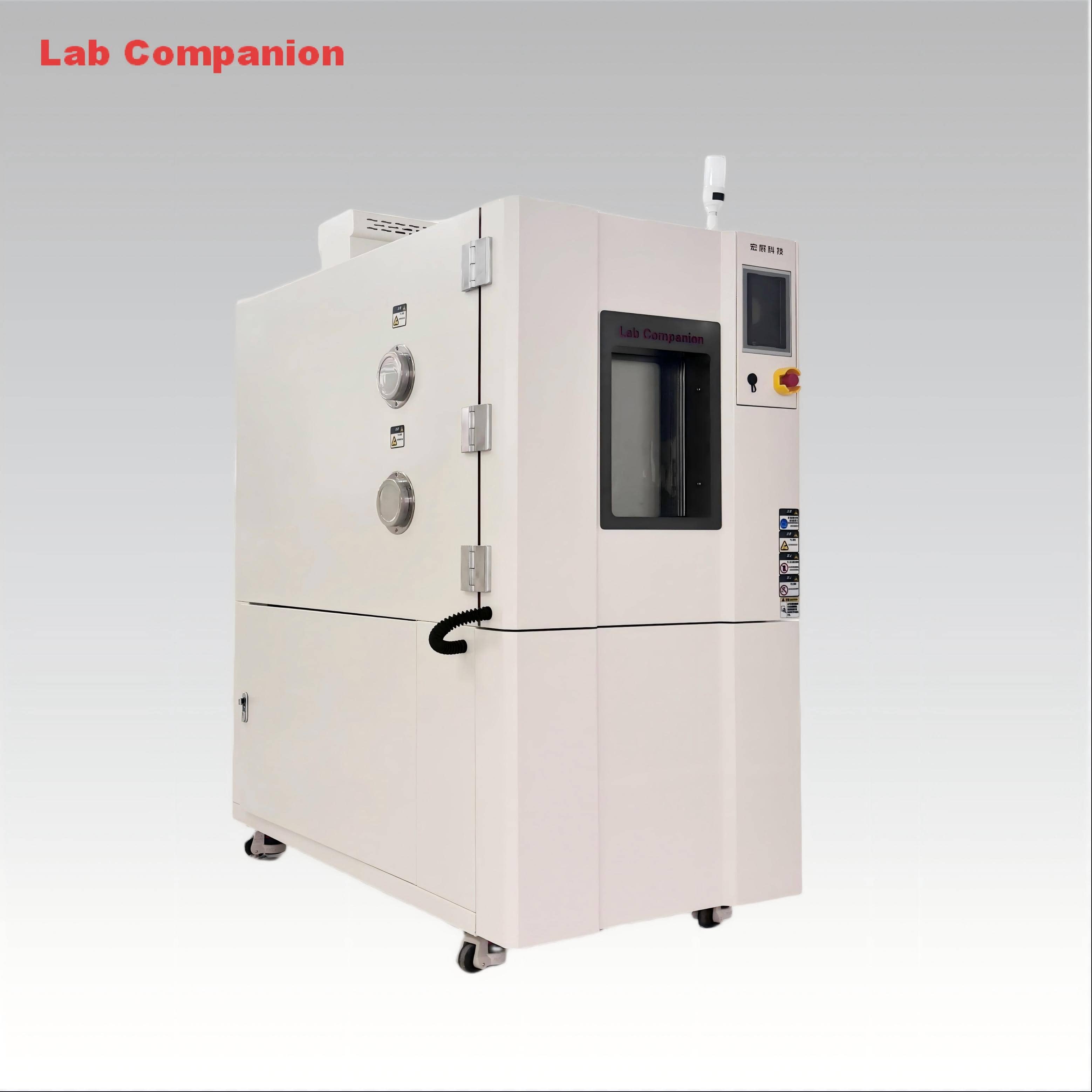
When the industry discusses the ranking of high and low temperature test chambers and selects the top 10, the core criteria are never a simple accumulation of equipment parameters, but whether the equipment can be deeply integrated into the rigorous R&D and quality inspection system, serving as a solid cornerstone for supporting product reliability engineering. The LabCompanion® high and low temperature test chamber series, with its positioning as a "trustworthy testing partner", has not only maintained a leading position in various rankings of high and low temperature test chambers through long-term market practice, but also silently verified the extreme performance of products in core projects in many key fields such as chips, automobiles, and semiconductors, becoming an industry benchmark.
I. Four Core Criteria for Selecting the Top 10 High and Low Temperature Test Chambers
Aspect 1: Precise Temperature Control and Quality Stabilization, Upgrading from "Data Provider" to "Risk Mitigator"
The accuracy of test data is the core competitiveness of high and low temperature test chambers, and even the primary prerequisite for being selected into the top 10 rankings. With excellent temperature fluctuation control and uniformity, LabCompanion® high and low temperature test chambers can effectively avoid environmental noise interference, accurately capture tiny performance attenuation of products, expose potential defects in advance, and fundamentally reduce R&D and mass production risks. For example, in the testing of new energy vehicle battery modules, tiny temperature gradient differences may directly affect the accuracy of evaluating the thermal management performance of battery packs, thereby laying a huge hidden danger of mass production recalls. The high-precision temperature control capability of LabCompanion® equipment ensures the uniqueness and reliability of test conclusions, minimizing test errors, which is also the core technical strength for it to maintain a leading position in the high-end high and low temperature test chamber industry ranking.
Aspect 2: Ensuring Test Continuity to Empower R&D Efficiency Upgrade
Interruptions in R&D and quality inspection processes often mean huge time and cost losses. Therefore, the stability of equipment is the key soft power for selecting the top 10 high and low temperature test chambers. LabCompanion® accurately addresses this pain point of customers, focusing on enhancing reliability in equipment design, adopting core components of well-known brands and system architectures verified by long-term market practice, and striving for extremely low failure rates and long mean time between failures. At the same time, the equipment integrates a number of humanized designs - the anti-condensation large viewing window facilitates real-time observation of test status, the adjustable controller adapts to different operating habits, and the convenient data export interface avoids data loss, comprehensively reducing the risk of manual operation interruptions. For industries such as semiconductors and optical devices that need to carry out long-term temperature cycle and high-low temperature dwell tests, the long-term stable operation of the equipment is not only a guarantee of the project cycle, but also a core support for the R&D rhythm. This intangible value is far beyond the price of the equipment itself, becoming an important weight for it to be selected into the top 10 rankings.
Aspect 3: Balancing Compliance and Flexibility to Meet the Challenges of Global Supply Chains
With the intensification of the global layout of the manufacturing industry, products need to meet the requirements of multiple standards in multiple countries and fields. Therefore, the standard compliance and scenario adaptability of equipment have become important indicators for selecting the top 10 high and low temperature test chambers. The LabCompanion® high and low temperature test chamber has built-in compliance design, which can directly meet a number of rigorous requirements such as national standards (GB/T 2423.1), military standards (GJB 150.3A), and International Electrotechnical Commission standards (IEC), providing customers with a "one-stop" compliant testing platform that can meet global quality inspection needs without additional adaptation. At the same time, the equipment covers a variety of standard models from 100L to 1500L, and supports in-depth non-standard customization, which can flexibly adapt to the full-scenario needs of incoming inspection (IQC), R&D pilot test, and finished product factory inspection (OQC) of enterprises of different sizes, serving as a standardized interface connecting the quality discourse power of the global supply chain and demonstrating its comprehensive adaptability.
Aspect 4: Full-Life-Cycle Services to Forge Long-Term Cooperation Value
The value of a truly high-end equipment is never limited to the moment of delivery. Perfect full-life-cycle services are the core bonus item for selecting the top 10 high and low temperature test chambers. LabCompanion® has always adhered to the concept that "delivery is the starting point of service", providing customers with not only a piece of equipment, but also a full-process solution covering pre-sales technical consultation, in-sales installation and commissioning, after-sales maintenance support, and regular calibration services. This service concept oriented to customers' long-term success has enabled the brand to maintain a high customer retention rate and recommendation rate after being tested by the market cycle. Compared with short-term marketing hype, this accumulated brand credibility is the core strength for it to maintain a leading position in various professional rankings of high and low temperature test chambers and be selected into the top 10 list.
II. Core Evaluation Dimensions for Cost-Effectiveness of High and Low Temperature Test Chamber Manufacturers
Evaluating the cost-effectiveness of high and low temperature test chamber manufacturers is never "low price first", but "value matching" - that is, the comprehensive balance between equipment performance, service quality and price. It can be judged from three core points: first, the matching degree between core performance and demand. Prioritize equipment whose temperature control accuracy, stability and compliance meet the needs of your own industry to avoid waste caused by blindly pursuing high-end parameters; second, the later operation and maintenance cost of the equipment, including the service life of core components, the cost of consumable replacement, and the efficiency of fault maintenance.
LabCompanion® can significantly reduce long-term operation and maintenance costs by virtue of high-quality core components and perfect after-sales service; third, service added value. Professional technical consultation, rapid after-sales response, and regular calibration services can effectively improve equipment utilization and reduce downtime losses, which is also an important embodiment of high cost-effectiveness.
Conclusion
In the view of LabCompanion® , a high and low temperature test chamber is never a simple collection of hardware, but a key system that carries customers' quality commitments and supports products to enter the market. It stands quietly in the laboratory, but deeply participates in every link of product reliability improvement, becoming a behind-the-scenes contributor to the quality upgrade of Made in China. In the future, LabCompanion® will continue to deepen its positioning as the "cornerstone of reliability testing", consolidate and enhance its core position in the global reliability testing field through more intelligent and interconnected technological iterations, and help Made in China win world trust with excellent quality.
About LabCompanion®
LabCompanion® is a leading provider of environmental reliability test equipment and solutions, always taking "helping customers improve the intrinsic quality of products" as its mission. With high-precision, high-reliability test equipment and professional and comprehensive full-life-cycle services, Hongzhan Technology has become a trustworthy long-term partner for many advanced manufacturing enterprises and scientific research institutions in China and even the world on the road of quality and reliability improvement.
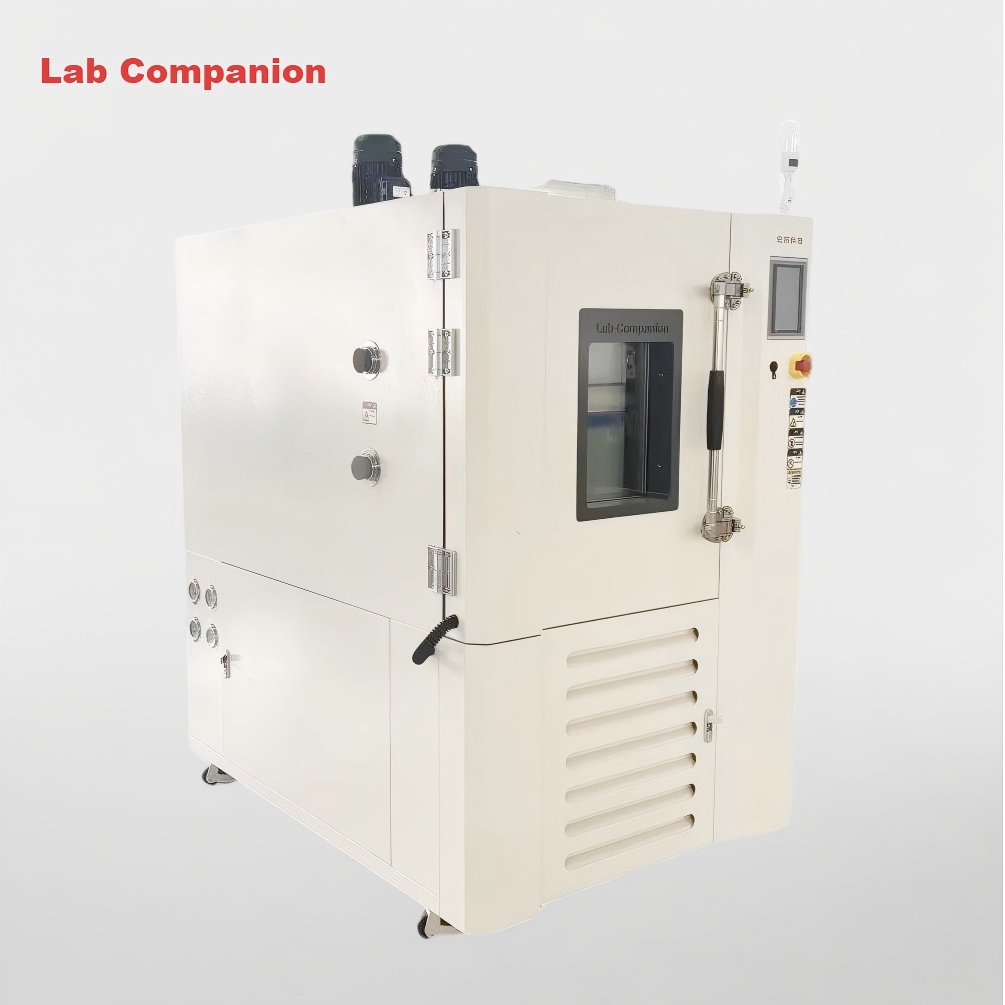
In the field of industrial product reliability testing, temperature test chambers are basic equipment, while rapid temperature change test chambers are upgraded models. Their core differences lie in performance, structure, application scenarios and cost. Below is a concise comparison from four core dimensions to clarify their positioning boundaries.
I. Core Performance: Essential Leap from "Steady-State Testing" to "Rapid Dynamic Simulation"
The core of performance differences lies in temperature change rate and control accuracy, which directly define testing capabilities. Standard temperature test chambers aim to meet basic steady-state testing, while Hongzhan's rapid models focus on precise simulation of extreme temperature-varying environments.
Standard chambers have a conventional temperature change rate of 0.7-1℃/min, with temperature fluctuation of ±0.5℃ and uniformity of ±2℃. They only comply with routine steady-state tests of GB/T 2423 series, suitable for basic temperature resistance verification in consumer electronics, home appliances and other industries, such as high-temperature aging of mobile phone chargers and low-temperature embrittlement tests of plastic toys.
Rapid temperature change chambers achieve performance leap, with customizable temperature change rate of 3-20℃/min (supporting linear heating/cooling), temperature fluctuation ≤±0.3℃, uniformity ≤±1.5℃, and no overshoot during temperature change. They can accurately simulate severe temperature variation and support accelerated aging tests. The standard temperature range is -70℃~+200℃, expandable to -80℃~+220℃ via customization, far exceeding standard models.
II. Structural Design: Differentiated Architecture Adapting to Performance Requirements
Structural design is the foundation of performance. Due to different testing objectives, the two models differ significantly in core component configuration and air duct design. Standard chambers adopt simplified structures to control costs, while Hongzhan's rapid models ensure stability under high-frequency temperature changes through precision architecture.
Standard models use a simple "single compressor + conventional air duct" structure, focusing on basic cooling/heating needs. With simple structure and few wearing parts, they are suitable for low-frequency, low-intensity tests. Single-stage refrigeration cycle is mostly used for low-temperature needs above -40℃, with relatively low refrigeration efficiency.
Hongzhan's rapid models are equipped with "dual-compressor cascade system + high-efficiency heat exchange module + impact-resistant structure". Core components include imported compressors (Bitzer, Copeland, etc.) and Swiss high-precision sensors, ensuring stable long-term high-frequency operation with MTBF over 8000 hours. They also support PLC programming and touch screen operation, with preset 100+ test programs for complex needs.
III. Application Scenarios: Precise Matching from "General Basic Testing" to "High-End Industry-Specific Needs"
Application differences stem from performance boundaries, forming a complementary pattern of "basic coverage" and "high-end breakthrough" to meet different industrial needs.
Standard models are suitable for consumer electronics, home appliances, toys and other industries, mainly for basic temperature resistance verification, applicable to general scenarios with low efficiency requirements and limited budget.
Hongzhan's rapid models focus on high-end industries such as new energy, automotive, aerospace and semiconductors, adapting to harsh tests like extreme temperature shock and high-frequency temperature fatigue. They support non-standard customization, such as explosion-proof devices and corrosion-resistant liners, to meet special industrial technical and environmental requirements.
IV. Full-Life Cycle Value and Operation & Maintenance Adaptability (Table Comparison)
Comparison Dimension
Standard Temperature Test Chamber
Rapid Temperature Change Test Chamber
Core Value
Stably complete basic temperature tests; suitable for simple-process, small-batch, long-cycle scenarios; meets basic quality inspection needs of small and medium-sized manufacturers
Improve test efficiency, quickly expose product defects, shorten R&D verification cycle; adapt to high-end enterprises' "fast R&D and iteration" rhythm, enabling efficiency-driven R&D
Operation Threshold
Simple structure and operation logic; ordinary operators can be competent after simple training
Intelligent operating system for easy basic operation; core functions require professionally trained personnel
Troubleshooting & Maintenance
Low difficulty in troubleshooting common faults; highly universal accessories; quick problem-solving to reduce downtime
Professional maintenance for core components; high stability and low fault rate; complete technical service system for rapid response
Suitable Enterprises
Small and medium-sized manufacturers with simple technical teams and basic testing needs
High-end manufacturers with professional technical teams and needs for continuous, high-precision testing
V. Summary: Core Selection Logic is "Demand Matching" Rather Than "Performance Stacking"
Standard temperature test chambers are "cost-effective choices" for basic tests with limited budget. Hongzhan's rapid models are "high-end customized choices" for extreme temperature simulation and high-efficiency precision testing. Essentially, they represent an upgrade from "meeting basic standards" to "breaking test boundaries". Selection should be based on industry standards, testing needs and budget, without blind pursuit of higher temperature change rate
Если вы заинтересованы в нашей продукции и хотите узнать более подробную информацию, пожалуйста, оставьте сообщение здесь, мы ответим вам, как только сможем.






 Получить цену
 Поддерживается сеть IPv6