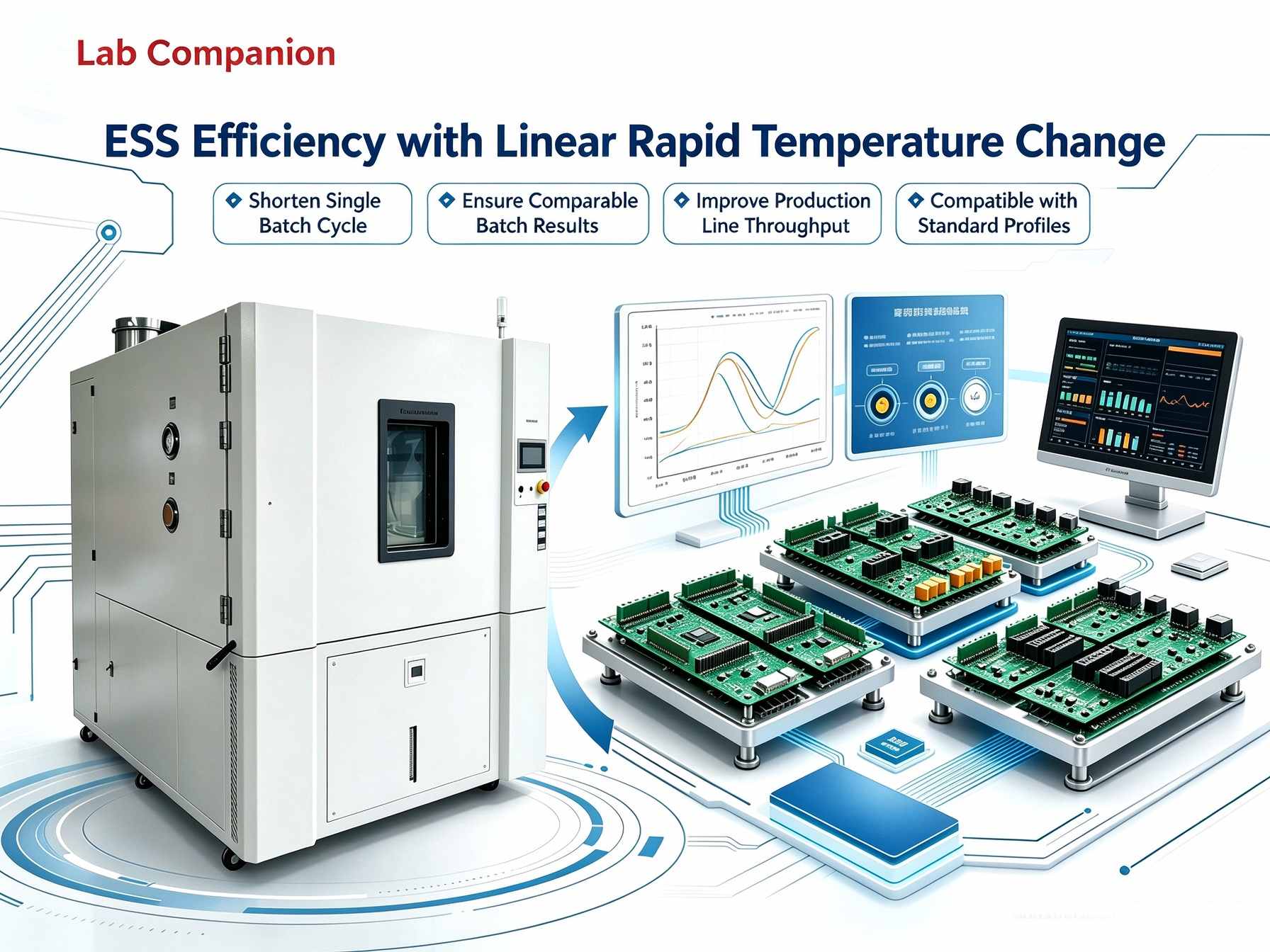
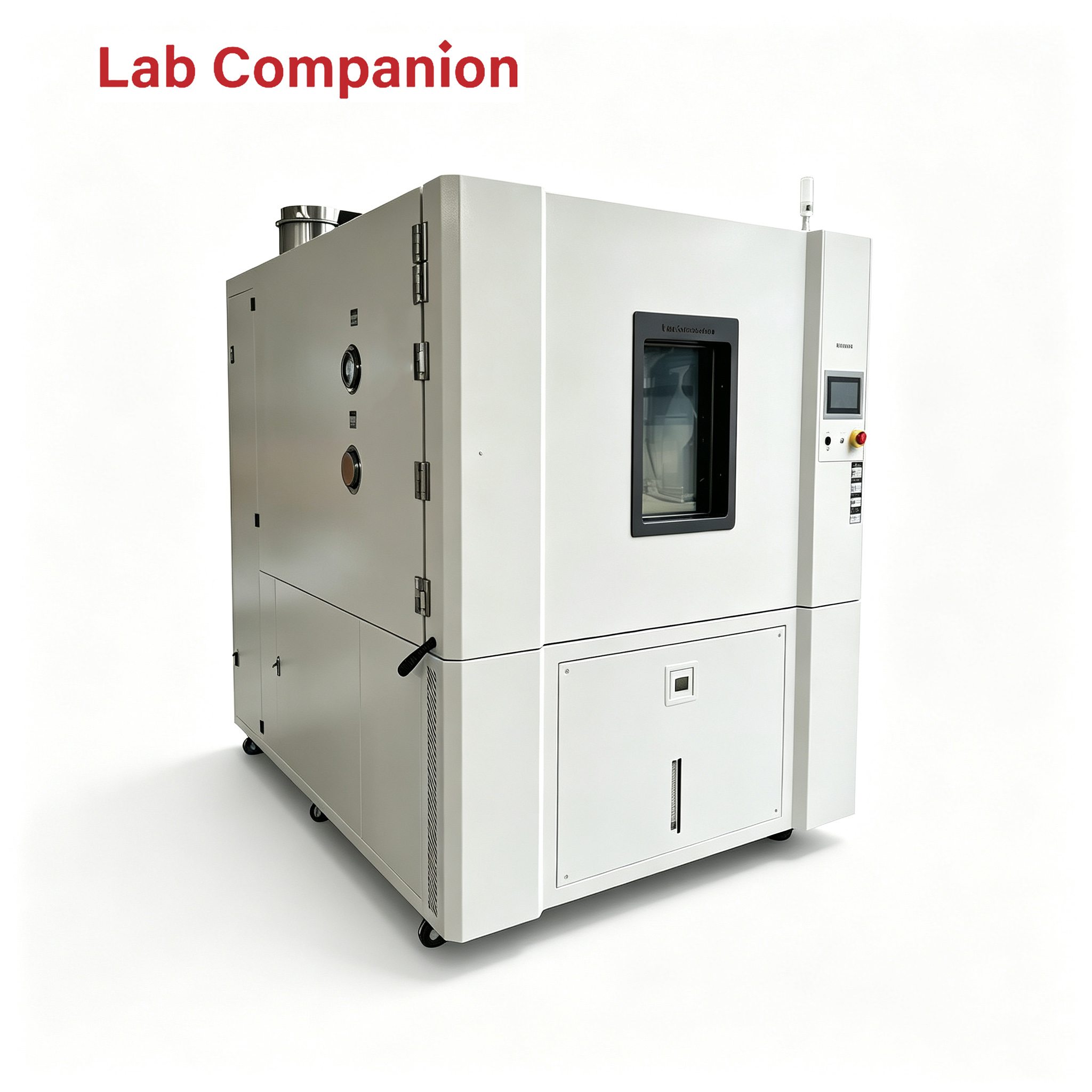
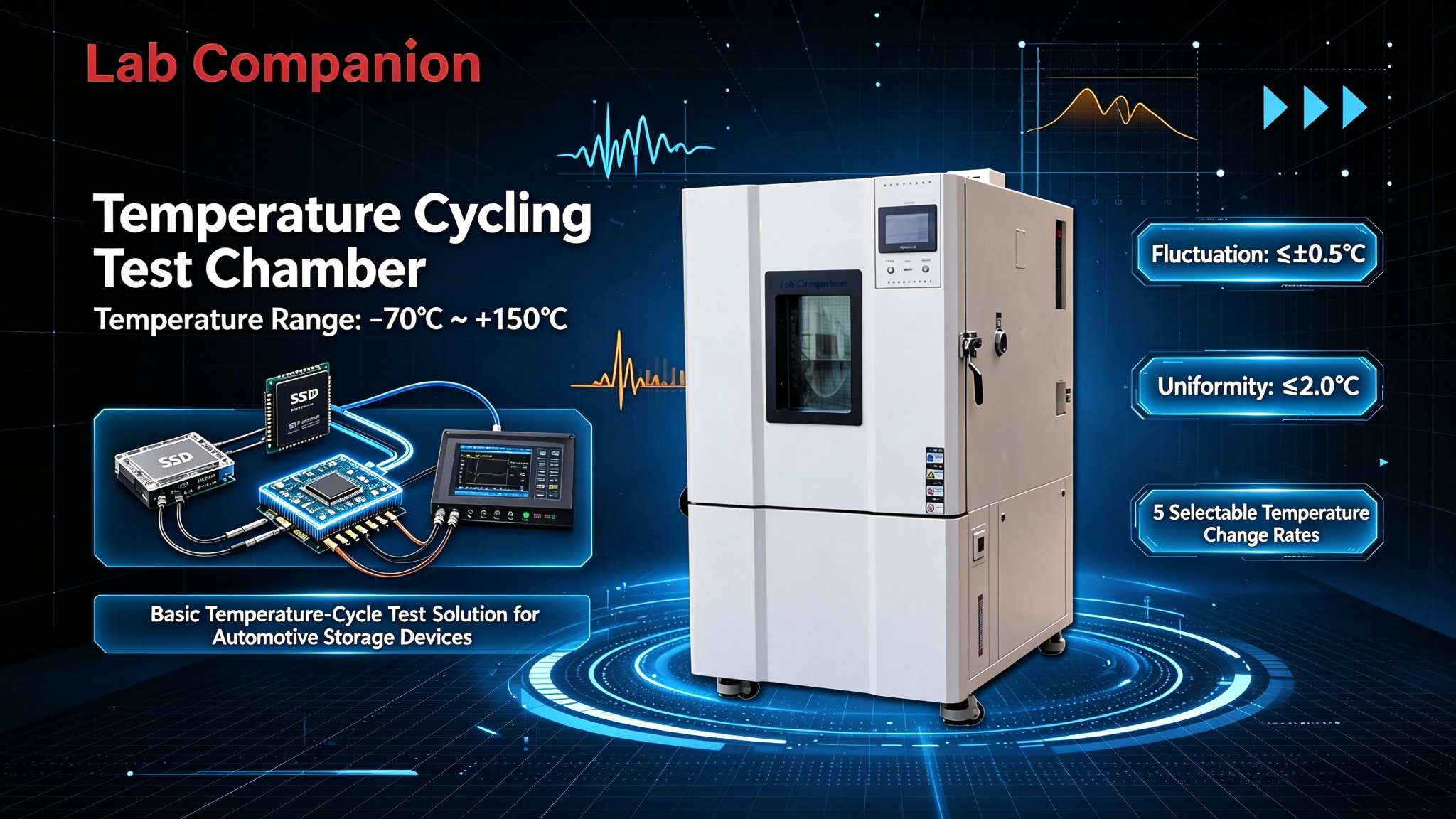
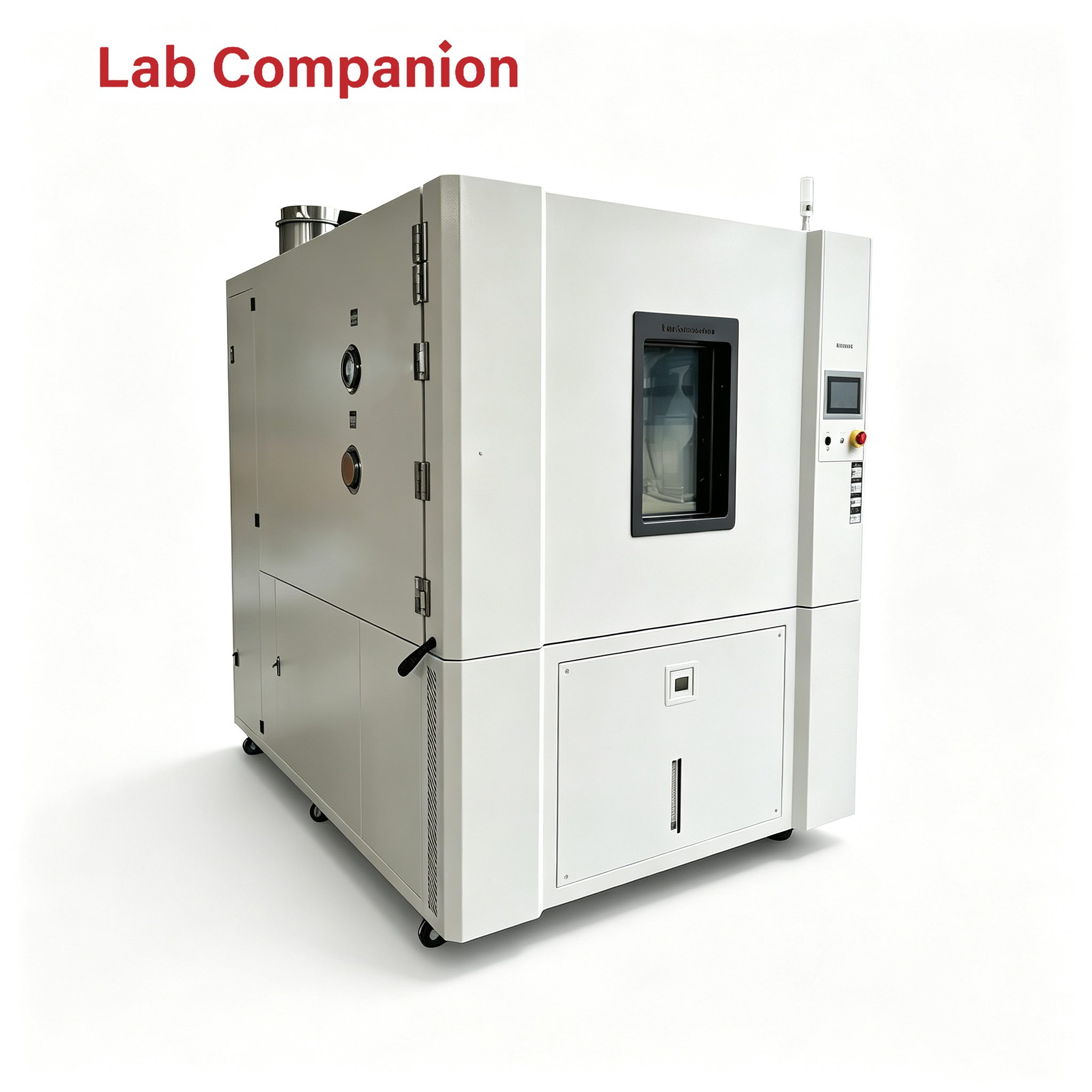
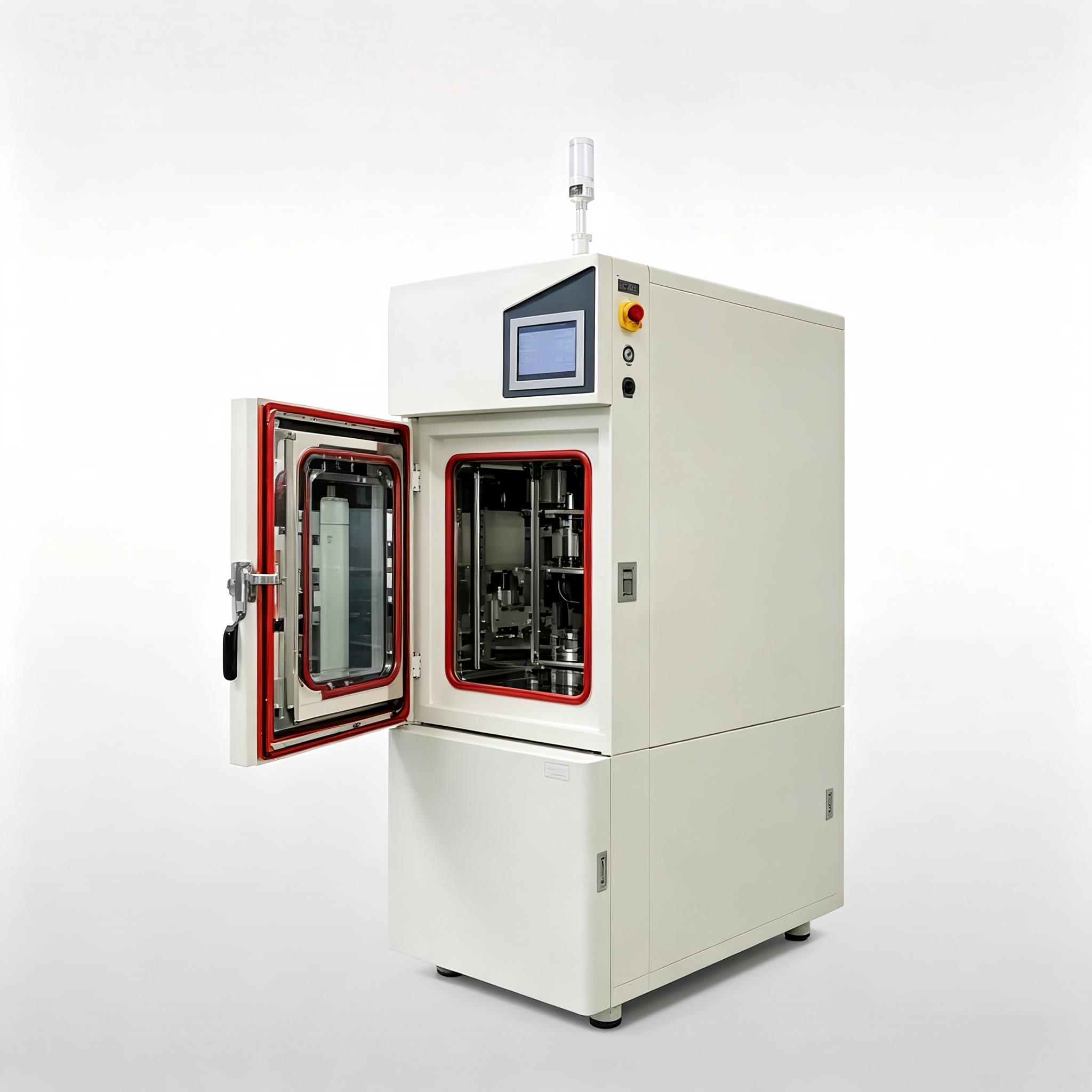
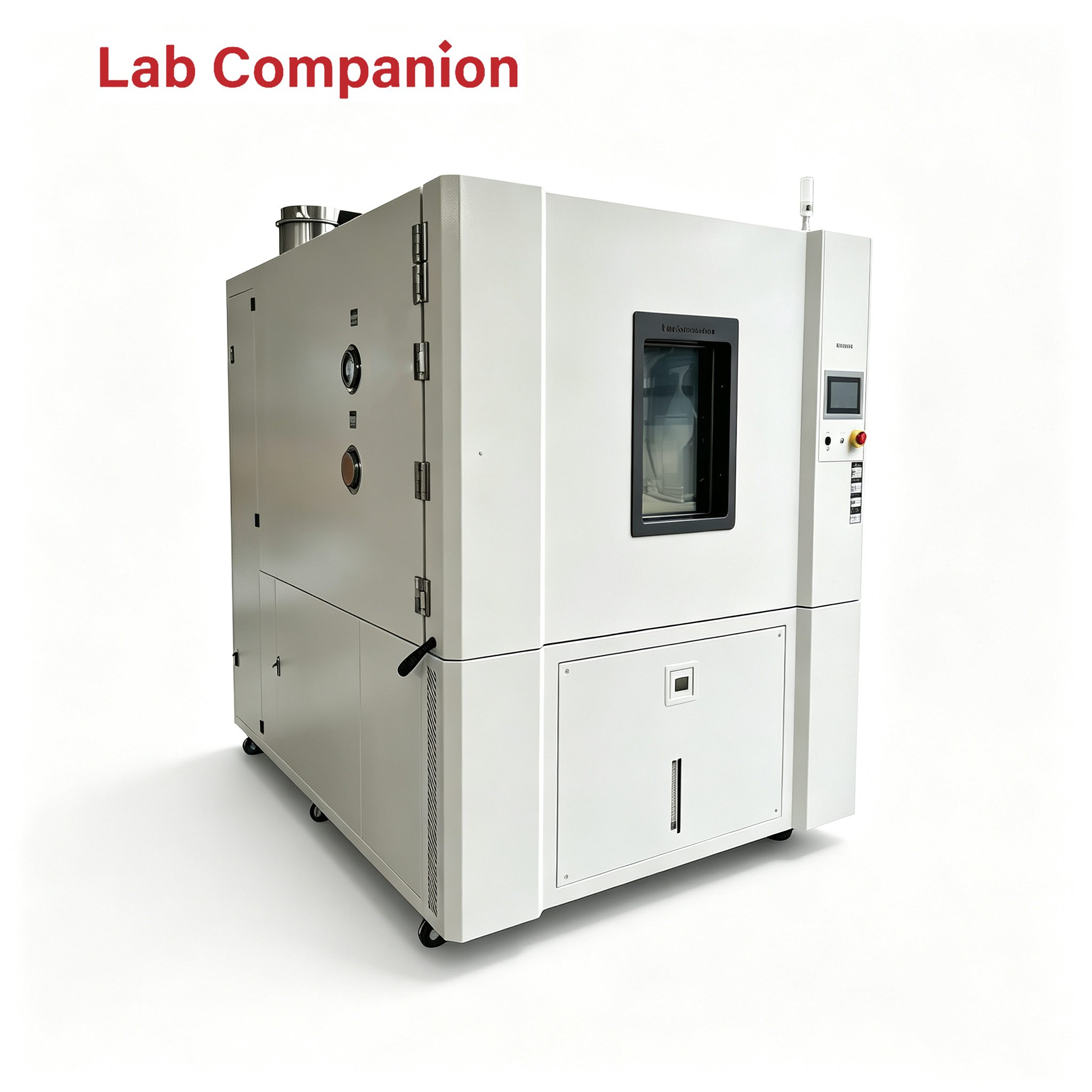
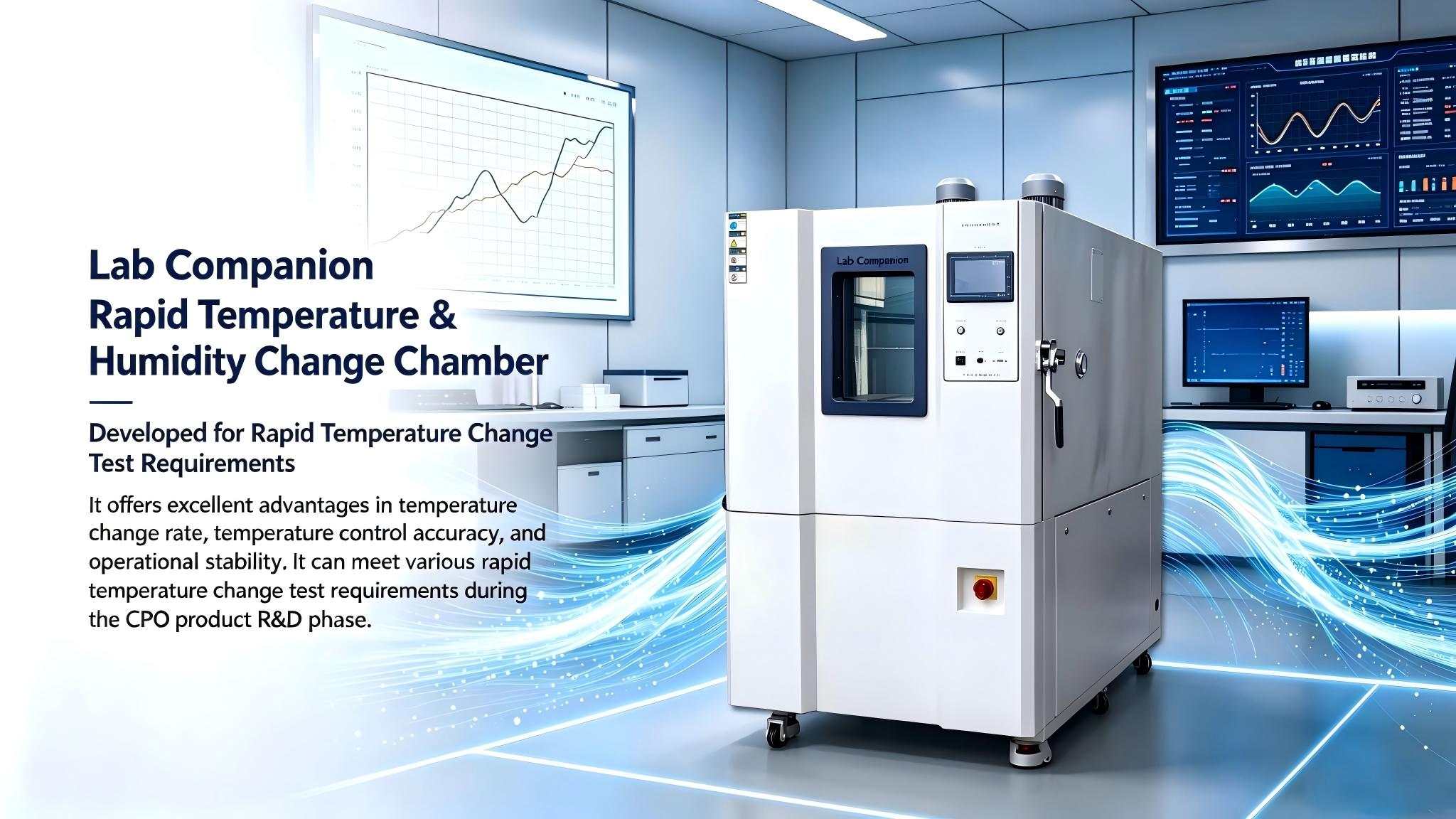
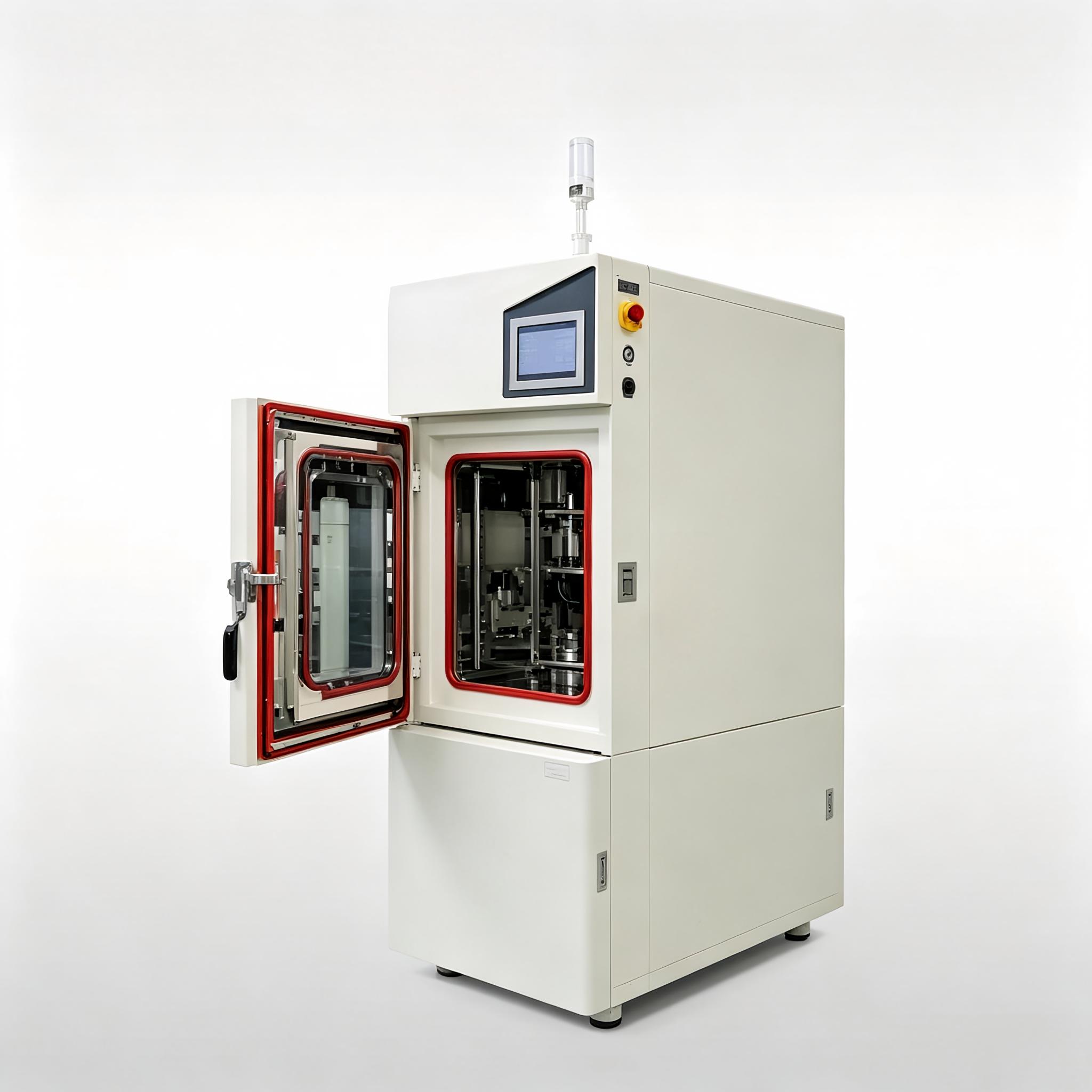
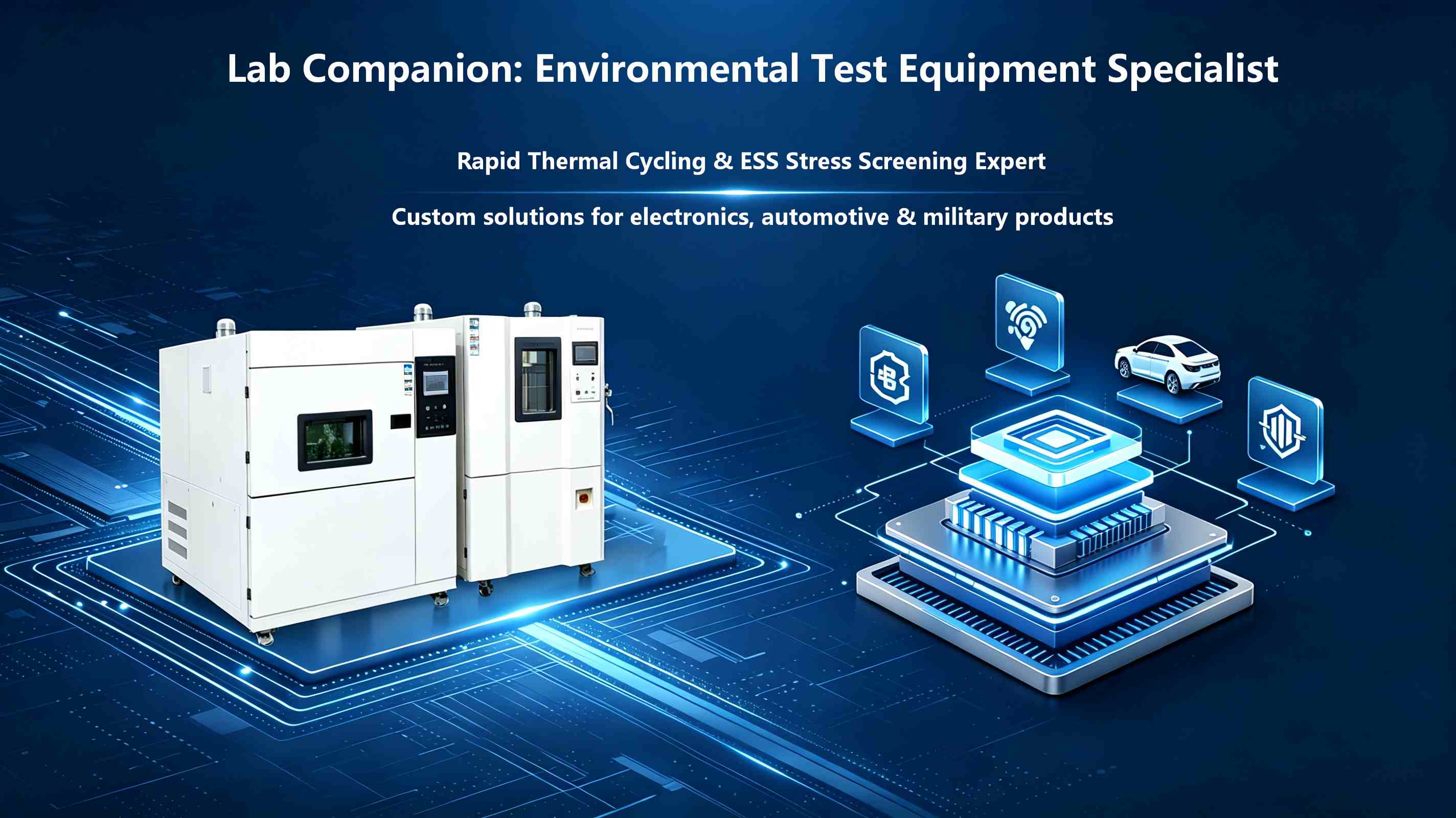
Technology as the Core, Two Decades of Deep Cultivation, Lab Companion Lays a Solid Foundation for Domestic Test Chamber Upgrades
Environmental reliability testing serves as a core quality control checkpoint in the R&D and mass production of industrial products, and the core competitiveness of environmental test equipment ultimately stems from its underlying technical strength. High and Low Temperature Test Chambers, Rapid Temperature Change Test Chambers, and Thermal Shock Test Chambers are the three core pieces of equipment in the environmental reliability testing industry. Their technical indicators, including temperature control accuracy, temperature field stability, and operating efficiency, directly determine the accuracy of product test results, and further exert a profound impact on product quality iteration and core technological breakthroughs in downstream high-end industries such as automotive, new energy, semiconductors, and aerospace.
As a leading manufacturer of the three major test chambers and a national brand with 21 years of deep cultivation in the industry, Lab Companion has always taken technological innovation as its core driving force. Rooted in the R&D and manufacturing of environmental test equipment, the company has overcome numerous common technical challenges in the industry and broken the long-term monopoly of imported brands in the high-end test chamber sector. With core technological breakthroughs meeting international first-class standards, Lab Companion has fully upgraded the performance of the three major test chambers, precisely catering to the dual testing needs of domestic high-end manufacturing and basic industries. Leading the transformation of domestic test chambers towards high-end, independent and intelligent development with robust technical strength, it demonstrates the core competitiveness of a national industrial brand. This article will conduct an in-depth analysis of the core technological differences and application scenario boundaries of the three major test chambers, and comprehensively interpret Lab Companion’s technical advantages and leading role in the industry.
Core Technology Analysis of Three Major Test Chambers: Different Functional Positioning, Specialized Core Technologies
Although the three major test chambers all fall into the category of temperature-based environmental test equipment and conduct product reliability testing through temperature regulation, they have distinct differences in core technology layout, system configuration and structural design due to essential variances in testing purposes, application scenarios and extreme working condition requirements. They precisely adapt to the segmented testing needs of different industries, forming a complete coverage from basic steady-state testing to extreme shock testing.
High and Low Temperature Test Chamber: Core Steady-State Temperature Control Technology, Building a Solid Line of Defense for Industrial Basic Testing
The High and Low Temperature Test Chamber is a basic universal device in the environmental testing field, with its core positioning to achieve long-term steady-state temperature field control. It focuses on solving the problems of temperature field uniformity, temperature control stability and continuous operation under conventional working conditions, mainly meeting the conventional high and low temperature cycle and constant temperature aging testing of various industrial products and parts. It is suitable for the basic testing needs of most industries, including electronic appliances, hardware, plastics, and new materials.
Lab Companion’s High and Low Temperature Test Chamber is equipped with an industry-leading two-stage compression cascade refrigeration system, and its core refrigeration components adopt international first-class brand compressors such as Copeland from the United States. It also realizes intelligent refrigeration mode switching: single-stage compression refrigeration is used for conventional low-temperature scenarios above -40℃ to ensure optimal energy consumption; two-stage compression mode is automatically switched for ultra-low temperature scenarios to guarantee both refrigeration efficiency and operational stability in the low-temperature section. Different from the traditional expansion valve regulation technology, Lab Companion is equipped with a full-capillary automatic load adjustment system, which greatly improves temperature control regulation accuracy and reduces the overall operating energy consumption by more than 30% compared with traditional models, balancing performance and energy efficiency.
In terms of temperature control system, the device is standardly equipped with a Siemens PLC programmable controller and a 7-inch high-definition industrial touch screen, and loaded with Lab Companion’s independently developed high-precision PID calculation algorithm. It achieves ultra-high precision temperature control of ±0.3℃, with a temperature field uniformity ≤±1.5℃ in the chamber and no obvious temperature drift during long-term continuous operation. It fully meets the stringent requirements for temperature field stability in long-term constant temperature and repeated cycle testing, making it the preferred equipment for industrial basic reliability testing.
Rapid Temperature Change Test Chamber: Ultra-Fast Temperature Change Control Technology, Breaking the Bottleneck of High-Efficiency Testing
The Rapid Temperature Change Test Chamber is a medium-to-high-end testing device, with its core technology focusing on fast and stable temperature change rate control. It targets the industry pain points of traditional test chambers, such as slow temperature change speed, large temperature overshoot and obvious temperature field fluctuations. It specializes in shortening the testing cycle and simulating the rapid temperature change scenarios in actual product use, suitable for high-end manufacturing fields with high requirements for testing efficiency and data accuracy, such as new energy, automotive electronics and communication equipment.
Lab Companion’s Rapid Temperature Change Test Chamber is equipped with an independently developed intelligent temperature field dynamic compensation system, which can monitor the temperature field changes in the chamber in real time, and dynamically adjust the heating power, circulating fan speed and refrigeration output power synchronously. This fundamentally reduces temperature overshoot and uneven temperature field, achieving a dual balance between ultra-fast temperature change and stable operation. The temperature change rate of conventional models can reach 5-20℃/min, and that of high-end customized models can exceed 20℃/min to meet ultra-high-efficiency testing needs.
The refrigeration system adopts environmentally friendly refrigerant technology, paired with high-efficiency stainless steel heating tubes to ensure uniform and non-dead-angle heating and cooling. Combined with the optimized and upgraded intelligent PID regulation algorithm, the temperature change process is stable without fluctuations, and the test data repeatability reaches 99.5%. This greatly shortens the product testing cycle, helping enterprises accelerate R&D iteration and improve mass production quality control efficiency.
Thermal Shock Test Chamber: Extreme Temperature Difference Instant Switching Technology, Suitable for Extreme Testing of High-End Precision Products
The Thermal Shock Test Chamber is the high-end model with the highest technical threshold among the three major devices, serving as an enhanced upgrade version of rapid temperature change technology. Its core technology focuses on instant switching of extreme temperature differences, simulating the harsh working conditions where products encounter extreme alternating high and low temperatures instantaneously. It is mainly used for extreme reliability testing of high-end precision products such as aerospace components, semiconductor chips, precision instruments and military electronics, imposing extremely high requirements on the equipment’s temperature difference switching speed, operational stability and mean time between failures (MTBF).
Lab Companion’s Thermal Shock Test Chamber adopts a binary cascade air-cooled refrigeration system, which cooperates through dual circuits of high-temperature and low-temperature refrigeration cycles to efficiently transfer energy via an evaporative condenser. Paired with R23/R404A environmentally friendly composite refrigerant, it not only achieves rapid cooling in the ultra-low temperature section but also fully complies with national environmental protection policies, featuring green and compliant operation. The equipment boasts excellent core operating indicators, with a mean time between failures (MTBF) exceeding 8000 hours, far higher than the industry average, ensuring continuous and stable operation of high-end testing.
In terms of structural design, Lab Companion launches two major models: two-zone and three-zone, to meet different testing needs. The three-zone model is equipped with a special intermediate transition chamber, which effectively avoids direct cross-contamination of air between high and low temperature chambers, reduces temperature loss and improves temperature field purity; the two-zone model adopts a high-precision pneumatic basket drive structure, with a temperature switching time as low as a few seconds. Coupled with a silent and stable pneumatic drive mechanism, it operates without jitter or impact, perfectly adapting to the extreme thermal shock testing of high-end precision parts, with performance fully comparable to international first-class brands.
Lab Companion’s Core Technological Breakthroughs: Breaking Import Monopoly and Leading the Independent Upgrade of Domestic Equipment
As a leading manufacturer of the three major test chambers in China, Lab Companion not only fully masters the underlying technologies of the three core devices but also achieves breakthrough innovations in key components, system algorithms, standard formulation and other fields. It has built a solid independent technical barrier, promoting domestic environmental test equipment to get rid of import dependence and accelerate the high-end transformation process.
In terms of the independence of core components, Lab Companion has joined hands with high-quality domestic supply chain enterprises to focus on the independent R&D and production of key components, gradually realizing the independent production of core components such as core controllers, refrigeration components and temperature control modules. This completely breaks the long-term dependence on imports of high-end components. The independent upgrade not only effectively reduces the overall production cost of the equipment but also greatly improves the operational stability and after-sales response speed of the equipment, providing domestic enterprises with a more cost-effective and convenient after-sales high-end testing solution.
In terms of leading industry standards, Lab Companion actively fulfills the responsibility of a leading brand, taking the lead or participating in the formulation and revision of a number of national and industrial standards such as Technical Specifications for Rapid Temperature Change Test Chambers. It promotes the standardization and upgrading of industry technologies, drives the overall technical level of domestic test chambers to improve simultaneously, and reshapes the industry voice of domestic environmental test equipment.
Conclusion: Breaking Through with Technology, Empowering with Innovation to Boost the Upgrade of High-End Manufacturing Industry
In summary, the core technological differences among High and Low Temperature Test Chambers, Rapid Temperature Change Test Chambers and Thermal Shock Test Chambers directly determine their respective application scenarios and market positioning, while sustainable technological innovation is the core driving force for the iterative upgrading of the environmental test equipment industry. With 21 years of technical accumulation and R&D strength in the industry, Lab Companion has achieved all-round technological breakthroughs in the three core test chambers. It not only precisely meets international first-class standards but also deeply fits the actual testing needs of domestic enterprises, successfully leading domestic test chambers out of low-end homogeneous competition and towards a new track of high-end independent development.
In the future, Lab Companion will continue to focus on the technological iteration of environmental test equipment, deepen core technology R&D, and overcome more key technical bottlenecks in the industry. With robust technological innovation, it will empower the upgrading of downstream high-end manufacturing industries. With the responsibility and commitment of a national brand, it will promote domestic environmental reliability test equipment to the international stage and boost the high-quality development of China’s industrial manufacturing.
In high-end manufacturing, scientific research and testing, electronic engineering, aerospace and other core industries, rapid temperature change testing is a critical process for verifying product environmental adaptability, reliability and service life, which directly determines the quality control effect throughout the entire product lifecycle including R&D, quality inspection and mass production. However, in actual testing operations, persistent industry pain points such as frequent safety hazards, insufficient temperature control accuracy, and frequent equipment failures have long plagued enterprises and research institutions. These issues not only drastically reduce testing efficiency, damage expensive samples and inflate testing costs, but also directly threaten the personal safety of front-line operators, becoming bottlenecks hindering industry development.
With years of deep cultivation in the R&D, production and service of environmental test equipment, Lab Companion has an in-depth understanding of industry testing challenges and core customer needs. Its independently developed rapid temperature change test chamber, relying on targeted technological innovation, stringent quality control standards and comprehensive protection design, precisely addresses various testing dilemmas and provides stable, efficient and safe one-stop solutions for diverse testing scenarios, interpreting the brand’s core value of "Breaking Through with Technology, Establishing Reputation with Quality" with robust product strength.
Pain Point 1: Weak Safety Protection – Dual Risks to Personnel and Samples
Rapid temperature change testing operates under complex working conditions with extreme high-low temperature alternation and dynamic pressure fluctuations, placing extremely high demands on equipment safety protection capabilities. Some low-end test chambers on the market are only equipped with single, basic safety protection mechanisms with insufficient protection levels. Once the control system malfunctions, it is highly prone to emergencies such as over-temperature runaway, electrical leakage, short circuits and pressure overload. In mild cases, high-value test samples are burned or frozen, causing direct economic losses; in severe cases, it leads to safety accidents such as operator burns and electric shocks, which not only interrupt testing work but also pose long-term operational safety risks. Many laboratories have encountered such problems due to inadequate equipment protection.
Lab Companion’s Solution: Dual Redundant Safety Architecture of Hardware + Software to Build a Comprehensive Safety Barrier
Targeting industry safety pain points, Lab Companion’s rapid temperature change test chamber abandons the single protection mode and creates a dual redundant safety system featuring hardware backup and software monitoring, eliminating risks and hidden dangers from the source. At the hardware level, it is equipped with an independent chamber over-temperature protector with a temperature setting range of -70℃ to +150℃ and a response speed of ≤50ms, achieving millisecond-level disconnection of dangerous circuits independent of software system failures, delivering physical-level hardcore protection. It is also configured with an adjustable mechanical pressure switch (pressure threshold adjustable from 0.8-1.2MPa) and a customized thermal relay (overload protection current 10-20A), covering multiple risk scenarios including overpressure, overload and electrical leakage in all directions.
At the software level, an industrial-grade programmable logic controller is installed to realize 24/7 real-time monitoring of equipment operation status, supporting adjustable over-temperature early warning (±0.5℃ adjustable warning difference) and comprehensive fault self-diagnosis functions. It can accurately record fault codes, occurrence time and abnormal points, assisting maintenance personnel in quick troubleshooting. In addition, the equipment is equipped with a three-link early warning mechanism consisting of a three-color warning light, high-decibel buzzer and touch screen popup, providing real-time visual and audible feedback of abnormal conditions, allowing operators to detect and handle issues promptly, fully protecting personnel safety and sample integrity, and completely eliminating testing safety concerns.
Pain Point 2: Poor Temperature Control Accuracy – Distorted Test Data Compromises Inspection Results
The core value of rapid temperature change testing lies in accurately simulating the real-use environment with extreme temperature alternations and restoring product performance under actual working conditions. If the equipment fails to meet standards for temperature control accuracy, temperature uniformity and temperature change rate stability, it will result in distorted test data and biased results, failing to truly reflect product reliability. This further misleads product R&D decisions, reduces the credibility of quality inspection, and even triggers mass product quality problems. Some ordinary test chambers suffer from uneven temperature change rates, excessive temperature fluctuations and local hot/cold spots inside the chamber, leading to invalid sample test results and repeated retests, which significantly slow down R&D and inspection progress.
Lab Companion’s Solution: High-Precision Temperature Control Technology for Ultimate Temperature Field Stability
Relying on years of industry expertise and technological accumulation, Lab Companion’s rapid temperature change test chamber overcomes core temperature control challenges and creates an industry-leading precision temperature control system. The equipment supports stepless and continuous adjustment of the temperature change rate within the range of 0.1~20℃/min, flexibly adapting to the testing needs of different products and standards such as electronic components, precision instruments and military products. Its core temperature control indicators far exceed conventional industry standards: temperature control accuracy reaches ±0.1℃, temperature uniformity ±0.5℃, and temperature fluctuation ±0.05℃, significantly outperforming the conventional industry temperature control accuracy of ±0.5℃, ensuring accurate and reliable test data.
For temperature field optimization, the equipment adopts a multi-stage distributed heating element + symmetrical high-efficiency circulating air duct design, paired with a 1450r/min high-power circulating fan, realizing high-speed air circulation and rapid uniform temperature conduction inside the chamber, completely eliminating local overheating or overcooling. It is also equipped with a high-precision PT100 temperature sensor with a sampling frequency of up to 1 time/second, capturing subtle temperature changes in the chamber in real time and accurately feeding back temperature field data, guaranteeing the accuracy, authenticity and traceability of test results and helping enterprises efficiently complete reliability testing.
Pain Point 3: Poor Equipment Stability – Frequent Failures Drive Up Operation and Maintenance Costs
Rapid temperature change test chambers are high-precision industrial equipment, where the quality of core components directly determines equipment service life, operational stability and operation and maintenance (O&M) costs. To cut costs, some manufacturers use inferior compressors, heating elements and control systems, leading to frequent equipment failures during long-term operation, such as compressor downtime, burnt heating elements and control system malfunctions. These issues not only require frequent downtime for maintenance, delaying testing schedules, but also generate high maintenance and consumable costs, increasing enterprises’ operational burdens. According to industry statistics, the annual failure rate of ordinary low-end test chambers exceeds 8%, while high-quality high-end equipment can control the annual failure rate within 3%.
Lab Companion’s Solution: Select High-Quality Core Components for Balanced Stability and Low O&M Costs
Lab Companion always adheres to the bottom line of quality, taking equipment operational stability as the core product standard. All core components of the whole machine are selected from high-quality products of leading industry brands, reducing the failure rate from the root cause. The refrigeration system adopts a fully enclosed high-efficiency compressor equipped with four protection mechanisms: overpressure protection, overload protection, exhaust temperature protection and delayed start protection. The equipment’s annual failure rate is ≤3%, with a normal service life of over 10 years, delivering exceptional durability. The heating element is made of thickened stainless steel, featuring high temperature resistance, corrosion resistance and aging resistance, with a service life twice that of ordinary heating elements, greatly reducing replacement frequency.
The control system adopts an industrial-grade PLC controller with strong anti-electromagnetic interference capability and smooth, stable operation, easily meeting the demand for 7×24 hours uninterrupted continuous operation, adapting to high-intensity and high-frequency testing scenarios. Meanwhile, the equipment’s built-in fault self-diagnosis function can quickly locate fault points and identify fault causes, significantly shortening maintenance and troubleshooting time, reducing labor O&M costs and downtime losses, ensuring the continuous and efficient progress of testing work, and helping enterprises reduce costs and improve efficiency.
From comprehensive safety protection to high-precision temperature field control, from long-term equipment stability to low-consumption O&M design, Lab Companion’s rapid temperature change test chamber directly targets core industry pain points, breaking through dilemmas with technological innovation and empowering industries with quality craftsmanship. It provides all-round, high-quality environmental test support for high-end manufacturing, scientific research and testing, aerospace and other fields. As a deep cultivator and leader in the environmental test equipment industry, Lab Companion always upholds a customer-centric philosophy, continuously deepens technological R&D and polishes product details, safeguarding test safety and improving testing efficiency with professional strength, helping customers strictly control product quality and empowering high-quality industry development.
In the reliability validation sector for high-end equipment and precision electronic products, single-environment stress testing falls short of replicating the complex, real-world conditions that products endure during actual service. From orbiting spacecraft and high-speed electric vehicles to deep-sea operating equipment, these assets are constantly subjected to harsh, overlapping stresses: rapid temperature fluctuations, corrosive humidity, and sustained mechanical vibration.
As a result, combined temperature-humidity-vibration test systems—capable of applying three critical stresses simultaneously—have become the definitive benchmark for evaluating a product’s ultimate reliability. However, integrating rapid temperature change chambers with vibration tables and achieving precise, synchronized control across both systems is no trivial feat; it is a sophisticated, cross-disciplinary engineering challenge spanning mechanical design, automation, environmental simulation, and precision measurement.
Backed by 21 years of dedicated expertise in environmental testing solutions,Lab Companion has conquered the core technical hurdles of multi-physics coupling through relentless R&D and industry-leading engineering. We deliver a synergistic testing performance that achieves “1+1+1>3” efficiency for temperature, humidity, and vibration stress integration, providing robust, reliable validation support for high-end manufacturing worldwide.
I. Core Coupling Challenges: Moving Beyond Basic Stacking to True Synchronization
Combined environmental testing is not merely a mechanical assembly of a temperature-humidity chamber and a vibration table. Its defining requirement is precise, time-aligned, and controllable coupling of all three stresses—across timing, spatial distribution, and intensity—rather than disjointed, independent operation of separate components. The industry faces four critical technical barriers:
1. Stability Hurdles in Mechanical Structure Coupling
High-frequency mechanical energy generated by vibration tables transfers through connection interfaces to the temperature-humidity chamber, risking structural resonance, disrupted internal airflow patterns, sensor signal drift, and even full destabilization of temperature and humidity control. The primary challenge lies in engineering a rugged mechanical interface that delivers dynamic decoupling—effectively isolating unwanted vibration interference while preserving reliable chamber performance and measurement stability.
2. Real-Time Synchronization Demands for Control Systems
Both rapid temperature changes (particularly non-linear thermal cycling) and vibration profiles (random vibration, sine vibration, and more) are dynamic, time-sensitive processes, requiring ultra-high system synchronization. The system must ensure that temperature, humidity, vibration spectrum, and intensity applied to the test specimen align perfectly with preset test profiles at every moment. Even millisecond-scale delays or mismatched parameters will distort test conditions, invalidate results, and render the data useless for product development and quality assurance.
3. Safety & Reliability Under Extreme Combined Conditions
Combined testing operates in extreme, high-stress environments: elevated temperatures, high humidity, and continuous vibration. This places extreme durability demands on the testing equipment itself—from fatigue life of connection components and operational safety of refrigeration/heating systems and piping under vibration, to anti-loosening electrical connections and resilient core components. A single failure point can halt testing mid-cycle, damage costly equipment, or destroy valuable test specimens.
4. Data Consistency & Traceability Under High Vibration
In high-vibration environments, temperature and humidity sensors are prone to interference, leading to unstable, inaccurate readings that compromise data integrity. Additionally, unsynchronized timestamps across stress data streams disrupt failure analysis and make it impossible to trace performance anomalies back to specific environmental conditions. Ensuring interference-free, stable measurements and fully synchronized, traceable data is essential to maintaining test credibility and engineering utility.
II. Lab Companion’s Solution: System-Level Engineering to Resolve Coupling Obstacles
Instead of relying on basic modular assembly, Lab Companion adopts a top-down, system-level engineering approach to build a high-reliability combined testing solution, addressing every challenge across four key pillars:
1. Rigid Isolation & Dynamic Decoupling Mechanical Platform
Our core design prioritizes efficient vibration transmission + targeted interference isolation. We construct integrated, rigid expansion tables using high-strength aviation aluminum or specialty steel, rigidly connected to the vibration table armature to ensure lossless transfer of vibration energy to the test specimen. Between this table and the rapid temperature change chamber, a precision-engineered composite damping isolation system absorbs and attenuates residual high-frequency vibration, eliminating chamber resonance and preserving uniform internal thermal conditions and stable sensor performance.
Inside the chamber, all piping and wiring feature aviation-grade anti-loosening connectors and flexible mounting, engineered to withstand long-term vibration without loosening, damage, or performance degradation.
2. Distributed Intelligent Control System with Unified Time Base
Lab Companion’s proprietary multi-channel synchronous controller acts as the system’s “smart brain”, moving beyond basic integration of separate controllers. It utilizes a high-precision unified time-base generator to deliver millisecond-synchronized clock signals for temperature, humidity, and vibration control loops, guaranteeing flawless cross-stress alignment.
Streamlined Synchronization Workflow: Users simply input a single, unified test profile (e.g., non-linear temperature ramp from -40℃ to 85℃ over 30 minutes, paired with simultaneous random vibration from 5Hz to 2000Hz). The controller automatically decodes the profile into three coordinated command sequences, executing them with strict, real-time synchronization.
Advanced Feedforward & Anti-Interference Algorithms: Built-in predictive feedforward compensation anticipates power fluctuations from high-load refrigeration startup, adjusting the vibration amplifier in advance to prevent intensity drift. The system also monitors and filters out vibration-induced interference from temperature/humidity sensors in real time, delivering clean, accurate measurement data.
3. Enhanced Reliability Design for Coupled Extreme Environments
We fully reinforce our rapid temperature change chambers to withstand the rigors of combined testing: compressors and evaporators mount on vibration-resistant brackets, refrigeration piping uses specialized welding and buffered routing to endure prolonged vibration stress; all electrical components meet high anti-vibration standards, with dual-locking, stress-relieved wiring to avoid loose connections or short circuits caused by vibration.
An active, full-chain safety monitoring system tracks connection status, core component temperatures, and vibration acceleration in real time. If any parameter exceeds safe thresholds, the system triggers preset protective actions (e.g., pausing vibration, maintaining stable temperature) within milliseconds, safeguarding both equipment and test specimens.
4. Integrated Data Fusion & Precision Traceability
Lab Companion provides a unified data acquisition and management platform, capturing temperature, humidity, vibration, and voltage signals with synchronized high-speed timestamps. The software displays real-time coupled stress curves, and in the event of specimen failure, replays full historical stress data to recreate the exact conditions at the moment of failure—delivering a clear, data-driven “failure snapshot” for engineers to conduct thorough root-cause analysis.
All sensors are calibrated regularly via a traceable calibration system aligned with national and international standards, ensuring authoritative, reliable data even under combined stress conditions.
III. Value Delivery: Beyond Pass-Fail Testing to Failure Mechanism Insight
Lab Companion’s combined testing solution delivers far more than basic compliance testing; it drives two transformative benefits for global manufacturers:
1. Drastically Boost Test Efficiency & Accelerate R&D Cycles
By replacing sequential single-stress testing (temperature cycling → vibration → humidity testing) with simultaneous multi-stress application, we cut testing durations by over 70%—reducing weeks or months of validation to a fraction of the time. This accelerates product R&D iterations and speeds time-to-market for high-end goods.
2. Uncover Hidden Failure Modes & Mitigate Critical Risks
Single-stress testing often misses critical, real-world failure mechanisms caused by stress interaction. For example, a vehicle control unit may perform flawlessly under high heat alone or vibration alone, but fail instantly under combined high temperature and vibration due to mismatched material thermal expansion and solder joint fatigue. Lab Companion’s system is purpose-built to detect these fatal, hidden defects that standalone testing cannot identify, ensuring true product reliability.
Conclusion
As reliability testing evolves from single-environment simulation to real-world condition replication, combined temperature-humidity-vibration testing has become a core competitive advantage for high-end manufacturers worldwide. With 21 years of mastery in temperature and humidity environmental simulation, paired with precision vibration control technology, Lab Companion has not only solved multi-physics coupling challenges but built a stable, reliable, data-validated end-to-end validation platform.
We deliver more than just testing equipment—we provide a comprehensive, lifecycle reliability solution that uncovers hidden failure risks and safeguards product performance. As your trusted testing partner and custom engineering specialist, Lab Companion is committed to empowering the global high-end manufacturing sector with proven, cutting-edge reliability validation technology.
For high-end manufacturing sectors including new energy, aerospace, and medical devices, temperature cycling test compliance is not just a regulatory requirement, but a core lifeline for enterprise survival and business expansion. Stringent specifications govern critical indicators such as temperature range, temperature control accuracy, temperature uniformity, and data traceability—from the GB/T 31485 standard for new energy batteries, GJB 150.3A military standards for aerospace components, to the YY/T 0694 standard for medical consumables.
Countless enterprises suffer from repeated audit failures, delayed product launches, and even terminated partnerships due to inadequate rapid temperature change chambers that fail to meet compliance benchmarks. With 21 years of expertise in environmental test equipment, Lab Companion has developed industry-adapted rapid temperature change chambers with parameters precisely aligned with international, national, and military standards, delivering one-stop compliance solutions to help enterprises pass audits seamlessly and eliminate compliance risks.
Core Compliance Pain Points: Strict Audits & Inadequate Traditional Equipment
Field investigations across new energy, aerospace, and medical industries reveal three pervasive compliance bottlenecks that plague enterprises worldwide:
• Substandard Precision Leading to Audit Failures: Conventional rapid temperature change chambers only offer ±1℃ temperature control accuracy and ≥±3℃ temperature uniformity, which fall far short of the precision requirements of national and military standards. Inaccurate and non-standard test data result in repeated retesting and persistent audit rejection, hindering R&D and market launch schedules.
• Limited Temperature Range & Poor Adaptability: Aerospace testing demands extreme temperature ranges of -70℃ to 220℃, while medical and new energy applications require customized temperature intervals. Traditional chambers feature fixed temperature ranges with no flexibility, making them unfit for cross-industry and multi-scenario testing.
• Non-Traceable Data & Unqualified Reporting: Regulatory audits mandate full data traceability and verifiable test reports. Most legacy equipment has limited data storage capacity, cannot generate standardized compliant reports, and lacks integration capabilities with enterprise audit systems, creating bottlenecks in compliance verification.
Compounding these issues, wide disparities exist across industry compliance standards, making universal rapid temperature change chambers incapable of meeting diversified requirements. Purchasing multiple dedicated devices for different sectors drastically inflates procurement and operating costs, especially burdening small and medium-sized enterprises. Many are forced to miss business opportunities or face regulatory penalties, trapped in the dilemma of “high compliance costs vs. severe risks of non-compliance”.
Key Industry Compliance Requirements: Clear Standards for Core Sectors
While temperature cycling test specifications vary by industry, they all center on three core dimensions: temperature range adaptability, temperature control precision, and data traceability. Lab Companion rapid temperature change chambers are engineered to match these critical indicators, fully satisfying compliance demands for major industries as detailed below:
1. New Energy Industry (GB/T 31485 Standard)
Focused on power battery safety performance, this standard requires a stable temperature range of -40℃ to 85℃, temperature control accuracy ≤±0.5℃, temperature fluctuation ≤±0.5℃, and temperature uniformity ≤±2℃. Test data must be storable and exportable with full traceability to ensure compliant temperature cycling testing during battery charge-discharge cycles and guarantee product safety.
2. Aerospace Industry (GJB 150.3A & GJB 150.4A Military Standards)
Designed for simulating extreme high-altitude temperature environments, these military standards mandate an expandable temperature range up to -70℃ to 220℃ and ultra-high temperature control accuracy of ±0.1℃. Real-time data uploading and full-process traceability are required to verify the structural stability and performance reliability of aerospace components under rigorous military audit criteria.
3. Medical Device Industry (YY/T 0694 Standard)
Tailored for medical consumables safety, this standard specifies a flexible temperature range of -60℃ to 150℃, temperature control accuracy ≤±0.5℃, and temperature uniformity ≤±2℃. Test reports must comply with industry regulatory formats to ensure the safety and stability of medical consumables under varying temperature conditions.
Lab Companion Compliance Solutions: Precision-Engineered for Seamless Audit Passing
Targeting industry-wide compliance pain points, Lab Companion rapid temperature change chambers feature core technical advantages to deliver one-stop compliant testing solutions with no retrofitting needed—ready for operation immediately upon startup to streamline audit processes.
✅ Wide Adjustable Temperature Range for Full Scenario Adaptation
The chamber offers a standard temperature range of -70℃ to 180℃, customizable to expand up to -70℃ to 220℃ to meet extreme aerospace testing demands. Flexible temperature interval adjustment caters to the differentiated testing standards of new energy and medical industries. Equipped with a binary cascade refrigeration system and high-efficiency heating module, the temperature change rate is adjustable between 10-20℃/min, perfectly matching both rapid and gradual temperature cycling test standards.
✅ Ultra-High Precision Temperature Control for Reliable Data
Integrated with Lab Companion’s self-developed dual PID closed-loop control system and high-precision PT100 platinum resistance sensors, the chamber achieves ±0.1℃ temperature control accuracy, ≤±0.5℃ temperature fluctuation, and ≤±2℃ temperature uniformity. These parameters fully exceed the compliance requirements of all three core industries, eliminating audit failures caused by insufficient precision and ensuring accurate, authoritative test data.
✅ Full-Process Data Traceability & Standardized Reporting
Built with a large-capacity data storage module capable of storing over 1 million test data entries, the chamber supports real-time data uploading and automatic generation of standardized PDF test reports. Report formats fully comply with national, military, and industry audit specifications, ready for direct submission. It also supports integration with enterprise internal audit systems, enabling full data traceability and verification to effortlessly meet compliance inspection requirements.
Case Validation: Aerospace Enterprise Passes Military Standard Audit with Lab Companion Equipment
An aerospace research enterprise required temperature cycling testing for electronic aerospace components, mandating compliance with GJB 150.3A military standards, a temperature range of -70℃ to 200℃, ±0.1℃ temperature control accuracy, and full data traceability. Previously, the enterprise used equipment from a competitor, which failed two consecutive audits due to poor temperature uniformity and lack of real-time data uploading, severely delaying the R&D project.
After adopting Lab Companion’s customized rapid temperature change chamber, the equipment achieved the required -70℃ to 200℃ temperature range, stable ±0.1℃ control accuracy, and ≤±2℃ temperature uniformity, fully aligning with military standard specifications. With real-time data uploading, full-process traceability, and automatic military-standard compliant report generation, the enterprise passed the GJB 150.3A military audit on the first attempt, accelerating the project schedule by 15 days and earning industry-wide recognition.
Quality & Service Assurance: Your Reliable Partner for Compliance Testing
Lab Companion rapid temperature change chambers adopt core components from world-renowned brands including Tecumseh (France) and Copeland (USA), delivering superior stability and durability compared to industry counterparts. We operate a global service network with 16 dedicated support centers to provide 24/7 after-sales assistance, with a 1-year warranty on core parts and lifetime technical support, ensuring worry-free compliance testing for enterprises worldwide.
In the field of industrial product reliability testing, temperature test chambers are basic equipment, while rapid temperature change test chambers are upgraded models. Their core differences lie in performance, structure, application scenarios and cost. Below is a concise comparison from four core dimensions to clarify their positioning boundaries.
I. Core Performance: Essential Leap from "Steady-State Testing" to "Rapid Dynamic Simulation"
The core of performance differences lies in temperature change rate and control accuracy, which directly define testing capabilities. Standard temperature test chambers aim to meet basic steady-state testing, while Hongzhan's rapid models focus on precise simulation of extreme temperature-varying environments.
Standard chambers have a conventional temperature change rate of 0.7-1℃/min, with temperature fluctuation of ±0.5℃ and uniformity of ±2℃. They only comply with routine steady-state tests of GB/T 2423 series, suitable for basic temperature resistance verification in consumer electronics, home appliances and other industries, such as high-temperature aging of mobile phone chargers and low-temperature embrittlement tests of plastic toys.
Rapid temperature change chambers achieve performance leap, with customizable temperature change rate of 3-20℃/min (supporting linear heating/cooling), temperature fluctuation ≤±0.3℃, uniformity ≤±1.5℃, and no overshoot during temperature change. They can accurately simulate severe temperature variation and support accelerated aging tests. The standard temperature range is -70℃~+200℃, expandable to -80℃~+220℃ via customization, far exceeding standard models.
II. Structural Design: Differentiated Architecture Adapting to Performance Requirements
Structural design is the foundation of performance. Due to different testing objectives, the two models differ significantly in core component configuration and air duct design. Standard chambers adopt simplified structures to control costs, while Hongzhan's rapid models ensure stability under high-frequency temperature changes through precision architecture.
Standard models use a simple "single compressor + conventional air duct" structure, focusing on basic cooling/heating needs. With simple structure and few wearing parts, they are suitable for low-frequency, low-intensity tests. Single-stage refrigeration cycle is mostly used for low-temperature needs above -40℃, with relatively low refrigeration efficiency.
Hongzhan's rapid models are equipped with "dual-compressor cascade system + high-efficiency heat exchange module + impact-resistant structure". Core components include imported compressors (Bitzer, Copeland, etc.) and Swiss high-precision sensors, ensuring stable long-term high-frequency operation with MTBF over 8000 hours. They also support PLC programming and touch screen operation, with preset 100+ test programs for complex needs.
III. Application Scenarios: Precise Matching from "General Basic Testing" to "High-End Industry-Specific Needs"
Application differences stem from performance boundaries, forming a complementary pattern of "basic coverage" and "high-end breakthrough" to meet different industrial needs.
Standard models are suitable for consumer electronics, home appliances, toys and other industries, mainly for basic temperature resistance verification, applicable to general scenarios with low efficiency requirements and limited budget.
Hongzhan's rapid models focus on high-end industries such as new energy, automotive, aerospace and semiconductors, adapting to harsh tests like extreme temperature shock and high-frequency temperature fatigue. They support non-standard customization, such as explosion-proof devices and corrosion-resistant liners, to meet special industrial technical and environmental requirements.
IV. Full-Life Cycle Value and Operation & Maintenance Adaptability (Table Comparison)
Comparison Dimension
Standard Temperature Test Chamber
Rapid Temperature Change Test Chamber
Core Value
Stably complete basic temperature tests; suitable for simple-process, small-batch, long-cycle scenarios; meets basic quality inspection needs of small and medium-sized manufacturers
Improve test efficiency, quickly expose product defects, shorten R&D verification cycle; adapt to high-end enterprises' "fast R&D and iteration" rhythm, enabling efficiency-driven R&D
Operation Threshold
Simple structure and operation logic; ordinary operators can be competent after simple training
Intelligent operating system for easy basic operation; core functions require professionally trained personnel
Troubleshooting & Maintenance
Low difficulty in troubleshooting common faults; highly universal accessories; quick problem-solving to reduce downtime
Professional maintenance for core components; high stability and low fault rate; complete technical service system for rapid response
Suitable Enterprises
Small and medium-sized manufacturers with simple technical teams and basic testing needs
High-end manufacturers with professional technical teams and needs for continuous, high-precision testing
V. Summary: Core Selection Logic is "Demand Matching" Rather Than "Performance Stacking"
Standard temperature test chambers are "cost-effective choices" for basic tests with limited budget. Hongzhan's rapid models are "high-end customized choices" for extreme temperature simulation and high-efficiency precision testing. Essentially, they represent an upgrade from "meeting basic standards" to "breaking test boundaries". Selection should be based on industry standards, testing needs and budget, without blind pursuit of higher temperature change rate
As a core device for environmental reliability testing, the rapid temperature change test chamber is widely used in electronics, automotive, and other industries due to its ability to achieve drastic temperature variations. Its high/low temperature performance and rapid temperature change capability directly affect test data accuracy, operational safety, and equipment service life. Below are the core operational precautions:
I. Pre-Startup: Conduct Basic Inspections
Comprehensive pre-startup checks are critical for preventing malfunctions, focusing on "medium, status, and connections":
Medium & Pipeline Inspection: Verify that the cooling system's liquid level and pressure meet standards, with no pipeline leakage or blockage. Check the refrigerant system pressure to avoid cooling failure or compressor damage due to insufficient medium.
Equipment Status Confirmation: Ensure the chamber door seal is intact (poor sealing reduces temperature change rate and increases energy consumption). Keep the chamber interior clean and free of debris, and ensure sensor surfaces are free of oil and dust to avoid temperature measurement interference.
Electrical Connection Check: Confirm power and control cables are securely connected, and the grounding resistance complies with specifications (≤4Ω) to prevent electric leakage or electromagnetic interference.
II. Sample Placement: Prioritize Scientific Standards
Proper sample placement ensures test authenticity, adhering to the principles of "no interference, no overrun, easy monitoring":
Weight & Volume Control: Total sample weight must not exceed the rated load. Single sample volume ≤ 1/3 of the working chamber. Maintain a distance of ≥5cm from the chamber walls and sensors to avoid uneven local temperature caused by airflow blockage.
Sample Compatibility: Never place flammable, explosive, corrosive, or toxic samples. For heat-generating samples, specify power in advance to ensure compatibility with the equipment's heat dissipation capacity and prevent overload.
Fixing & Wiring Specifications: Secure samples with dedicated brackets to prevent displacement during temperature changes. Use high-temperature resistant insulated wires for energized tests to avoid short circuits and aging.
III. Operation Process: Precise Monitoring & Adjustment
Dynamic monitoring during operation guarantees test reliability, focusing on "parameters, status, and abnormalities":
Parameter Setting & Verification: Set temperature range, change rate, and other parameters per standards and re-verify. Adjust only after the equipment stabilizes to avoid system fluctuations.
Operation Status Monitoring: Real-time monitor temperature curves and indicator lights to ensure the deviation between actual and set temperatures ≤ ±1℃. Listen for abnormal noises from components like the compressor and shut down immediately if detected.
Abnormal Handling: If the equipment triggers over-temperature, overload, or other protections, do not force reset. First troubleshoot the cause (e.g., abnormal sample heating, unstable voltage) before restarting.
IV. Post-Test: Standardized Shutdown & Maintenance
Proper post-test procedures extend equipment life, following three steps: "cooling, cleaning, and recording":
Gradual Cooling to Prevent Damage: After testing, open the door only when the chamber temperature drops to room temperature (20-25℃) and the temperature difference with the outside ≤10℃, avoiding sample condensation or chamber wall damage.
Cleaning & Maintenance: Wipe the chamber interior and door seal with a dry cloth. Use dedicated cleaners for leaked substances. Remove dust from the equipment exterior to ensure unobstructed heat dissipation.
Data & Status Recording: Document test parameters, curves, and abnormalities. After turning off the power, cut off the cooling medium supply and organize wires and brackets.
V. Long-Term Maintenance: Extend Equipment Lifespan
Regular maintenance prolongs service life:
Monthly: Check the door seal elasticity and replace if aged.
Quarterly: Clean the condenser and evaporator.
Annually: Arrange professional inspection and maintenance of the compressor and refrigeration system.
The core of test chamber operation is "safety first, standardized operation, and precise monitoring." Strict adherence to the above precautions ensures safety, reliable test data, and extended equipment life, providing strong support for product reliability verification.
Испытательная камера с быстрым изменением температуры подходит для аэрокосмической продукции, информационных и электронных приборов, материалов, электрических и электронных изделий, а также различных электронных компонентов для проверки эксплуатационных показателей продукции в условиях быстрого изменения температуры.Характеристики испытательной камеры быстрого изменения температуры: 1. Камера спроектирована с передовой и рациональной структурой, с использованием передовых на международном уровне продуктов и функциональных компонентов, которые отвечают долгосрочным, стабильным, безопасным и надежным производственным потребностям. Она соответствует требованиям обработки и производства для этих приложений, удобна для пользователя с точки зрения эксплуатации, обслуживания и использования, имеет длительный срок службы, привлекательный дизайн и удобный интерфейс, который упрощает и улучшает опыт эксплуатации и мониторинга для пользователя.2. Основные компоненты оборудования выбираются из высококачественной продукции известных международных брендов, чтобы гарантировать качество и производительность всей машины.3. Идеальная производительность оборудования и простая в эксплуатации функция диалога человек-машина.4. Иметь независимые права интеллектуальной собственности и патенты на промышленные образцы, а также освоить основную технологию климатической испытательной камеры.5. В качестве контрольного прибора используется оригинальный японский импортный прибор «Youyikong» UMC1200, который можно контролировать удаленно.6. В системе охлаждения используется оригинальный французский компрессорный агрегат Taikang, а также поддон для сбора конденсата.7. Основные электрические компоненты — все импортные, известных брендов, таких как Schneider.8. Следуйте передовой концепции проектирования зарубежного оборудования для испытаний на воздействие окружающей среды и разделяйте воду и электричество.9. Увлажнение в мелком резервуаре, новый и уникальный метод добавления воды в выдвижной ящик, конструкция сверхбольшого резервуара.10. В нижней части студии предусмотрена конструкция дренажной канавки для предотвращения конденсации пара и максимальной защиты испытываемой заготовки.11. В системе освещения используется комплект Philips, а смотровое окно имеет воронкообразную форму для обеспечения более широкого поля зрения.12. Уникальная конструкция защиты от протечек для более безопасной эксплуатации.
Основные методы устранения неисправностей высоко- и низкотемпературных испытательных камер:1、 Оборудование для испытаний при высоких и низких температурах. При высокотемпературных испытаниях, если изменение температуры не достигает значения испытательной температуры, можно проверить электрическую систему и устранить неисправности одну за другой. Если температура повышается медленно, необходимо проверить систему циркуляции воздуха, нормально ли открыта регулирующая заслонка циркуляции воздуха. В противном случае проверьте двигатель циркуляции воздуха.Нормальная ли работа. Если перерегулирование температуры является серьезным, необходимо отрегулировать параметры настройки ПИД-регулятора. Если температура повышается напрямую и имеется защита от перегрева, контроллер выйдет из строя, и прибор управления необходимо заменить.2. Если во время испытания оборудование для испытаний на высокие и низкие температуры внезапно выйдет из строя, на приборе управления появится соответствующее сообщение о неисправности и звуковой сигнал. Оператор может быстро определить, к какому типу неисправности она относится, обратившись к главе об устранении неполадок в эксплуатации и использовании оборудования, а затем попросить профессиональный персонал быстро устранить неисправность, чтобы обеспечить нормальный ход эксперимента. Другое оборудование для испытаний на воздействие окружающей среды может испытывать другие явления во время использования, поэтому необходимо специально проанализировать и устранить их. Регулярное техническое обслуживание и уход за оборудованием для экологических испытаний, регулярная очистка конденсатора в холодильной системе, смазка движущихся частей в соответствии с инструкциями, а также регулярное техническое обслуживание и проверка электрической системы управления являются важными задачами.3. Если низкая температура высоко- и низкотемпературного испытательного прибора не может соответствовать тестовым показателям, вам необходимо наблюдать за изменениями температуры, независимо от того, падает ли температура очень медленно или существует ли тенденция восстановления температуры после достижения определенного значения. Перед проведением низкотемпературного испытания необходимо проверить, высохла ли рабочая камера, чтобы рабочую камеру можно было сохранить сухой перед помещением испытательного образца в рабочую камеру для дальнейшего тестирования. Если в рабочую камеру помещено слишком много тестовых образцов, которые препятствуют полной циркуляции воздуха в рабочей камере, после исключения вышеуказанных причин необходимо задуматься, не является ли это неисправностью холодильной системы. В этом случае для обслуживания необходимо нанять профессиональный персонал от производителя Lab Companion. Последнее явление вызвано плохими условиями использования оборудования. Температура и место размещения оборудования (расстояние между коробом и стеной) должны соответствовать требованиям (указанным в инструкции по эксплуатации оборудования).В настоящее время основная продукция компании включает в себя: камеры для испытаний при высоких и низких температурах, камеры для испытаний на быстрое изменение температуры, камеры для испытаний с постоянной температурой и влажностью, а также камеры для испытаний на удар при высоких и низких температурах.
Если вы заинтересованы в нашей продукции и хотите узнать более подробную информацию, пожалуйста, оставьте сообщение здесь, мы ответим вам, как только сможем.