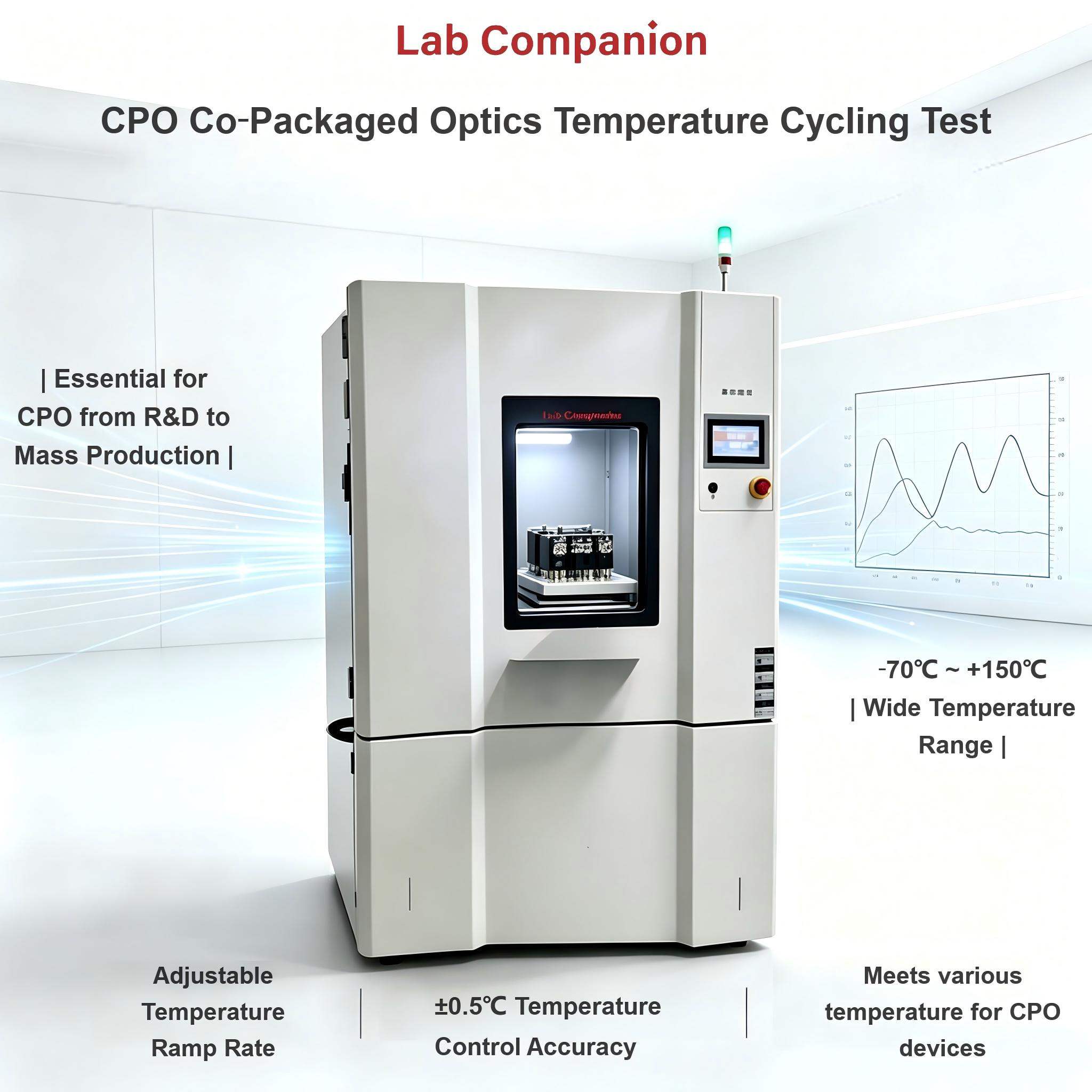
In 2026, the global semiconductor and optical communication industries are witnessing a surging demand for environmental testing equipment. Temperature and humidity test chambers have evolved from optional auxiliary devices to core production necessities for mass manufacturing high-end AI chips and high-speed optical modules, with leading factories worldwide expanding procurement and production lines at full speed.
This booming market demand is not a blind industry trend, but an inevitable requirement driven by the explosive growth of AI computing power and the iterative upgrade of high-speed optical modules. High-end chips and optical components are extremely sensitive to temperature and thermal cycling. Without professional high-low temperature testing, products cannot meet international certification standards or be launched on the global market. Based on Lab Companion’s decades of technical accumulation and global market insights, this article thoroughly analyzes the core reasons behind this global procurement upsurge, as well as the competitive advantages of Chinese intelligent manufacturing in the global precision testing equipment track.
I. AI Boom & Optical Module Upgrade Drive Rigid Thermal Testing Demand
1. AI Chips: High Power Consumption & Advanced Processes Vulnerable to Thermal Shock
Current mainstream AI GPUs and NPUs feature power consumption exceeding 200W, adopting cutting-edge 3nm/2nm manufacturing processes and advanced Chiplet packaging technology. Billions of transistors are highly integrated in a tiny chip area, resulting in drastic temperature fluctuations during operation. The temperature rises sharply to nearly 100°C during operation and drops rapidly to room temperature after shutdown. Repeated thermal cycling easily triggers critical quality risks:
• Packaging Delamination & Solder Cracking: Different packaging materials have distinct thermal expansion coefficients, leading to structural damage under continuous temperature cycling;
• Performance Drift & Unstable Computing Power: Temperature fluctuations cause parameter deviation, unbalanced computing output, and reduced AI operation accuracy;
• Mass Production Scrap Risks: Unidentified thermal hazards in mass production lead to batch defective products and huge economic losses.
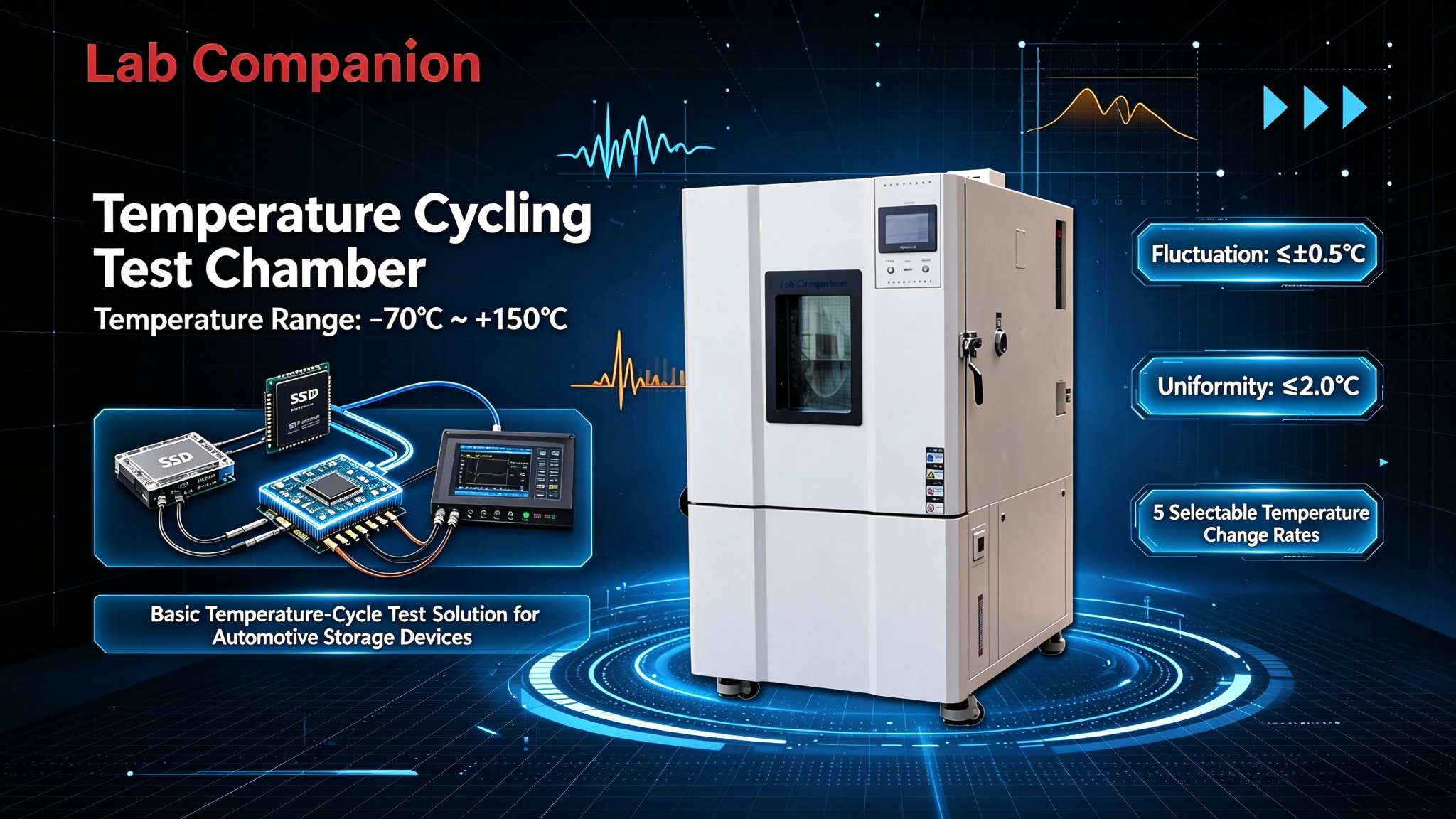
Therefore, mass production of high-end AI chips strictly requires professional thermal test chambers to simulate extreme temperature environments of -70°C to 150°C, expose potential defects in advance, screen qualified products, and ensure reliable chip quality from the source.
2. High-Speed Optical Modules: 800G/1.6T Mass Commercialization Raises Strict Thermal Standards
2026 marks a pivotal year for the large-scale commercialization of high-speed optical modules. Global shipments of 800G optical modules have doubled year-on-year, and 1.6T products have entered formal batch deployment. The core components of high-speed optical modules include lasers and precision optical elements, which are extremely sensitive to temperature changes. A mere 1°C temperature fluctuation will cause wavelength shift and optical power instability, directly resulting in data bit errors, transmission lag, and even communication interruption.
In addition, optical modules are deployed in diverse and complex global scenarios, enduring extreme outdoor temperatures of -40°C to 60°C for base stations and continuous high heat density in data centers. Products without rigorous high-low temperature cycle testing pose major hidden dangers to global communication systems after delivery.
II. Product Iteration Makes Traditional Testing Equipment Obsolete
With the rapid upgrading of AI chips and high-speed optical modules, traditional thermal test equipment (temperature change rate: 1-3°C/min, temperature accuracy: ±3°C) can no longer meet the strict testing standards of next-generation high-end products, with prominent functional limitations:
• Incapable of Simulating Real Working Conditions: Actual terminal equipment undergoes drastic temperature changes. A fast temperature change rate of 5-20°C/min is required to restore real operating scenarios and reproduce potential faults accurately, which traditional equipment cannot achieve;
• Low Accuracy & High Missed Detection Rate: Tiny performance drift of high-end products can only be captured with precision control of±0.5°C (standard) and ±0.1°C (high-end). Traditional equipment with large errors easily omits hidden quality defects;
• Outdated for Updated Global Standards: International standards including GB/T 2423 and IEC 60068 have been continuously upgraded, requiring longer testing duration and more cycling times. Old equipment fails to meet the latest industry certification requirements.
Global product upgrading has forced the entire industry to upgrade testing equipment, triggering a large-scale replacement and procurement wave among semiconductor and optical module manufacturers worldwide.
III. Global Localization Replacement Accelerates: Chinese-Made Lab Companion Becomes Global Preference
In the past, the global high-end environmental testing equipment market was long monopolized by foreign brands. However, imported equipment has obvious drawbacks: exorbitant prices, long customization cycles, and slow after-sales response, which greatly restrict the mass production efficiency of global enterprises.
Nowadays, Chinese intelligent manufacturing technology has achieved comprehensive breakthroughs and overtaking. As a leading Chinese high-end testing equipment brand, Lab Companion has become the top choice for global AI and optical communication enterprises with four core advantages: international-level precision performance, 40%-50% lower procurement cost than imported equipment, flexible customized solutions, and professional global remote service systems, leading the global localization replacement of testing equipment.
IV. Brand Strength: Lab Companion High-Low Temperature Test Chamber Core Advantages
Founded in 2005, Lab Companion is a national high-tech enterprise rooted in China, with 21 years of professional experience in environmental testing equipment R&D and manufacturing. As a core Chinese supplier in the global semiconductor and optical communication industries, Lab Companion serves more than 500 well-known global enterprises including Huawei, ZTE, HiSilicon, and SMIC, with product stability and performance fully verified by global mass production scenarios.
1. Premium Parameters: International Standard, Fully Adaptable to High-End Testing
• Temperature Range: Standard model covers -40°C~150°C, customized model reaches -70°C~180°C, covering all extreme environmental testing scenarios;
• Temperature Control Accuracy: Fluctuation ≤±0.3°C for standard models, up to ±0.1°C for high-precision models, uniformity ≤±0.5°C, capturing tiny product performance changes accurately;
• Temperature Change Rate: 5-10°C/min for conventional models, 15-20°C/min for high-speed models with linear adjustable speed, matching fast thermal cycling testing requirements;
• High-Grade Material: SUS304 mirror stainless steel cavity, corrosion-resistant and anti-aging, equipped with 120mm high-density insulation layer for low energy consumption and long-term stability;
• Intelligent Control System: 7-inch touch screen, supporting 100+ program storage and 99-segment curve editing, adopting AI fuzzy algorithm and dual PID control to ensure stable and repeatable test data.
2. Industrial-Grade Stability: Adapt to High-Intensity Global Mass Production
• 24/7 Continuous Operation: MTBF (Mean Time Between Failures) reaches 20,000 hours, supporting long-term high-frequency operation and adapting to strict mass production testing schedules worldwide;
• High Load Adaptability: Stably supports over 50kW thermal load, fully meeting extreme testing demands of high-power AI chips;
• Anti-Static Protection Design: Built-in anti-static coating protects precision chips and optical components from static damage during testing;
• Global Standard Compliance: Fully compliant with GB/T 2423, IEC 60068, SEMI S2 and other international standards. Test data is valid for global product certification and authentication.
3. Global Remote Service System: Professional & Efficient for Overseas Clients
• Full Lifecycle Remote Support: Adapting to overseas market characteristics, Lab Companion provides 24/7 global online guidance instead of on-site door-to-door service, covering equipment installation, commissioning, operation training, and daily troubleshooting;
• Remote Monitoring & Early Warning: Intelligent system supports real-time remote equipment monitoring and fault pre-alert. More than 80% of daily faults can be solved remotely and efficiently, avoiding production delays;
• Reliable Warranty Policy: Complete 1-year full machine warranty and long-term core component protection, providing stable after-sales guarantee for overseas production lines;
• Global Technical Guidance: Professional multilingual technical teams provide one-on-one customized operation guidance and annual calibration services to ensure long-term accurate and stable equipment operation.
4. Core Value: Chinese Manufacturing Empowers Global Industrial Chain
• Quality Assurance: High-precision thermal testing eliminates unqualified products in advance, reducing 90% of factory failure risks and avoiding massive rework costs and brand losses for global clients;
• Efficiency Improvement: Fast temperature cycling and 24-hour stable operation shorten the testing cycle by over 30%, greatly improving mass production and global delivery efficiency;
• Superior Cost Performance: As a high-quality Chinese manufacturing brand, Lab Companion cuts procurement costs by 40%-50% compared with imported equipment, with lower long-term operation and maintenance costs;
• Stable Global Supply Chain: Independent Chinese R&D and localized production realize stable and sufficient supply without supply chain risks, supporting the independent and controllable development of the global semiconductor and optical communication industrial chains.
Conclusion: Choose Premium Equipment to Win Global Market Competitiveness
In 2026, the global AI computing and optical communication industries maintain rapid growth. Thermal testing equipment has become an indispensable quality cornerstone and production standard configuration for high-end manufacturing. Driven by product iteration upgrading, equipment renewal demand, and global recognition of Chinese intelligent manufacturing, high-performance domestic testing equipment is ushering in a global popularization boom.
With 21 years of Chinese R&D and manufacturing experience, international leading product performance, and professional global remote service system, Lab Companion has become a preferred Chinese testing equipment supplier for global AI chip and high-speed optical module manufacturers. Choosing Lab Companion means choosing precise testing, stable operation, cost-effective solutions and reliable global services, empowering global enterprises to stabilize product quality and enhance core market competitiveness.
1. Core Requirements for Environmental Testing of New Energy Vehicle Battery Packs
1.1 Correlation Between Temperature Stress and Battery Operational Safety
As the core component of new energy vehicles, power battery cells, modules and complete battery packs are constantly exposed to ambient temperature fluctuations and heat generated during charging and discharging in daily operation. Repeated high and low temperature cycles cause thermal expansion and contraction of materials as well as changes in internal stress. Long-term exposure will lead to performance degradation and potential structural risks.
Rapid temperature change chambers and thermal cycle chambers simulate full-lifecycle temperature conditions of vehicles in advance, so as to fully identify potential defects of batteries. This fundamentally improves product safety and service life. As industrial standards become increasingly stringent, higher requirements are set for the temperature change rate, load capacity and chamber size of testing equipment.
1.2 Specifications for Thermal Cycling Tests per Automotive Standards
Current testing of power batteries strictly complies with automotive-grade standards, which define clear specifications for temperature range, temperature ramp rate, cycle times and combined temperature & humidity control. Conventional tests require thousands of high-low temperature cycles. Some reliability verifications also adopt combined stress tests with humidity and vibration.
The Yangtze River Delta region including Shanghai, China is home to numerous new energy vehicle manufacturers and supporting battery enterprises, with strong demands for production line testing, R&D certification and batch screening. Local customers require not only high-performance testing equipment, but also efficient and professional technical support and maintenance services.
2. Core Technologies of Lab Companion Dedicated Rapid Temperature Change Chambers for Battery Packs
2.1 Large-capacity Integrated Chamber for Full-range Battery Testing
To adapt to the large size and diverse specifications of battery packs, the equipment adopts a large-capacity integrated chamber with optimized internal layout. It is suitable for testing cells, modules and complete battery packs of different dimensions.
Reinforced thermal insulation and sealing structures effectively reduce heat exchange between inside and outside the chamber. A stable internal temperature field is maintained during prolonged high-low temperature cycling, perfectly meeting the requirements for large-scale battery pack testing.
2.2 High-speed Temperature Change & Adaptive Load Technology
The equipment delivers a maximum temperature change rate of 25°C/min. Equipped with an adaptive load system, it offsets heat generated by batteries during charging and discharging in real time, ensuring stable and consistent temperature ramp rates even when test samples continuously produce heat.
The full product line covers a temperature range of -70°C ~ 180°C, fully satisfying all working condition tests for power batteries.
2.3 Integrated Temperature, Humidity & Vibration Testing
To meet the demand for combined environmental tests, the equipment supports synchronous control of temperature, humidity and vibration. It accurately simulates real driving scenarios such as outdoor exposure and driving on bumpy roads.
While achieving rapid temperature change, the chamber precisely regulates internal humidity. The anti-condensation design prevents damage to battery electrical components caused by low temperature and high humidity.
2.4 Dedicated Safety Alarm & Protection System
The equipment is equipped with multi-level early warning mechanisms for abnormal temperature and overpressure, with customized safety optimizations for battery testing scenarios. Once abnormal parameters are detected, the system triggers alarms and activates protective actions immediately to ensure safe and stable testing throughout the process.
3. Comprehensive Testing Solutions for Power Batteries at All Levels
3.1 Early Defect Screening for Battery Cells
At the front end of production, rapid temperature change chambers conduct thermal cycle tests on individual cells. High-frequency temperature cycling eliminates early failure products, controls the quality of raw materials and reduces failure risks of finished modules and packs. The compact and efficient equipment is ideal for high-volume batch screening on production lines.
3.2 Working Condition Verification for Battery Modules
After assembly of battery modules, rapid thermal cycle chambers simulate temperature fluctuations accompanied by charging and discharging. They verify the stability of internal connections and heat dissipation systems.
The programmable controller supports complex cycle logic to replicate actual operating conditions of modules and complete long-term reliability validation.
3.3 Certification Testing for Complete Battery Packs
For vehicle certification of battery packs, large-chamber rapid temperature & humidity change chambers perform extreme high/low temperature tests and alternating temperature-humidity tests. All technical parameters are in line with automotive certification standards. Reliable test data helps customers complete certification procedures efficiently.
3.4 Environmental Stress Screening for Mass Production
In the mass production phase, ESS (Environmental Stress Screening) chambers operate continuously to conduct stress screening on finished battery packs. Latent defects are fully exposed to ensure consistent quality of delivered products.
4. Global Service & Practical Applications in China
4.1 Professional Technical Team for New Energy Industry
Based in Shanghai, China, Lab Companion has established a professional technical team specializing in new energy battery testing standards and working conditions. We provide targeted support to vehicle manufacturers and battery suppliers across the local industrial cluster.
4.2 Customized Testing Solutions & Online Technical Training
Our technical team customizes equipment parameters and testing programs remotely according to customers’ product specifications and international testing standards.
We also provide comprehensive online training covering equipment operation, daily maintenance and safety regulations. With video guidance, remote assistance and detailed documents, operators can master equipment operation efficiently.
4.3 Successful Local Application Cases in China
Our battery testing equipment has been widely adopted by many leading new energy enterprises in Shanghai and surrounding areas of China. The equipment runs stably during thousands of thermal cycles, effectively shortening R&D cycles and improving overall reliability of battery products.
4.4 Global Online After-sales Support System
We provide 24/7 global online after-sales service without on-site maintenance. Our professional team offers multilingual technical consultation, remote troubleshooting, equipment debugging and operational guidance. Rapid remote response minimizes equipment downtime and guarantees uninterrupted R&D and production testing for global customers.
I. Industry Trends of Ultra-Fast Temperature Change Technology
The iteration of rapid temperature change test chambers is driven by global and Chinese upgrading standards for product reliability testing. Modern testing has evolved from basic high/low temperature storage to professional Environmental Stress Screening (ESS), widely required in China’s semiconductor, military, and new energy industries, forming higher demands for temperature transition speed and stability.
1.1 Updated Global & Chinese Testing Standards
• Past requirements: A temperature change rate of 1~3°C/min was adequate for basic environmental adaptability verification.
• 2026 mainstream standards: The international JESD22-A104 standard requires a minimum cycling rate of 10°C/min. China’s military standard GJB 1032 enforces 100% batch screening for electronic products at 5~15°C/min, raising stricter thresholds for high-reliability manufacturing in China.
1.2 Core Application Value in China’s High-End Manufacturing
Ultra-fast temperature change chambers have become core precision testing equipment in China’s strategic industries:
• Semiconductor industry: Rapid thermal stress exposes latent defects such as package delamination and solder cracking caused by mismatched thermal expansion coefficients.
• Military manufacturing (China): Full-batch rapid temperature cycling ensures equipment stability under extreme operational environments.
• New energy industry (China): Strict thermal shock and temperature uniformity standards guarantee the safety and durability of vehicle power components and electronic systems.
1.3 Three Major Global Technical Bottlenecks
• Cooling capacity limitation: Traditional refrigeration systems decay sharply at low temperatures, causing obvious rate lag in the final cooling stage.
• Temperature uniformity constraint: High-speed airflow easily disrupts chamber temperature consistency, challenging structural and duct design.
• Energy efficiency imbalance: Overlapping operation of heating and refrigeration systems causes energy conflict and temperature fluctuation.
II. Top 10 Manufacturers Performance Evaluation & Market Pattern
The global market features international high-end brands and fast-rising Chinese domestic manufacturers. This evaluation adopts four authoritative dimensions based on China’s industrial application standards.
2.1 Four Core Evaluation Dimensions
• Full-process stability of linear and non-linear temperature change rates
• Chamber temperature uniformity and batch testing repeatability
• Rate retention performance under 25% volume copper block heavy load
• Long-term operational stability (over 20,000 working hours)
2.2 Market Comparison: Imported Brands vs. Chinese Domestic Brands
Advantages & Disadvantages of International Brands
• Strengths: High precision (±0.3°C accuracy, ≤±2.0°C uniformity) and stable long-term performance.
• Weaknesses: 3–5 times higher pricing than Chinese domestic models; agent-based after-sales leads to slow response and long spare-part cycles in China’s Yangtze River Delta.
Core Competitiveness of Lab Companion (Shanghai, China)
• Full rate coverage of 5~25°C/min, with ±0.3°C precision and -70°C~180°C ultra-wide temperature range.
• Temperature uniformity outperforms China’s national standard GB/T 5170.
• Pricing is only 50%~70% of imported equipment with equivalent performance.
• Local Shanghai service center supports rapid after-sales response for Yangtze River Delta enterprises.
2.3 Industry-Leading Practical Performance
Lab Companion solves the common low-temperature rate lag problem. With self-developed AI algorithms and Q8 control system, the equipment maintains ≤±2°C uniformity and ≤±0.5°C fluctuation under full load, and recovers preset temperature within 3 minutes after door opening, ranking top among China’s mainstream manufacturers.
III. Core Technology Advantages of Lab Companion (Shanghai, China)
3.1 Independent Two-Stage Cascade Refrigeration System (China Proprietary)
• Dual-stage cooling structure: High-stage R404A eco-friendly refrigerant for pre-cooling; low-stage R23 refrigerant for stable ultra-low temperature output down to -70°C.
• Stable heat dissipation: Complete compression–condensation–throttling–evaporation cycle ensures sufficient cooling capacity at extreme low temperatures.
• High-efficiency heating & airflow: High-power nichrome heating tubes plus optimized Chinese localized duct design realize stable 5~20°C/min linear temperature change.
3.2 Q8 Intelligent Control System & AI Dynamic Regulation
• Real-time monitoring of chamber temperature, sample surface temperature and thermal load changes.
• H-PID dynamic balancing technology predicts thermal inertia interference and adjusts compressor and heater output intelligently.
• Temperature overshoot strictly controlled within 0.5°C.
• Overall energy consumption reduced by 28% compared with traditional imported control solutions.
3.3 China Localized Customization & Full-Cycle Service System
• Customization capability: Supports 36L–10,000L non-standard chambers, max 25°C/min ultra-fast rate, and special working condition adaptation.
• Shanghai local service: Dedicated engineer team + local spare parts warehouse, achieving 2-hour rapid response.
• Service advantage: Direct official service far exceeds agent-based support of international brands, ensuring stable operation for Chinese manufacturing clients.
IV. Practical Application & User Cases in China
4.1 Case 1: Automotive-Grade Semiconductor Testing (Shanghai, China)
A Shanghai-based automotive chip verification enterprise adopts Lab Companion 15°C/min linear rapid temperature change chambers.
• Achieves ±0.1°C high precision and ≤±1.5°C temperature uniformity.
• Effectively identifies micro cracks and hidden packaging defects in BGA structures.
• Shortens batch testing cycle by 40% and increases latent defect detection rate by nearly 20%.
• Accelerates new chip R&D launch and accumulates reliable screening data for China’s automotive semiconductor industry.
4.2 Case 2: Chinese Leading New Energy Vehicle Manufacturer
A major new energy vehicle enterprise in China’s Yangtze River Delta uses Lab Companion equipment for BMS controller ESS testing at 10°C/min (-40°C~125°C cycling).
• Completes more thermal cycling tests within the same R&D cycle than traditional low-rate chambers.
• Exposes hidden risks such as cold solder joints and power module thermal fatigue failure.
• Reduces early product failure rate and lowers production line quality supervision pressure.
V. Conclusion
The upgrade of temperature change technology from 5°C/min to 30°C/min represents a systematic innovation of China’s environmental testing equipment industry, covering material science, thermal management, and intelligent control algorithms.
As a benchmark Chinese manufacturer, Lab Companion (Shanghai, China) thoroughly breaks three major industry bottlenecks through independent cascade refrigeration hardware and AI dynamic control algorithms. Supported by China-based localized customization and full-cycle after-sales services, the brand delivers high-precision, cost-effective, and stable rapid temperature cycling solutions.
Lab Companion continuously empowers reliability testing for China’s semiconductor, new energy, military, and automotive electronics sectors, promotes domestic substitution of high-end testing equipment, and provides reliable technical support for global high-end manufacturing.
In the field of environmental reliability testing, rapid temperature change test chambers are core equipment for stimulating potential product defects and verifying environmental durability and service life. Based on different temperature control logic and change modes, mainstream equipment in the industry is divided into two technical categories: linear rapid temperature change chambers and non-linear rapid temperature change chambers. The two types differ significantly in applicable test standards, test scenarios and testing purposes. Distinguishing their technical differences accurately is a core prerequisite for enterprises to implement scientific selection, compliant testing and improved test efficiency.
This article comprehensively analyzes the core differences, applicable scenarios and performance advantages of linear and non-linear rapid temperature change technologies, and elaborates on the technical highlights, parameter strengths and customized solutions of Lab Companion’s two core product series, providing professional and practical selection references for global industrial users.
1. Core Differences Between Linear and Non-Linear Temperature Change Technologies: Trade-off Between Precision Control and High Efficiency Acceleration
1.1 Definition and Principle: Technical Differentiation Between Constant-Speed Precision and Intelligent Variable Speed
Linear rapid temperature change is defined byfull-process constant-rate temperature rise and fall. Within the set temperature range, the equipment performs temperature changes at a uniform and stable rate, forming a standard straight-line temperature-time curve. Featuring stable control and excellent repeatability, it delivers mild thermal shock to test samples and restores the standard-compliant durability test environment to the greatest extent.
For instance, if the temperature change rate is set to 10℃/min, the equipment maintains this exact rate throughout the test without instantaneous fluctuation, achieving strictly linear temperature variation over time. This technical mode fully complies with constant-rate test requirements of national and international standards, serving as the mainstream solution for conventional reliability qualification tests.
Non-linear rapid temperature change adopts an intelligent variable-speed control logic. Instead of a fixed constant rate, it takes the full-process average temperature change rate as the key assessment index, with adjustable instantaneous rates adapting to test logic, forming a polyline or stepped temperature-time curve.
Focusing on high-stress and high-efficiency testing, this mode simulates complex and harsh sudden temperature changes in actual working conditions, effectively exposing latent defects that cannot be identified via constant-speed temperature cycling. Its core value lies in greatly shortening the test cycle, making it the essential equipment for Highly Accelerated Stress Screening (HASS) and Highly Accelerated Life Testing (HALT), and widely applied in rapid defect detection and mass production screening.
1.2 Application Scenario Differences: Specialized Functions for Precise Test Matching
Designed for distinct testing purposes, linear and non-linear temperature change technologies cover full-scenario testing demands including compliance qualification, durability verification, defect screening and limit testing with clear and complementary application boundaries.
Linear rapid temperature change chambers: Specialize in standardized, high-precision and repeatable testing for conventional reliability verification and product qualification tests requiring constant temperature change rates. Typical applications include automotive electronic durability tests in accordance with ISO 16750, thermal fatigue tests on consumer electronic components and structural materials, as well as compliance inspection and factory qualification tests for military, industrial control and home appliance products.
Non-linear rapid temperature change chambers: Optimized for high-acceleration, high-efficiency and high-stress screening to expose early product defects and verify design limits. Typical applications include high-acceleration defect screening of semiconductor chips per AEC-Q100 standards, mass stress screening of new energy battery modules and electronic control components, limit temperature resistance testing in R&D stages, and accelerated life tests for military products complying with GJB and MIL-STD standards.
2. Horizontal Comparison of Core Technical Indicators
To help users intuitively identify performance differences and quickly match test standards, the core parameters, performance characteristics and applicable specifications of the two types of chambers are compared comprehensively below:
Comparison Items
Linear Rapid Temperature Change Chamber
Non-Linear Rapid Temperature Change Chamber
Rate Characteristics
Constant full-process speed, conventional rate: 5~20℃/min with zero obvious fluctuation
Intelligently adjustable variable speed, max instantaneous rate: 25~30℃/min
Curve Morphology
Standard linear temperature-time curve with high repeatability
Customizable polyline/stepped curve for complex variable-speed tests
Control Accuracy
Ultra-high precision, rate fluctuation ≤±0.5℃/min with excellent data consistency
Superior accuracy, assessed by qualified full-process average rate
Test Efficiency
Standard test cycle complying with industrial specifications
Test efficiency increased by over 40% with prominent accelerated defect screening performance
Applicable Standards
IEC 60068-2-14, GB/T 2423.22, ISO 1675 and other conventional durability standards
AEC-Q100, GJB 1032, MIL-STD-883 and other high-acceleration screening standards
3. Lab Companion Linear Rapid Temperature Change Chamber: Benchmark for Precision Control and Standard Compliance
Lab Companion TC Series Linear Rapid Temperature Change Chambers are flagship products designed for standardized, high-precision and high-repeatability reliability tests. Focusing on constant-speed precision temperature control, traceable data and full standard compatibility, they perfectly adapt to product qualification, durability verification and compliance testing scenarios.
3.1 3D Precision Control System for Zero-Deviation Linear Temperature Change
Abandoning the hysteresis and large deviation drawbacks of traditional single-PID control, the equipment adopts a 3D precision control system consisting of adaptive feedforward control, high-dynamic sensors and balanced thermal system, paired with self-developed dual-PID fuzzy logic algorithm. It compensates in real time for external interferences including load changes, ambient temperature fluctuation and equipment operation loss. The full-process rate fluctuation is strictly controlled within ≤±0.5℃/min, realizing true linear temperature variation. Meanwhile, the chamber temperature fluctuation is ≤±0.3℃ with uniformity ≤±0.5℃, ensuring balanced full-domain temperature field and 100% repeatable and traceable test data.
3.2 Wide Temperature Range & High Load Adaptability with Consistent In-Service Performance
The TC Series covers an ultra-wide temperature range of -70℃~+180℃, fully meeting temperature test requirements for civil, industrial and military products. Equipped with a dual-compressor cascade refrigeration system and graded independent heating modules, it achieves stable loaded linear temperature change at 1~15℃/min with controllable full-process deviation.
Different from the industry’s common empty-chamber parameter exaggeration, all nominal temperature change rates and control accuracy of Lab Companion TC Series are actual measured data under rated heating load, which fully fits real test conditions and eliminates performance attenuation under loaded operation.
3.3 Full Industrial Standard Compatibility for Qualification & Compliance Testing
The series strictly complies with mainstream domestic and international standards including IEC 60068-2-14, GB/T 2423.22 and ISO 16750, fully satisfying conventional reliability tests and official qualification requirements for automotive electronics, consumer electronics, industrial control equipment, precision components and new materials. Equipped with Q8 intelligent touch controller, it supports multi-segment programming, curve preset, one-click start and data storage/export, facilitating standardized daily laboratory testing.
4. Lab Companion Non-Linear Rapid Temperature Change Chamber: Technological Breakthrough for Intelligent Speed Regulation & High-Efficiency Screening
Lab Companion ESS-2000 Series Non-Linear Rapid Temperature Change Chambers are professional devices developed for Highly Accelerated Stress Screening (HASS), Environmental Stress Screening (ESS) and limit life testing. Featuring intelligent speed regulation, efficient defect screening, multi-functional integration and long-term stability, they are ideal for R&D limit verification and mass production batch screening.
4.1 Programmable Intelligent Variable Speed for Shorter Test Cycles & Lower Energy Consumption
Equipped with Lab Companion’s self-developed high-performance multi-channel programmable controller, the equipment supports fully customized non-linear temperature curve editing. Users can set complex working conditions such as multi-segment ramping, constant temperature holding and cyclic temperature change, and precisely control the rate, duration and interval of each segment to simulate complex and harsh actual environmental stresses.
Powered by an intelligent energy consumption regulation algorithm, the equipment adaptively reduces redundant heating power at high temperatures, cutting comprehensive energy consumption by 20% compared with traditional devices while improving test efficiency by over 40%. It effectively exposes latent defects such as virtual welding, structural flaws and material fatigue, greatly shortening product R&D iteration and mass production quality inspection cycles, and achieving optimal balance between test efficiency and production cost.
4.2 Full-Range Rate Coverage with One-Click Linear/Non-Linear Switching
The ESS-2000 Series covers a full temperature change rate range of 1~30℃/min to adapt to all test scenarios: 1~5℃/min for standard conventional temperature cycle tests; 5~15℃/min for mass ESS stress screening of most electronic modules and components; 15~30℃/min ultra-high rate for high-acceleration limit testing.
The equipment supports one-click switching between linear and non-linear modes, integrating standard compliance testing and high-acceleration screening in one unit. It eliminates the need for multiple devices, greatly reducing procurement and site costs and meeting diversified enterprise testing demands.
4.3 Multi-Level Safety Protection for Long-Term Continuous Stable Operation
High-acceleration screening requires long-term uninterrupted operation, making equipment stability and safety critical. The ESS-2000 Series is built with a multi-level intelligent safety protection system, including independent mechanical over-temperature protection, compressor high-exhaust-temperature shutdown, refrigeration system high/low pressure overload protection and water shortage protection, completely avoiding equipment failure and test risks.
In addition, the optimized evaporator structure and intelligent defrost logic extend the continuous operation cycle significantly, reducing shutdown interference caused by defrosting during batch screening. The built-in fault self-diagnosis, real-time status monitoring and acousto-optic alarm system display core component status in real time, enabling early risk prediction and rapid troubleshooting to ensure uninterrupted and efficient testing.
5. Professional Selection Guide & Industry Technology Development Trends
5.1 Targeted Selection Suggestions & Full-Lifecycle Service Support
Core selection principle: Choose linear mode for standard compliance testing; choose non-linear mode for high-efficiency defect screening.
For enterprises focusing on product reliability qualification, compliance inspection and service life verification that require strict standard-based constant-rate testing with high data accuracy, repeatability and authority, the Lab Companion TC Series Linear Rapid Temperature Change Chamber delivers standardized, traceable and high-precision test conditions, perfect for test report issuance, product certification and quality acceptance scenarios.
For enterprises needing R&D limit exploration, mass production batch defect screening and test cycle compression to expose early product defects and verify design and process flaws via high stress, the Lab Companion ESS-2000 Series Non-Linear Rapid Temperature Change Chamber is the optimal solution that balances screening performance and test cost.
Lab Companion provides free technical consultation, free sample testing and customized test scheme design to help customers match equipment with actual testing demands accurately. Custom solutions are available for special test procedures and non-standard industrial specifications. Standard models of the TC Series are in stock for fast delivery, while the ESS Series supports non-standard size customization and walk-in chamber solutions to adapt to diverse production capacities and test requirements.
Supported by nationwide sales and after-sales service networks, Lab Companion offers full-lifecycle services including equipment warranty, remote diagnosis, on-site installation & commissioning, technical training and lifelong maintenance, ensuring reliable equipment operation for global users.
5.2 Industry Technology Trend: Dual-Mode Integration & All-in-One Functionality
Linear and non-linear temperature change technologies are not competitive alternatives but complementary and scenario-segmented technical paths. The linear mode acts as a "precision ruler" to verify conventional product service life reliability and ensure test compliance and data credibility; the non-linear mode serves as a "detection probe" to explore design weaknesses and latent defects while improving test efficiency and product quality.
The global industry is trending toward linear & non-linear dual-mode integration. All-in-one equipment supporting both standard compliance testing and high-acceleration screening effectively reduces enterprise equipment investment and improves test flexibility. With in-depth technical accumulation and rich project experience, Lab Companion continuously iterates dual-mode control technology to optimize equipment accuracy, efficiency and stability, keeping pace with high-end industrial quality development.
Conclusion
In the rapid temperature change testing industry, equipment accuracy, stability and adaptability directly determine the authenticity and effectiveness of product reliability verification. With solid technical expertise, comprehensive product portfolio and mature customized service capabilities, Lab Companion accurately matches temperature testing demands across diverse industries. The TC Series delivers ultra-high precision and standard-compliant stability, while the ESS-2000 Series provides high-efficiency screening and intelligent adaptability. All products feature authentic labeled parameters, stable performance and full-lifecycle professional services, safeguarding product reliability testing for global manufacturers.
For detailed product specifications, parameter comparison sheets, sample testing applications or customized test solutions, please contact the Lab Companion technical team for one-on-one professional support.
Evolution of Intelligent Control Systems: From Passive Execution to Active Intelligence
In the field of environmental reliability testing, the control system serves as the core brain of test chambers, having undergone multiple technical iterations. It has evolved from early mechanical regulation via manual knobs and dials to traditional digital PID automatic control. However, with the rapid development of high-end industries including new energy vehicles, semiconductors, and aerospace, stricter requirements have been raised for testing accuracy, operational efficiency, data traceability, and equipment intelligence. Traditional control modes are limited by low precision, passive execution, lack of risk prediction, and incomplete data closed-loop capabilities, making them inadequate for advanced high-precision testing scenarios.
Addressing industry pain points and digital testing trends, Lab Companion has independently developed the Q8 Intelligent Control System, breaking the functional boundaries of conventional controllers. It is upgraded into a full-dimensional intelligent system integrating high-precision closed-loop control, AI algorithm decision-making, big data management, and full-range remote operation and maintenance. Supporting an ultra-wide temperature range of -70℃ to 180℃ with an ultimate temperature fluctuation accuracy of ≤±0.3℃, the system reduces unplanned downtime risks by over 90% through intelligent early warning mechanisms. As a core technical advantage of Lab Companion’s rapid temperature change and ESS test chambers, it leads the environmental reliability testing industry in transitioning from the automation era to the intelligent era.
Core Architecture of Q8 Intelligent System: Industrial-Grade Foundation & Intelligent Kernel
The superior performance of the Q8 system stems from its robust hardware architecture and fully self-developed, controllable software ecosystem. Designed with the philosophy of combining industrial-grade durability for harsh working conditions and intelligent kernels for efficient testing, it delivers stable, accurate, and intelligent operation through seamless hardware and software collaboration.
1. Industrial-Grade Hardware Platform for Maximum Stability
The system is equipped with a high-performance industrial processor with sufficient computing power and ultra-fast response, paired with a high-resolution hardened color touch screen that is waterproof, oil-proof, vibration-resistant, and wear-resistant, fully adapting to complex laboratory environments. Core underlying executive components such as contactors and circuit breakers adopt premium international brands including Schneider Electric from France. Every command output and circuit switch operates with precise stability, providing solid hardware support for long-term uninterrupted operation and significantly reducing hardware failure rates.
2. Fully Independent Software Ecosystem for Safety, Efficiency & Controllability
Unlike ordinary control systems secondary-developed on universal industry platforms, the Q8 system runs on a fully self-developed embedded real-time operating system by Lab Companion, offering prominent core advantages. Its kernel is deeply optimized for environmental testing scenarios, featuring high operating efficiency and strong compatibility to eliminate crashes, stuttering, and response delays, ensuring continuous and stable testing. Additionally, all core algorithms, program codes, and data storage are fully self-controllable without third-party backdoors, comprehensively protecting enterprise test data security. The system supports multi-language switching (Chinese, English, Japanese, Korean) and adopts an ergonomic, intuitive interface layout to lower operational barriers and enable fast operator proficiency.
3. AI-Integrated Control Algorithms for Zero-Deviation Precision Temperature Control
Algorithms form the core soul of the Q8 system. Based on classic dual-PID control technology, the system innovatively integrates fuzzy logic and adaptive intelligent algorithms, simulating the operational experience of senior engineers. In real time, it perceives internal temperature dynamics, thermal capacity characteristics of test samples, and external environmental interference, predicts temperature variation trends in advance, and dynamically adjusts cooling and heating output power. This proactive control mechanism fundamentally eliminates industrial pain points such as temperature overshoot and curve oscillation during rapid temperature changes, strictly limiting the full-process temperature fluctuation within ±0.3℃.
4. High-Capacity Data & Communication for Digital Scenario Adaptation
The system is equipped with built-in large-capacity local storage, saving over 1,000 sets of complex test programs and more than 1 million original operational and test data records, supporting years of data traceability and meeting the data retention requirements for long-term testing and mass production screening. It supports multiple standard communication interfaces including Ethernet, RS-485, USB, and optional Wi-Fi, enabling seamless LAN access, fast docking with enterprise MES and QMS upper management systems, and global remote monitoring, online diagnosis, and program debugging. It serves as a core node for building digital, unattended intelligent laboratories.
Core Functions of Q8 Intelligent System: Redefining New Standards of Efficient, Accurate & Reliable Testing
The core advantages of the Q8 system are reflected in practical scenario-oriented functional details, comprehensively improving testing accuracy, operational efficiency, and maintenance safety.
1. Adaptive Intelligent Temperature Control for Full-Range Test Loads
Breaking the limitations of fixed-parameter PID control in traditional equipment, the Q8 system features intelligent load identification and self-learning capabilities. For diverse test samples ranging from microchips and heat-generating servers to large-capacity battery packs, it automatically identifies sample thermal characteristics and matches optimal temperature control parameters. It maintains a temperature uniformity of ≤±0.5℃ under no-load, light-load, and heavy-load conditions, enabling a single device to cover full-range testing from components and parts to complete machines without repeated manual parameter debugging, greatly enhancing test adaptability and versatility.
2. Flexible Programming for Full-Scenario Testing Coverage
The system supports up to 1,000-segment program editing, allowing users to freely build complex temperature-time test curves including linear temperature rise, nonlinear thermal shock, constant temperature standing, and gradient temperature change. For high-frequency scenarios such as ESS battery screening and high-low temperature reliability verification, users can flexibly set cycle times, temperature change rates, and dwell durations. Built-in mainstream national and international standard test templates (GB, IEC) support one-click generation of compliant test programs, simplifying programming procedures and efficiently adapting to full-scenario operations including R&D verification, mass screening, and quality inspection sampling.
3. AI Predictive Fault Early Warning for Proactive Maintenance
The system monitors real-time operational parameters (current, voltage, temperature, pressure) of over 20 core components including compressors, fans, sensors, and power supplies. Leveraging self-developed AI fault prediction algorithms to analyze equipment operating status and performance degradation trends, it achieves accurate early warning hours or even days before component failure or performance deterioration, with a prediction accuracy rate of 99.95%. For example, it can predict compressor winding insulation aging by monitoring current harmonic changes. This transforms the traditional passive post-fault maintenance mode into proactive pre-maintenance, effectively avoiding test interruptions and sample damage caused by sudden equipment failures.
4. Panoramic Remote Monitoring for Unattended Operation
Via dedicated PC client and mobile APP, users can remotely view real-time equipment operating status, temperature curves, historical test data, and monitoring footage anytime and anywhere to fully track test progress. In case of equipment early warnings, alarms, or abnormal shutdowns, the system delivers instant notifications via APP push, SMS, and email. It enables engineers to remotely manage multiple devices across laboratories and factories, supporting 24/7 unattended safe operation, reducing labor costs, and improving overall laboratory operational efficiency.
5. Compliant Data Management for Audit Standard Compliance
All test data, temperature curves, operation logs, and alarm records are fully encrypted and stored with non-tamperable and traceable features. Compatible with mainstream quality system standards including ISO/IEC 17025 and IATF 16949, the system supports one-click export of structured test reports in PDF and Excel formats. Reports automatically integrate equipment numbers, calibration information, test parameters, temperature curves, and operation records, fully meeting strict requirements for data authenticity, integrity, and traceability in enterprise quality audits, customer verification, and qualification certification.
In-Depth Industry Empowerment: Adapting to Digital Testing Needs of High-End Fields
With excellent compatibility, openness, and intelligence, the Q8 intelligent control system has been deeply applied in high-end testing scenarios across multiple industries, serving as the core hub for digital reliability testing.
New Energy Industry
In the reliability testing of battery cells and packs, the Q8 system enables real-time linkage communication with Battery Test Systems (BTS) and Battery Management Systems (BMS) via Ethernet to eliminate data silos. It not only precisely regulates ambient temperature but also synchronously collects core cell temperature data, dynamically optimizing control logic based on actual cell temperature. It realizes accurate correlation analysis between environmental data and battery electrical performance data, providing precise support for battery thermal management optimization and safety performance evaluation.
Semiconductor Industry
The system achieves full-process test automation through seamless linkage with Automatic Test Equipment (ATE). When the chamber temperature stabilizes and meets test conditions, the Q8 system automatically sends start signals to ATE to initiate chip testing. Upon test completion, it receives feedback data from ATE and executes the next temperature change procedure automatically. The entire process requires no manual intervention with automatic associated data storage, perfectly adapting to high-throughput, high-consistency, and high-precision batch testing requirements for semiconductor chips.
Automotive Electronics Industry
The system is preloaded with a complete library of mainstream automotive test standard profiles such as AEC-Q100 and ISO 16750. Users can generate full compliant test programs automatically by selecting corresponding standards and test grades, eliminating manual programming complexity and human parameter setting errors. It ensures full compliance of test procedures and results with automotive certification requirements while lowering the technical threshold for automotive-grade testing.
Military & Aerospace Industry
Supporting customized security audit and dedicated data interfaces, the Q8 system can encrypt and upload test data to the military quality management Failure Reporting, Analysis, and Corrective Action System (FRACAS). It realizes automatic reporting, traceability analysis, and closed-loop rectification of test fault data, fully meeting the stringent process control and data traceability requirements of GJB 9001 and other military standards for reliability verification of high-end military and aerospace products.
Operation & Maintenance Guidelines: Core Guarantee for Long-Term Stable Operation
To ensure long-term efficient and stable operation of the Q8 system and adapt to high-frequency enterprise testing operations, standardized operation and maintenance specifications are formulated to balance usability and long-term reliability.
Basic Operations
The system main interface adopts a clear modular design with four core sections: Operation Monitoring, Program Editing, Historical Data, and System Settings, featuring intuitive logic. Users can configure multi-stage working conditions quickly via two convenient editing modes: drag-and-drop visual editing and form filling. During testing, real-time temperature curves, core equipment parameters, and operating status are displayed on a single screen for clear and intuitive condition monitoring.
Daily Maintenance
Clean the touch screen regularly with a soft dry cloth to maintain sensitivity and clarity. Back up test programs and core data via USB or network ports quarterly to prevent data loss. Stay updated with official firmware upgrade notifications and leverage Lab Companion’s lifetime free software upgrade service to access new functions and performance optimizations continuously.
Common Troubleshooting
Conventional faults can be resolved via quick self-inspection: For communication interruptions, check network cables, switches, and network connections first. Failure to start programs is usually caused by logical parameter errors (e.g., set high temperature threshold lower than low temperature threshold), with explicit system pop-up prompts. For complex faults, view detailed fault codes and instructions via the built-in fault diagnosis page, or activate remote assistance for online diagnosis and guided resolution by Lab Companion engineers.
Professional Technical Support
Lab Companion provides exclusive Q8 system operation training for all customers, enabling operators to master full-process skills including programming, maintenance, and data export. Supported by a nationwide service network, we offer 7×24-hour all-weather remote technical support. Most software faults can be diagnosed and resolved online remotely to ensure uninterrupted customer testing tasks.
Industry Trends & Conclusion: Leading the Future of Testing with Intelligent Kernels
In the future, control systems for environmental reliability test equipment will continue to evolve toward in-depth AI integration, full-scale IoT connectivity, big data predictive maintenance, and digital twin cluster regulation. Control systems will no longer be limited to single-device temperature regulation but will realize collaborative operation, energy consumption optimization, and intelligent scheduling of the entire laboratory equipment cluster, building a fully digital intelligent testing system.
Lab Companion continues to invest in R&D to iteratively optimize the Q8 intelligent control system. Advanced machine learning algorithms will be introduced to realize independent test profile optimization, achieving higher-standard screening with shorter testing time and lower energy consumption. Leveraging the IoT cloud platform, we will realize full-life-cycle health monitoring and intelligent management of global equipment.
Against the backdrop of homogeneous competition in the testing equipment industry, the Lab Companion Q8 intelligent control system builds solid technical barriers with superior precision, leading intelligence, and stable open architecture. It acts not only as the smart brain of rapid temperature change and ESS test chambers but also as a strategic core tool for enterprises to achieve efficient R&D, lean mass production, and digital quality control. Lab Companion test chambers equipped with the Q8 system serve as a continuously evolving future-oriented intelligent testing platform, safeguarding the reliability and quality of high-end products across industries.
Environmental Stress Screening (ESS) is an indispensable reliability testing process in fields such as semiconductors, automotive electronics, new energy, and aerospace. Its core equipment — the ESS rapid temperature change test chamber — needs to achieve a large temperature change from -70℃ to 150℃ in a short period of time, placing extremely high requirements on the output capacity of the refrigeration and heating systems. However, the pain point of "high energy consumption" of such equipment has long plagued enterprises, and the extensive operation mode of "cold-hot confrontation" has further exacerbated the problem of energy waste.
When selecting equipment, many enterprises often focus on purchase price, temperature change rate, and temperature range, but overlook energy consumption as a hidden cost. According to statistics, a single traditional rapid temperature change test chamber can consume more than 100,000 kWh of electricity per year, and the energy consumption is even more staggering when applied in batches. More importantly, traditional equipment generally has the contradiction of "refrigerating while heating" during the constant temperature phase: the refrigeration system operates at full load continuously to generate excess cold, and the heating system needs to offset the excess cold through electric heating to maintain temperature stability. The energy waste caused by this ineffective internal consumption is as high as 40%.
With the in-depth advancement of the "dual carbon" strategy and the accelerated green transformation of the manufacturing industry, the energy efficiency of test equipment has become a core consideration for enterprise procurement. Industry reports show that in 2025, the market share of test chambers complying with international energy management standards has exceeded 40%, and energy conservation has become a key track for industry competition. Against this background, Lab Companion has fundamentally solved the energy consumption dilemma of ESS test chambers with its nationally patented "Cold End Regulation" control technology, providing the industry with a solution that combines performance and environmental protection. This article will deeply analyze the core logic, advantages, and practical application effects of this patented technology.
I. Traditional Dilemma: The Core Cause of High Energy Consumption of ESS Test Chambers
1.1 The Working Characteristics of Rapid Temperature Change Determine the Basis for High Energy Consumption
The core function of an ESS rapid temperature change test chamber is to test the temperature stress of test pieces through rapid heating and cooling, which requires the equipment to be equipped with high-power refrigeration and heating systems. Compared with ordinary high and low temperature chambers, a 100L ordinary high and low temperature chamber has a power of about 5-8kW, while a rapid temperature change chamber of the same specification can reach 8-20kW. Behind the doubled power is a significant increase in energy consumption.
1.2 "Cold-Hot Confrontation": A Hidden Energy Consumption Black Hole
Traditional equipment generally adopts "cold-hot compensation balance technology" to achieve stable temperature control: the refrigeration end operates at full load at all times, and the controller adjusts the on-off time and power of the heating end according to the data fed back by the temperature sensor to offset excess cold and maintain a constant temperature inside the chamber. The essence of this mode is double internal consumption of "invalid refrigeration + invalid heating" — the refrigeration system continuously "generates cold", and the heating system struggles to "consume cold", forming a typical "cold-hot confrontation".
Industry data shows that in the alternating cycle test from -40℃ to 150℃, the energy consumption of the refrigeration system of traditional equipment accounts for more than 60%, and the energy consumption of the heating system accounts for about 30%. Nearly half of the electricity is consumed ineffectively, making it a veritable "energy hog".
1.3 The Chain Cost Burden Behind High Energy Consumption
The operation mode of "cold-hot confrontation" not only pushes up the electricity costs of enterprises, but also accelerates the wear and tear of core components of the equipment. Long-term full-load operation and frequent start-stop of the compressor will shorten its service life and increase later maintenance costs. For ESS production lines that need to operate 24/7, the superposition of energy consumption and maintenance costs makes the total life cycle cost of the equipment far exceed the expected value at the time of purchase, becoming a hidden burden for enterprises.
II. The Solution: An Analysis of Lab Companion's Patented "Cold End Regulation" Technology
2.1 Core Principle: The Transformation from "Constant Output" to "On-Demand Supply"
Lab Companion's independently developed C100-type PID temperature and humidity control + fuzzy logic control system has the ability to automatically coordinate subsystems such as refrigeration, heating, and vacuum, enabling high-precision control over the entire temperature range. Among them, the core "Cold End Regulation" control method has obtained a national patent, and its core logic is to accurately control the refrigeration output from the source, abandoning the extensive mode of "generating cold first and then consuming cold".
During the cooling and low-temperature holding phases, the system dynamically adjusts the refrigeration output through cold-end PID regulation to real-time match the current cold demand — ensuring sufficient cold to maintain temperature stability while avoiding energy waste caused by excess cold. This design greatly reduces the heating compensation power of the test chamber during the low-temperature constant phase, and even achieves temperature stability without electric heating under some working conditions, fundamentally ending the "cold-hot confrontation".
2.2 Core Differences from Traditional Technology
Technical Dimension
Traditional "Cold-Hot Confrontation" Mode
Lab Companion's "Cold End Regulation" Mode
Refrigeration Output
Constant full-power operation with excess cold
Dynamically adjusted according to heat load, on-demand supply
Heating Compensation
High-power heating to offset excess cold
Significantly reduced heating power, even no heating required
Compressor Working Condition
Long-term full load or frequent start-stop, fast wear
Stable operation at low load, significantly reduced wear
Energy Consumption Level
High power consumption at both cold and hot ends, serious waste
Synchronous energy reduction at both ends, significant energy-saving effect
In terms of mechanical implementation, the technology adjusts the refrigerant flow through the control unit, and sets a solenoid valve between the condenser and the evaporator to accurately control the amount of refrigerant flowing through the evaporator, realizing on-demand adjustment of refrigeration power. At the same time, a bypass design is adopted to prevent compressor stalling, which not only reduces power consumption, but also ensures long-term stable operation of the equipment, balancing energy conservation and reliability.
2.3 Comprehensive Energy-Saving System: More Than "Cold End Regulation"
The "Cold End Regulation" technology does not exist in isolation, but is a core component of Lab Companion's comprehensive energy-saving system of "component energy saving + intelligent consumption control + structural optimization".
At the core component level, Lab Companion's rapid temperature change chambers are equipped with imported inverter compressors, which can dynamically adjust the output power according to the actual load — operating at low frequency under low load, reducing energy consumption by more than 30% under light load conditions; under temperature change conditions, the inverter solution can achieve 20%-30% energy saving. In terms of refrigerant selection, all models adopt environmentally friendly R404A refrigerant with an Ozone Depletion Potential (ODP) of 0. Compared with traditional refrigerants, the refrigeration efficiency is increased by 15%, and energy consumption is additionally reduced by 5%-8%.
At the intelligent consumption control level, the independently developed Q8 intelligent control system integrates dual PID and AI fuzzy algorithms, which can real-time collect multi-dimensional data such as internal chamber temperature, load, and ambient temperature, dynamically adjust heating power, compressor frequency, and fan speed, avoiding energy waste caused by temperature overshoot or undershoot; it also supports sleep mode, which automatically turns off unnecessary electrical components during standby or intermittent operation periods to further reduce invalid energy consumption.
III. Energy-Saving Effectiveness: Verifying Green Value with Data
3.1 Measured Data: Visible and Tangible Energy-Saving Effects
The effectiveness of Lab Companion's "Cold End Regulation" and comprehensive energy-saving technologies has been verified by a large number of measured data. During the constant temperature or temperature holding phase, the energy consumption of Lab Companion's energy-saving rapid temperature change chambers is 30%-40% lower than that of traditional equipment; its high-efficiency inverter refrigeration system and adaptive intelligent energy management platform can real-time match the test program and internal chamber load demand, accurately adjust the operating power of core energy-consuming components, and completely eliminate the energy waste of the traditional fixed-frequency system's "big horse pulling a small cart" mode.
More convincing is the verification in mass production scenarios: in a continuous mass production environment, the actual power consumption of Lab Companion's rapid temperature change chambers is about 30% lower than that of traditional fixed-speed models, and the energy-saving benefits are very significant in long-term operation.
3.2 Total Life Cycle Cost: "Affordable to Buy, More Affordable to Use"
According to analysis data released by Lab Companion, the overall energy consumption of its energy-saving rapid temperature change chambers is 28%-38% lower than that of traditional equipment, and the energy consumption reduction during the constant temperature phase is more than 40%. Taking a 408L rapid temperature change chamber operating 6,000 hours a year as an example, it can save about 12,000 yuan in electricity bills per year, and tens of thousands of yuan in electricity bills during long-term service (calculated by 5-10 years).
In addition, the "Cold End Regulation" technology reduces the start-stop frequency and working load of the compressor, extends the service life of core components, and reduces later maintenance costs. This makes Lab Companion's rapid temperature change chambers not only cost-effective at the time of purchase, but also continuously reduce the burden on enterprises during long-term use, truly achieving "affordable to buy, affordable to use, and more economical".
IV. The Era of Green Manufacturing: Balancing Performance and Environmental Protection Without Compromise
4.1 Energy Saving Without Sacrificing Performance: Both Precision and Efficiency Are Guaranteed
Many users have concerns: will energy-saving design lead to reduced equipment performance? Lab Companion's practice gives a negative answer. While achieving significant energy savings, Lab Companion's rapid temperature change chambers still maintain leading industry levels in terms of temperature change rate and temperature control accuracy. Its TH/TC series rapid temperature change chambers support adjustable linear/non-linear temperature change rates in a wide range of 5℃/min to 20℃/min, with stable rate under full load and deviation controlled within ±0.5℃/min; the internal chamber temperature uniformity can reach ≤±1.5℃, ensuring the consistency of test conditions and the reliability of data, fully meeting the high-standard testing needs of various industries.
4.2 Complying with Green Trends and Demonstrating Corporate Responsibility
Driven by the "dual carbon" goal, the green transformation of the manufacturing industry has become an irreversible trend. In 2025, the market share of test chambers complying with international energy management standards exceeded 40%, and this proportion is still rising in 2026. Lab Companion's patented "Cold End Regulation" technology is not a gimmicky energy-saving promotion, but starts from the underlying logic of equipment operation, replacing extensive confrontation with precise dynamic control, and achieving tangible energy reduction on the premise of ensuring test accuracy.
At present, Lab Companion has passed the ISO9001, ISO14001, ISO45001, and ISO27001 four-system certification, and was rated as a Guangdong Provincial Specialized, Refined, Characteristic, and Novel SME in 2025. It is at the forefront of the industry in terms of independent control of core technologies and green energy conservation, helping the green upgrading of the manufacturing industry through technological innovation.
Conclusion: From "Cold-Hot Confrontation" to "On-Demand Collaboration, Ushering in a New Paradigm of Energy Conservation
The service life of an ESS rapid temperature change test chamber can be as long as several years or even ten years, and its electricity expenditure often far exceeds the initial purchase price. However, energy conservation, a key variable, is often overlooked during equipment selection. Lab Companion's patented "Cold End Regulation" technology has fundamentally broken the dilemma of "cold-hot confrontation" of traditional equipment. Through precise control of refrigeration output, it makes the refrigeration end and heating end move from "confrontation" to "collaboration", achieving an energy-saving effect of more than 30% while maintaining high-precision testing capabilities.
This technology not only reduces the test operation costs of enterprises, but also responds to the call of the times for green manufacturing, providing a replicable and promotable solution for the energy-saving upgrading of the ESS test chamber industry. In the future, Lab Companion will continue to deepen core technologies and help the manufacturing industry achieve "efficient, energy-saving, and green" development with more innovative products.
In the rigorous practice of Environmental Stress Screening (ESS), rapid temperature change test chambers are required to perform hundreds or even thousands of high and low temperature extreme cycles continuously. This process is like launching an "endurance marathon" for the equipment itself, and evaporator frosting is the core bottleneck most likely to cause "performance attenuation" in this marathon. When traditional equipment operates at low temperatures for a long time, frost will continuously condense on the surface of the evaporator, leading to a sharp decline in heat exchange efficiency, slower temperature change rate, and deterioration in temperature uniformity. Eventually, the equipment has to be shut down for defrosting—this not only interrupts the valuable test process, but also undermines the continuity of stress application. To address this industry pain point, Lab Companion has focused on technological R&D, integrating intelligent anti-frost technology into its ESS series test chambers, endowing the equipment with excellent long-term continuous and stable operation capabilities, and becoming the "invisible guardian" silently protecting ESS equipment.
I. The Dilemma of Frosting: The Core Constraint on Long-Term Stable Operation of ESS
In rapid temperature change tests, especially when the test temperature drops to a low-temperature range of -40℃ or even -70℃ and operates for a long time, water vapor in the air inside the chamber will quickly condense on the surface of the low-temperature evaporator and gradually freeze into a thick layer of frost. This frost layer is like putting a "heat-insulating cotton-padded jacket" on the evaporator, which will seriously hinder the heat exchange between the evaporator and the air inside the chamber, and then trigger a series of chain problems, becoming the core constraint restricting the long-term stable operation of ESS equipment:
• Continuous Performance Attenuation: The refrigeration capacity drops significantly, and the temperature change rate (especially the heating rate when switching from low temperature to high temperature) cannot maintain the set standard, resulting in a significant reduction in test accuracy;
• Forced Operation Interruption: To restore equipment performance, it is necessary to frequently shut down and start the electric defrosting program, leading to an unpredictably extended test cycle and disrupting the overall test plan of the laboratory;
• Distorted Stress Application: The instability of temperature changes and operation interruptions violate the core principle of ESS "continuous stress application", which may lead to deviations in screening results and affect the accuracy of product reliability judgment.
II. Lab Companion's Solution: Intelligent Hot Gas Bypass Defrosting, Transforming "Passive Interruption" into "Active Protection"
Faced with the problem of frosting, Lab Companion has jumped out of traditional thinking and built a solution with intelligent hot gas bypass anti-frost technology, completely subverting the passive response mode of "frost thickening—then shutdown for defrosting", and instead adopting an active protection strategy of "continuous suppression and intelligent adjustment" to fundamentally solve the frosting problem.
(I) Principle Innovation: Predictive Protection to Inhibit Frost Formation from the Source
The system is equipped with high-precision temperature and pressure sensors, which can real-time capture the working status, temperature changes and frosting trend of the evaporator. When the sensor predicts that the frost layer is about to reach the critical point affecting equipment performance, the control system will automatically start the intelligent hot gas bypass loop—directing part of the high-temperature and high-pressure refrigerant gas discharged from the compressor to the evaporator accurately. This "targeted warm flow" can gently offset the supercooling degree on the surface of the evaporator, effectively inhibiting water vapor condensation and frost growth, instead of performing rough high-temperature defrosting after the frost layer thickens, achieving a core breakthrough of "preventing frosting" rather than "removing thick frost".
(II) Intelligent Control: Adaptive Adjustment to Balance Energy Efficiency and Protection Effect
The entire anti-frost process is fully controlled by an advanced adaptive algorithm. The system can dynamically adjust the start time, duration and gas flow of hot gas bypass according to multiple parameters such as the current temperature change program, humidity load inside the chamber and equipment operation time, achieving the optimal balance between energy efficiency and anti-frost effect. This intelligent adjustment capability enables the equipment to avoid special shutdown for defrosting in most cases during a complete test program lasting hundreds of hours, ensuring the continuity of the test process.
III. Customer Value: Consolidating Test Continuity and Upgrading Screening Reliability and Efficiency
The application of Lab Companion's intelligent anti-frost technology not only solves the frosting pain point of long-term operation of ESS equipment, but also comprehensively improves equipment value from the perspective of customers' actual needs, providing strong support for users in the high-reliability manufacturing industry:
• Guarantee Test Continuity and Improve Data Authority: It completely eliminates unplanned defrosting shutdowns, so users do not need to frequently adjust test plans. It is especially suitable for the strict requirements of long-cycle and multi-cycle ESS tests for automotive electronics, military products and other fields, ensuring the continuity and stability of environmental stress application, and making test data more valuable and authoritative;
• Maintain Performance Without Attenuation and Ensure Screening Consistency: The evaporator always maintains the optimal heat exchange state, so that the equipment can stably output the nominal temperature change rate and temperature uniformity throughout the long-cycle test, ensuring that the stress conditions of the first test cycle and the 1000th test cycle are highly consistent, and guaranteeing the accuracy of screening results;
• Improve Comprehensive Efficiency and Strengthen Test Predictability: It eliminates unplanned shutdown time, makes the overall test cycle predictable and plannable, effectively improves the utilization rate of laboratory equipment, reduces labor and time costs, and helps laboratories improve overall output efficiency.
The in-depth integration of intelligent anti-frost technology into the ESS product platform is not only Lab Companion's precise solution to industry pain points, but also a reflection of its deep cultivation in the field of environmental test equipment and pursuit of extreme product reliability. This technology makes Lab Companion's ESS test chambers an tireless "quality goalkeeper", which continuously, stably and accurately completes each stress screening task, protects the high-reliability manufacturing industry with technical strength, and becomes a trustworthy long-term partner for users.
In the rapid temperature change test chamber industry, an unspoken phenomenon that harms customer interests is quietly spreading: many merchants take advantage of customers' lack of professional knowledge about equipment parameters, deliberately exaggerate the necessity of "high-end configurations", and induce customers to customize non-standard equipment that far exceeds their actual needs. From temperature change rate to volume size, from special functions to material grades, every link that can be "upgraded" has become a tool for merchants to earn high price differences. The final result is that customers pay a high price but end up with a lot of idle performance — 80% of the "high-end configurations" are never used when the equipment is in operation. The lack of industry integrity has turned test equipment that should serve product R&D into a tool for merchants to harvest profits.
With more than 20 years of in-depth experience in the industry, Lab Companion has witnessed countless small and medium-sized enterprises trapped by "induced over-customization". For this reason, Lab Companion resolutely took a path opposite to the industry chaos: no inducement, no exaggeration, no concealment. With the "false demand identification mechanism" as the core, it takes the initiative to help customers avoid the trap of over-customization, ensuring that every penny of procurement budget is spent wisely. The following will clearly demonstrate the core logic of "adaptation is optimal" by analyzing industry inducement tactics and comparing Lab Companion's honest practices.
I. Analysis of Industry Chaos: 3 Common Tactics of "Induced Over-Customization" (with Real Cases)
Tactic 1: Exaggerating Demands — Packaging "Ordinary Needs" as "High-End Needs"
• Core Operation: When contacting customers, merchants deliberately raise the threshold of test standards, using words such as "industry mainstream upgrade" and "future standard update" to mislead customers into thinking that ordinary configurations cannot meet their needs, and then recommend high-end models.
• Specific Scenario: A customer's product actually only needs to perform routine temperature cycle tests in GB/T 2423 (a temperature change rate of 5℃/min ~ 8℃/min is sufficient), but the merchant claims that "the industry mainstream has been upgraded to 15℃/min" and "if you don't buy high-speed equipment, you will definitely fail to meet the standards when they are updated in the future".
• Real Case: A medical device enterprise purchased a rapid temperature change chamber. Its product test standard clearly requires a temperature change rate ≤ 5℃/min, but the merchant repeatedly recommended a high-end model with 15℃/min, on the grounds that "it may be used for future product upgrades". In the end, the enterprise spent nearly 200,000 yuan more, and the high-speed function of the equipment has never been turned on in three years of use.
Tactic 2: Concealing Parameter Matching Relationships — Only Emphasizing "Non-Standard Customization is More Professional"
• Core Operation: Evading the key information that "the temperature change rate is restricted by multiple factors such as sample heat load, volume size, and refrigeration unit power", only exaggerating the advantages of "non-standard customization", inducing customers to upgrade configurations, but failing to inform them that the actual improvement is limited.
• Specific Scenario: A device with a nominal no-load rate of 15℃/min may have its actual rate drop sharply to below 8℃/min when a large-mass or high-heat-generating sample is placed. However, merchants deliberately avoid this point during model selection, only emphasizing that "we can customize higher specifications", inducing customers to upgrade the compressor unit, increase the condenser, and incur unnecessary costs.
• Real Case: A battery module manufacturer needed to conduct -40℃ ~ 85℃ temperature cycle tests, and the samples themselves generated a lot of heat. The merchant promoted a "customized solution" with super large cooling capacity, which was 50% more expensive than the standard model. In fact, the test had no high requirements for temperature change rate, and the standard equipment was fully competent. The customer spent several hundred thousand yuan more, only to get an underloaded "overkill" equipment. The frequent start-stop of the refrigeration unit even shortened its service life.
Tactic 3: Evading Cost Issues — Only Talking About "Advantages of Customization" and Ignoring Long-Term Waste
• Core Operation: Every non-standard customization will lead to a triple increase in procurement, operation and maintenance, and energy consumption costs. However, merchants only emphasize that "high speed shortens test time" and "customization reflects enterprise strength", and keep silent about long-term costs.
• Specific Scenario: Increasing the temperature change rate from 10℃/min to 15℃/min requires increasing the compressor power by 30% ~ 50%, increasing the equipment price by 15% ~ 25%, and increasing the power consumption during operation by more than 20% with higher maintenance frequency. However, merchants will not take the initiative to inform these hidden costs.
• Real Case: A small electronics factory purchased a rapid temperature change chamber. The merchant guided it to customize the volume from 150L to 300L, on the grounds that "it will be used for testing large parts in the future". Three years later, all products of the factory did not exceed 100L, and the 300L equipment was only used less than half of the space all year round. The annual electricity cost was more than 6,000 yuan higher, and the 30,000 yuan spent extra on procurement was directly idle and unable to exert value.
Core Summary: The essence of the above tactics is to take advantage of the information asymmetry and professional blind spots of customers, package "over-customization" as "professional advice", and finally make customers pay for idle performance.
II. Lab Companion's Integrity Comparison: No Inducement, No Deception, Proactively Helping Customers Save Costs (3 Core Practices)
In sharp contrast to the industry chaos, Lab Companion has always adhered to the integrity principle of "adaptation is optimal". Through three core practices, it helps customers return to rational model selection and truly achieve "cost-saving and easy-to-use".
Comparison 1: Industry "Encouraging More Customization" vs. Lab Companion "Encouraging Less Customization" — Proactively Identifying False Demands
• Industry Practice: When customers put forward configuration requirements beyond their actual needs, merchants add more aggressively, strongly recommend high-end customization, and pursue the maximum short-term order amount.
• Lab Companion's Practice: It does not blindly cater to customers' needs, but takes the initiative to identify false demands, frankly informs customers of "which configurations are unnecessary", and gives reasonable suggestions.
• Specific Case: When a customer proposes a temperature change rate of 20℃/min, Lab Companion will first comprehensively evaluate the sample size, quality, heat load and actual test standards. If it is confirmed that 10℃/min is fully sufficient, it will clearly recommend adjusting the demand and explain: "According to your sample characteristics and test standards, 10℃/min is not only sufficient, but also can avoid unnecessary mechanical stress on the sample caused by excessive temperature change; the saved budget can be used for other more urgent testing equipment."
• Core Advantage: Although it seems to give up short-term order profits, it establishes long-term customer trust. Many small and medium-sized enterprises regard Lab Companion as "one of their own" rather than just a "salesperson".
Comparison 2: Industry "Concealing Costs" vs. Lab Companion "Transparent Calculation" — Full Lifecycle Cost Disclosure
• Industry Practice: Only talking about equipment price and customization advantages, avoiding operation and maintenance, energy consumption and other long-term costs, making customers fall into the trap of "saving money in the early stage but spending more in the later stage".
• Lab Companion's Practice: When providing model selection plans, it takes the initiative to calculate the full lifecycle cost for customers, allowing them to clearly understand the rationality of each expenditure and make rational decisions.
• Detailed Cost Calculation
a. Procurement Cost: The price of the equipment itself and the additional cost of non-standard customization (clearly marked with "savable" and "mandatory" items);
b. Operation and Maintenance Cost: Annual calibration fee, replacement cycle and unit price of wearing parts, manufacturer's on-site/service fee, etc.;
c. Energy Consumption Cost: Accurately estimate the annual electricity cost based on equipment power and local electricity price;
d. Potential Upgrade Cost: Inform customers that if there are new needs in the future, the expansion cost of standard interfaces is much lower than that of non-standard customization.
• Core Advantage: It does not do "one-time business", but speaks with data to help customers see the long-term waste of over-customization — often, the extra money spent on over-customization in five years is enough to buy another standard equipment.
Comparison 3: Industry "Perfunctory Model Selection" vs. Lab Companion "Precise Adaptation" — Scientific Evaluation, Rejecting Waste
• Industry Practice: Model selection only "checks the parameter table", does not combine with the customer's actual scenario, blindly recommends high-end configurations, and only pursues "good-looking parameters".
• Lab Companion's Practice: Based on a scientific evaluation model, it fully adapts to the customer's real needs to ensure that the equipment is "just enough and never wasted".
• Scientific Evaluation Dimensions:
a. Sample Heat Load Evaluation: Determine the heat generated by the sample during the test and confirm the required cooling capacity (for example, the heat load of an AI server cabinet is as high as several hundred kilowatts, which is very different from the configuration needs of small sensors);
b. Test Standard Matching: Convert the standards implemented by customers (such as IEC, GB, GJB, MIL, etc.) into specific parameters, without blindly pursuing "higher than standard" or lower than standard;
c. Site and Energy Consumption Adaptation: Recommend the most suitable heat dissipation method (air-cooled/water-cooled) and installation layout according to the laboratory's power supply capacity, ventilation conditions and ambient temperature.
III. Real Comparative Cases: Two Choices, 35% Cost Difference
The following two cases have almost the same customer needs, but due to different choices, there is a huge cost difference, which intuitively reflects the value of Lab Companion's "false demand identification mechanism".
Case 1: An Electronics Enterprise Induced to Over-Customization (Industry Tactic)
• Background: A consumer electronics accessories enterprise in Zhejiang planned to purchase a rapid temperature change chamber for product sampling inspection. The initial demand was: temperature change rate 10℃/min, volume 150L, temperature range -40℃ ~ 130℃.
• Merchant's Operation: A salesperson from a manufacturer induced the enterprise to upgrade the configuration on the grounds that "future standards will be updated" and "peers have bought higher configurations": the temperature change rate was increased to 20℃/min, the volume was expanded to 300L, the temperature range was expanded to -70℃ ~ 150℃, and additional humidity function and remote monitoring module were installed. The final quotation was 35% higher than the initial estimate.
• Result: Two years after the equipment was delivered, many configurations were idle — the rate exceeding 15℃/min was never used (excessive temperature change is easy to damage samples); the 300L volume was only used less than half of the time; the humidity function was never turned on because the product did not involve water; the remote monitoring was abandoned after one month of trial use due to cumbersome operation. The annual electricity cost was about 8,000 yuan higher than that of the 150L standard equipment, and the compressor had been repaired once due to frequent start-stop. The person in charge of the enterprise admitted: "If I had listened to Lab Companion earlier, the money saved would have been enough to build another laboratory."
Case 2: A Similar Enterprise with Precise Adaptation (Lab Companion's Service)
• Background: An enterprise in Guangdong that also produces consumer electronics accessories had exactly the same needs as Case 1.
• Lab Companion's Operation: After on-site investigation, Lab Companion's model selection consultant accurately identified false demands and provided an adaptive plan: Finally, a standard 150L rapid temperature change chamber was recommended, and the total quotation was 35% lower than the enterprise's original budget.
a. Temperature Change Rate: The sample size was small and the heat load was low. The test standard was GB/T 2423.4, and 8℃/min was sufficient with a margin. A standard adjustable rate of 5℃/min ~ 15℃/min was recommended;
b. Volume: 120L was enough to place 50 samples for simultaneous testing, so there was no need to expand to 300L;
c. Additional Functions: The demand for humidity testing was extremely low, so a standard interface for later installation on demand was reserved, and there was no need for advance customization; remote monitoring was not necessary and was not selected temporarily.
• Result: One year after the equipment was used, all test tasks were successfully completed, and there was never a case of insufficient performance; the energy consumption cost was lower than the industry average, and the operation and maintenance were simple. The person in charge of the enterprise commented: "Lab Companion did not recommend what we didn't need just to sell at a high price. This kind of integrity is rare in the current market."
IV. Conclusion: Building a Brand with Integrity, Lab Companion Leads the Healthy Development of the Industry
Lab Companion has always firmly believed that the real "cost saving" is not to reduce equipment quality, but to reject excessive waste; the real "integrity" is not to deceive customers by taking advantage of information asymmetry, but to empower customers with professionalism and help them make the most rational choices.
The chaos of induced over-customization in the rapid temperature change test chamber industry will not disappear overnight, but Lab Companion has chosen to be the "breaker". For more than 20 years, Lab Companion has adhered to the model selection concept of "adaptation is optimal", and through the honest behaviors of "proactively dissuading false demands, transparently calculating full lifecycle costs, and accurately matching real needs", it has helped countless small and medium-sized enterprises avoid the trap of "spending money in vain on idle performance".
Every "discouragement from over-customization" and every act of candor is Lab Companion's strong response to industry chaos. We have always believed that only manufacturers who think from the customer's perspective can win long-term trust; only brands that adhere to the bottom line of integrity can promote the industry towards healthy and sustainable development.
In the procurement process of rapid temperature change test chambers, the attention of most users is focused on "explicit parameters" such as temperature change rate, temperature range, and volume—how much is the equipment purchase price, whether it can meet test standards, and whether the heating and cooling efficiency is up to standard. These are certainly the core of model selection, but a key factor is often overlooked: energy consumption cost.
The service life of a rapid temperature change test chamber can be as long as several years or even ten years, and the electricity cost during its full life cycle is often much higher than the initial purchase price. Those energy consumption details easily ignored during model selection will eventually be converted into unexpected electricity bills. Taking Lab Companion as an example, this article details this easily overlooked key point of model selection from four dimensions: energy consumption composition, core energy-saving technologies, empirical cases, and full-life-cycle costs, helping enterprises achieve "saving money on procurement and even more on use."
I. The Truth About Energy Consumption of Rapid Temperature Change Chambers: Why Are They the "Energy Hogs" of Labs?
The high energy consumption of rapid temperature change test chambers stems from their working characteristics: they need to complete large-scale temperature range switching in a very short time (such as switching from -70℃ to 150℃ or vice versa), which requires both the refrigeration and heating systems to have strong output capabilities. However, traditional equipment generally adopts an extensive operation mode of "simultaneous cooling and heating"—during the constant temperature phase, the refrigeration system operates continuously to generate excess cold, and the heating system then uses resistance heating to offset this part of the cold to maintain temperature stability. This ineffective internal consumption leads to energy waste of up to 40%.
According to industry data statistics, in the alternating cycle test of conventional rapid temperature change chambers from -40℃ to 150℃, the energy consumption of the refrigeration system accounts for more than 60%, and the energy consumption of the heating system accounts for about 30%, with prominent energy waste problems. A single traditional equipment can consume more than 100,000 kWh of electricity per year, and the carbon emissions during batch application are even more considerable.
A more intuitive comparison: the power of a 100L ordinary high and low temperature chamber is about 5-8kW, while the power of a rapid temperature change chamber of the same specification can reach 8-20kW. The difference in electricity costs will increase synchronously with the frequency of equipment use. For large enterprises that need 24/7 continuous operation, the long-term accumulated electricity costs will become a heavy operational burden.
II. Lab Companion's Solution: Three Major Energy-Saving Technology Systems to Solve Energy Consumption Pain Points
With more than 20 years of experience in the environmental test equipment field, Lab Companion has built a comprehensive energy-saving technology system of "component energy saving + intelligent energy control + structural optimization" to address the energy consumption pain points of rapid temperature change chambers. While ensuring test efficiency and accuracy, it achieves a win-win situation of low-carbon energy saving and truly helps enterprises reduce long-term operational costs.
1. Core Component Energy Saving: Inverter Drive + Environmentally Friendly Refrigerant, Reducing Consumption from the Source
Traditional fixed-frequency compressors adopt an "on-off" operation mode, resulting in serious energy waste during the constant temperature phase. Lab Companion's rapid temperature change chambers are equipped with imported inverter compressors, which can dynamically adjust the output power according to the actual load of the equipment: operating at low frequency under low-load conditions, reducing energy consumption by more than 30%; under temperature change conditions, the inverter scheme can achieve an energy-saving effect of 20%-30%.
In terms of refrigerant selection, Lab Companion fully adopts environmentally friendly R404A refrigerant with an Ozone Depletion Potential (ODP) of 0, which improves refrigeration efficiency by 15%. Compared with traditional refrigerants, R404A has higher thermal conductivity and lower condensation temperature, which can effectively reduce the load of the compressor and additionally reduce energy consumption by 5%-8%. Some models further adopt an indirect refrigeration system—refrigerant cools the secondary refrigerant in an external closed-loop cycle, and then the secondary refrigerant exchanges heat with the air inside the chamber, which greatly reduces the start-stop frequency of the compressor and saves more than 50% energy compared with the traditional direct refrigeration method.
2. Intelligent Energy Control Algorithm: AI-Enabled, Precise Control of Every Kilowatt-Hour of Electricity
Lab Companion's independently developed Q8 intelligent control system integrates dual PID and AI fuzzy algorithms, which can real-time collect multi-dimensional data such as internal chamber temperature, test load, and ambient temperature, dynamically adjust heating power, compressor frequency, and fan speed, and effectively avoid energy waste caused by temperature overshoot or undershoot. At the same time, the system supports a sleep mode, which automatically turns off unnecessary electrical components during equipment standby or intermittent operation, maintaining standby status with extremely low power consumption.
Test data shows that this intelligent control system can reduce the comprehensive energy consumption of the equipment by 28% compared with traditional equipment, with temperature fluctuation controlled at ±0.3℃ and temperature field uniformity reaching ±0.5℃. In addition, the heater and humidifier adopt alternating output control to further reduce ineffective energy consumption; the TC series rapid temperature change cyclic damp heat test chamber adopts a balanced temperature regulation method, achieving energy-saving and efficient operation while ensuring temperature control accuracy (±0.5℃).
3. Structural Optimization Design: Synergy of Thermal Insulation and Air Ducts to Reduce Energy Loss
Structural design is an "invisible starting point" for energy consumption optimization, but it is often overlooked by the industry. Lab Companion's rapid temperature change chambers adopt high-density polyurethane insulation layers, combined with a pneumatic damper quick-locking structure, to effectively block cross-temperature zone energy loss; the vortex air duct design ensures that the temperature field uniformity is ≤±1.5℃, avoiding power waste caused by excessive local temperature differences. At the same time, the equipment adopts a modular design, simplifying maintenance processes and shortening fault downtime, further reducing operational costs from the perspective of the full life cycle.
III. Empirical Cases: Visible Energy-Saving Effects and Calculable Cost Savings
The effectiveness of energy saving is best demonstrated by test data and user cases. The following are the actual application feedback from Lab Companion's users in different industries, intuitively presenting the cost benefits brought by energy saving:
• New Energy Battery Enterprise: After applying Lab Companion's energy-saving rapid temperature change chambers, the annual power consumption of a single equipment decreased from 108,000 kWh to 81,000 kWh, saving more than 30,000 yuan in electricity costs per year, while reducing CO₂ emissions by about 2.7 tons, successfully helping the enterprise pass the green factory certification.
• Semiconductor Manufacturing Enterprise: Using Lab Companion's equipment for chip testing not only shortened the test cycle by 30% but also reduced energy consumption by an additional 15%, balancing efficiency and environmental protection, and successfully achieving green production goals.
• Automotive Manufacturing Enterprise: After batch application of Lab Companion's rapid temperature change chambers, the annual electricity saving exceeded 800,000 kWh, reducing CO₂ emissions by about 690 tons, fully complying with national energy-saving policy requirements and reducing the enterprise's environmental protection pressure.
• 408L Model Test Calculation: Based on 6,000 hours of operation per year, a single equipment can save about 12,000 yuan in electricity costs per year—equivalent to 5%-8% of the equipment purchase cost, which can be "saved back" in just one year.
Overall, the energy consumption of Lab Companion's energy-saving rapid temperature change chambers is 28%-38% lower than that of traditional equipment, and the energy consumption reduction during the constant temperature phase exceeds 40%; based on a single equipment operating 8 hours a day and 300 days a year, it can save nearly 10,000 yuan in electricity costs per year, with significant long-term benefits.
IV. Full-Life-Cycle Accounting: Energy Consumption Determines Your Actual Investment
Many enterprises fall into the misunderstanding of "only looking at the purchase price" when purchasing, but ignore the electricity costs during the equipment's service life—which is the core component of the full-life-cycle cost. Taking the 408L rapid temperature change chamber as an example, let's calculate a clear "energy-saving account":
Assuming the industrial electricity price is 1 yuan per kWh, the annual power consumption of a traditional model is about 100 kWh/day × 300 days = 30,000 kWh, with an annual electricity cost of about 30,000 yuan; the annual power consumption of Lab Companion's energy-saving model of the same specification is about 62-72 kWh/day × 300 days = 18,600-21,600 kWh, with an annual electricity cost of about 18,600-21,600 yuan. Alone, this can directly save 8,400-11,400 yuan in electricity costs per year.
If the service life of the equipment is calculated as 8 years, only the electricity cost can be saved by 67,000-91,000 yuan; coupled with the hidden benefits such as reduced maintenance costs and extended service life of core components brought by the reduced frequent start-stop of the inverter compressor, the gap in the full-life-cycle total cost will be more obvious.
Driven by the "dual carbon" goal, due to the need for frequent switching of extreme temperature ranges, the energy consumption of rapid temperature change equipment usually accounts for more than 30% of the total laboratory energy consumption. Choosing an energy-saving rapid temperature change test chamber not only reduces the enterprise's operational costs but also is an important measure for enterprises to practice green manufacturing and fulfill social responsibilities.
V. Energy Saving Without Compromise: Both Speed and Accuracy Are Achievable
Many users have concerns: will energy-saving equipment compromise temperature change rate or temperature control accuracy? The test data from Lab Companion gives a clear answer—energy saving and performance are not mutually exclusive, truly achieving "high efficiency and energy saving."
The core parameters of Lab Companion's energy-saving rapid temperature change chambers are completely comparable to non-energy-saving equipment: the temperature change rate is adjustable from 5-20℃/min, the temperature control accuracy is ±0.1-±0.3℃, and the temperature field uniformity is ≤±1.5℃, which can meet the conventional test needs of various industries such as new energy, semiconductors, automobiles, and electronics; the temperature switching time of the energy-saving high and low temperature impact chamber is ≤10 seconds, and the temperature recovery time is ≤3 minutes, with better test efficiency than traditional equipment in some scenarios.
The comprehensive energy-saving technology system of "component energy saving + intelligent energy control + structural optimization" built by Lab Companion has successfully broken the industry misunderstanding that "high temperature change rate must mean high energy consumption," realizing the coordinated development of efficient testing and low-carbon operation—under the same test conditions, the energy consumption is reduced by 28%-38%, and the test accuracy and efficiency are maintained at the leading level in the industry.
VI. Conclusion: Ask One More Question About Energy Consumption During Model Selection, and Spend Less on Electricity Bills in the Long Run
The energy consumption of rapid temperature change chambers is a key detail that is easily overlooked during model selection but has a profound impact. Its proportion in the full-life-cycle cost of the equipment is often much higher than the initial purchase price; a piece of equipment serving for five, eight, or even ten years, the annual accumulated electricity bills will become an unavoidable operational burden for enterprises.
With multiple energy-saving measures such as inverter compressors, independently developed intelligent control systems, indirect refrigeration technology, and environmentally friendly refrigerants, Lab Companion has achieved an overall equipment energy consumption reduction of 20%-30% (some models have more prominent energy-saving effects), with particularly obvious energy-saving advantages during the constant temperature phase. Whether it is a 150L small equipment or a 1000L large equipment, its energy-saving effect is supported by clear test data, truly helping enterprises transform from "affordable to buy" to "affordable to use," while ensuring test needs, reducing long-term operational costs, and practicing the concept of green manufacturing.
From -30℃ icy and snowy road conditions in Northeast China to 60℃ high-temperature and high-humidity environments in South China, volatile climatic conditions across diverse geographical scenarios trigger widespread reliability risks for new energy vehicles (NEVs). Common failures including ECU crash under high temperature, battery capacity attenuation under low temperature, automotive lamp fogging, and electronic control signal anomalies directly compromise driving safety and user experience.
Traditional outdoor field tests require months of operation with uncontrollable working conditions, incomplete hazard detection and low efficiency, failing to keep pace with the rapid iteration of NEV R&D and mass production. Lab Companion’s rapid temperature change chambers and Environmental Stress Screening (ESS) systems replicate extreme outdoor climatic conditions in laboratory environments to expose latent component and vehicle defects in advance, serving as core testing equipment for NEV manufacturers to validate the reliability of powertrain systems and automotive electronics and consolidate overall vehicle quality.
1. Industry Background: Mandatory Demand for Rapid Thermal Stress Screening for NEVs
As new energy vehicles evolve toward longer cruising range, higher safety and superior intelligence, the environmental reliability testing of power batteries, motor and electronic control systems, and vehicle electrical systems faces three critical challenges:testing efficiency, operational safety, and mass production quality inspection. Authoritative industry standards including AEC-Q100 and ISO 16750-4 specify that the temperature variation rate for automotive component thermal cycling tests shall range from 5℃/min to 15℃/min.
Power battery packs require hundreds to thousands of thermal cycling tests throughout their service life, while automotive electronic components must maintain zero signal errors under drastic temperature fluctuations. Accordingly, rapid temperature change chambers and ESS systems have become indispensable core equipment for NEV R&D verification, supply chain quality inspection and vehicle certification.
With over 20 years of expertise in environmental reliability testing, Lab Companion is a national high-tech and specialized, refined, distinctive and innovative enterprise. The company operates three R&D and manufacturing bases in Dongguan, Kunshan and Chongqing, establishing a full industrial chain covering independent core component R&D and complete machine assembly. Boasting an annual production capacity of over 2,000 units, Lab Companion delivers standard models within 7 to 15 days. With customized, high-quality testing solutions, Lab Companion serves leading enterprises across the NEV industrial chain including Huawei, BYD and CATL, with products exported to Europe, the Middle East and other global regions.
2. Professional Testing Solutions for NEV Powertrain Systems
As the core components of new energy vehicles, batteries, motors and electronic control systems are highly sensitive to temperature and humidity fluctuations. Insufficient environmental adaptability may lead to range fading, system malfunctions and thermal runaway risks, making rigorous environmental reliability testing a prerequisite for mass production launch.
2.1 Power Battery: Explosion-Proof Rapid Temperature Change & ESS Specialized Equipment
Tailored for the high-safety, high-precision and long-cycle testing requirements of power batteries, Lab Companion offers explosion-proof rapid temperature change chambers and ESS systems with volumes ranging from 150L to 20m³, supporting wide temperature testing from -40℃ to 85℃. Equipped with dedicated leakage monitoring and automatic pressure relief dual safety systems, the equipment is ideal for thermal runaway simulation and long-cycle life testing of blade batteries and ternary lithium batteries.
Featuring a maximum temperature variation rate of 15~30℃/min, the equipment cuts single test cycle duration by two-thirds compared with traditional testing devices, significantly accelerating OEM R&D verification and mass inspection efficiency. Fully compliant with the national standard GB 38031 for power battery safety, our equipment delivers accurate and authoritative test data for official product certification.
In a landmark application case, Lab Companion customized a 25m³ walk-in explosion-proof temperature and humidity chamber for BYD for blade battery pack safety verification. The system stably simulates extreme working conditions of 85℃ and 95% RH, with a real-time gas monitoring system detecting hydrogen, carbon monoxide and other hazardous gases. Automatic pressure relief is triggered once thresholds are exceeded to ensure full testing safety. After equipment deployment, the product qualification rate of BYD’s blade batteries increased from 78% to 95%, effectively reducing mass production failure rates.
2.2 Motor & Electronic Control: High-Precision ESS Rapid Thermal Stress Screening
Drive motors, on-board chargers and motor controllers are core power output components that demand exceptional temperature stability and signal accuracy. Lab Companion’s rapid temperature change chambers feature self-developed dual-PID temperature control, intelligent energy compensation technology and AI fuzzy algorithms to dynamically optimize testing parameters, achieving precise temperature fluctuation control of ±0.1℃~±0.5℃.
The intelligent energy compensation system independently adjusts cooling and heating power, reducing energy consumption by over 40% during constant-temperature stages to balance testing accuracy and operational cost efficiency. The TC series supports adjustable temperature variation rates of 5℃/min, 10℃/min and 15℃/min, while the specialized T-200-20 model reaches 20℃/min under loaded conditions. It rapidly simulates extreme thermal cycling stress to expose latent manufacturing defects and shorten overall verification cycles.
3. ESS Environmental Stress Screening for Automotive Electronics
Intelligent new energy vehicles integrate massive electronic components, including ECUs, on-board sensors, BMS and vehicle displays. These components must withstand extreme temperature ranges from -40℃ to 125℃, where latent manufacturing defects such as cold solder joints, cracked solder points and chip packaging failures may trigger critical vehicle electronic faults.
ESS environmental stress screening applies controlled rapid thermal cycling stress to expose hidden manufacturing flaws before component assembly, eliminating defective parts from production lines. Lab Companion equipment is engineered to fully comply with mainstream automotive standards including AEC-Q100, ISO 16750-4 and IEC 60068-2-14 (GB/T 2423.22), ensuring full alignment with official certification specifications.
All units undergo metrological calibration in CNAS-accredited laboratories prior to delivery with official calibration certificates, enabling globally recognized test data to support domestic and international certification applications. Covering full temperature conditions from -40℃ to 85℃, the equipment meets testing requirements for cockpit and engine compartment components. Strict ISO 16750-4 compliant cycling testing ensures zero signal transmission errors for ECUs and core automotive electronics under thermal alternation, drastically reducing early-stage electronic failure rates for complete vehicles.
4. Customized Full-Scenario Solutions: From Components and Assemblies to Complete Vehicles
NEV testing covers a wide range of specimen sizes, from miniature sensors to complete vehicles, making standard equipment insufficient for diversified testing demands. Leveraging mature non-standard customization capabilities, Lab Companion builds a comprehensive equipment portfolio to support environmental reliability testing across components, large assemblies and full vehicles.
Component-Level Testing: ESS rapid temperature change chambers with volumes from 80L to 2000L+ support batch quality inspection for sensors, ECUs, BMS circuit boards and automotive displays. Featuring multi-chamber parallel testing, fast-opening doors and rail pallet transfer systems, the equipment completes full-batch specimen loading and unloading within 5 minutes to perfectly match mass production line tact time.
Large Assembly-Level Testing: Walk-in rapid temperature change chambers with volumes of 1m³ to 10m³ (expandable via non-standard customization) are dedicated to large and heavy components such as power battery packs and motor assemblies. Comprehensive optimizations in structural design, refrigeration systems, air duct layout and control systems ensure stable long-cycle testing for heavy-load specimens.
Full-Vehicle Testing: Customizable walk-in climatic chambers ranging from 4m³ to 500m³ support non-destructive integrated testing for complete NEVs, simulating complex working conditions including extreme low-temperature cold start, normal-temperature cruising and high-temperature high-humidity climbing. A leading domestic automaker adopted Lab Companion’s 60m³ walk-in temperature and humidity chamber for 7-day continuous cyclic testing covering -30℃ cold start, 25℃ cruising and 60℃ high-humidity operation. Hidden defects including insufficient low-temperature air conditioning heating efficiency and interior plastic microcracks were identified and resolved, enabling one-pass ISO 16750 certification for the complete vehicle.
Product Series
Temperature Range
Temperature Change Rate
Key Applications
Core Features
Standard ESS Series (Rapid Temperature Change Chambers)
-70℃~+150℃
1~30℃/min (Linear/Non-Linear Optional)
Environmental stress screening and batch production testing for ECUs, sensors, BMS and PCB boards
Multiple volume options (80L~2000L+); supports temperature & humidity combined testing (20%~98% RH); fast access doors and rail pallet design for production line adaptation
Power Battery Dedicated Series
-40℃~+85℃
Up to 30℃/min
Thermal runaway simulation and cycle life testing for blade batteries and ternary lithium batteries
Full explosion-proof design (150L~20m³); built-in leakage monitoring and automatic pressure relief system; fully compliant with national power battery safety standards
Walk-In Series
-70℃~+150℃
Customizable
Testing for large assemblies including battery packs, motor controllers and power distribution units
1m³~10m³ scalable volume; split structural design; suitable for large-size and heavy-load specimen testing
Walk-In Climatic Laboratories
-70℃~+150℃
Customizable
Full-climate simulation testing for NEVs, energy storage containers and charging piles
Ultra-large customizable space (4m³~500m³); multi-parameter linkage control; programmable complex test sequences
5. Core Specifications of Full-Range NEV Testing Equipment
Note: All specifications and functions are compiled based on official technical documents of Lab Companion. Final specifications are subject to official product datasheets.
6. Robust Technical Strength: High-Stability & Energy-Efficient Testing Equipment
6.1 Full-Range Linear Temperature Variation with Precise Rate Control
Equipped with high-efficiency cascade refrigeration systems and high-power cooperative heating systems, Lab Companion rapid temperature change chambers maintain consistent designed temperature variation rates across the full temperature spectrum. Dual switchable modes (linear / average temperature change) are available: linear mode strictly meets linearity requirements of GJB, IEC and other international standards, while average mode adapts to conventional mass screening scenarios, realizing multi-scenario applicability for OEM R&D, certification and mass production.
6.2 Ultra-Low Failure Rate for Long-Duration Continuous Testing
ESS screening requires uninterrupted cyclic operation for hundreds or thousands of hours. Lab Companion ensures superior equipment stability via three core guarantees: world-class industrial-grade compressors and electrical components including Tecumseh and Bitzer; optimized air duct and evaporator structures to minimize frosting and temperature disturbance caused by defrosting; mandatory 48+ hours of continuous extreme cycling aging tests before delivery to eliminate latent hardware defects, supporting 24/7 production line operation.
6.3 Intelligent Algorithm Control for Uniform and Precise Thermal Field
Uneven temperature variation during rapid cycling leads to invalid screening results. Lab Companion’s self-developed PID + fuzzy logic adaptive algorithm, combined with multi-point sensor deployment and independent circulating air ducts, achieves temperature uniformity ≤2.0℃ during dynamic temperature variation and ≤0.5℃ under steady-state conditions, completely avoiding over-screening or under-screening of test specimens and ensuring consistent and accurate screening results.
6.4 Self-Developed Control System with Data Traceability & MES Compatibility
The proprietary H-Touch industrial touchscreen controller supports up to 1,200 customizable cyclic test programs to accommodate complex automotive qualification specifications. Standard RS485 and Ethernet interfaces, plus optional OPC server access, enable seamless integration with factory MES systems for automatic data collection, remote monitoring and full data traceability, facilitating intelligent quality management for automakers.
6.5 Variable-Frequency Energy-Saving Design to Reduce Long-Term Operational Costs
Optimized for 24/7 mass production operation, the variable-frequency compressor and electronic expansion valve system automatically adjusts refrigeration capacity according to specimen load. Adopting hot-gas bypass non-stop defrosting technology, the equipment eliminates shutdown defrost downtime. Actual test data verifies 30% lower power consumption compared with conventional fixed-frequency equipment, significantly reducing long-term operational energy costs.
7. Global Service Network & Market Recognition
Lab Companion has built a global service network with local centers across 16 domestic Chinese cities, Singapore, France and other overseas regions, implementing a service standard of 2-hour rapid response and 3-day on-site maintenance. The company has served over 12,000 enterprises covering aerospace, semiconductors, new energy and other high-end industries, providing one-stop full-lifecycle support including equipment deployment, commissioning and technical consultation.
After-Sales Service Instructions: Free online technical guidance is provided globally. Overseas on-site maintenance services are available at additional quotation.
Lab Companion holds more than 50 core technical patents and four major management system certifications (ISO9001, ISO14001, ISO45001, ISO27001), alongside 30+ international certifications including CE and RoHS. The self-developed Dragon thermal shock system has obtained dual NASA and ESA certifications. With sustained above-average R&D investment and top-ranking third-party customer satisfaction ratings for three consecutive years, the company maintains outstanding repurchase rates and global market reputation.
Conclusion
Product reliability serves as the core competitiveness of NEV manufacturers and the fundamental guarantee for user driving safety. Currently, rapid temperature change and ESS environmental stress screening equipment have become essential infrastructure for the reliability verification of NEV powertrain systems, automotive electronics and complete vehicles.
Backed by 20+ years of environmental testing expertise, three independent manufacturing bases, self-controlled core algorithms and control systems, rigorous factory verification procedures and global service networks, Lab Companion delivers comprehensive environmental testing solutions spanning miniature components to full vehicles, R&D certification to mass quality inspection, and conventional to extreme working conditions. We continuously help global NEV manufacturers improve product quality, reduce mass production failures, accelerate certification progress and drive high-quality industrial development.
The procurement of rapid temperature change chambers and ESS (Environmental Stress Screening) test chambers represents a high-investment, long-term capital purchase for industrial facilities. During the selection process, buyers commonly have concerns regarding performance consistency, operational stability, power consumption, usability, after-sales support, MES system integration, and hidden costs.
With over 20 years of industry experience and thousands of global client projects, Lab Companion summarizes the ten most frequent customer inquiries for ESS chamber selection. The following professional, practical responses help factories make reliable, cost-effective purchasing decisions.
Concern 1: Can the published temperature ramp rate be achieved in actual testing?
Lab Companion Answer: Factory tested with load; official test curve reports provided to eliminate specification inflation
Many competitive chambers only achieve nominal temperature change rates under no-load conditions. Once test samples are loaded, ramp speed drops significantly and fails to meet standard ESS screening requirements.
All Lab Companion rapid temperature change and ESS stress screening chambers completefactory calibration with simulated loads. Each unit is delivered with official, verified temperature profile reports. Customers may also perform on-site acceptance tests using their actual products, with our professional engineers supporting full verification to ensure published specifications match real-world performance.
Concern 2: Are units prone to failure after long-term 24/7 continuous operation?
Lab Companion Answer: Industrial-grade components + 72-hour aging testing + full-unit warranty for maximum operational stability
ESS screening requires round-the-clock operation, often exceeding 20 hours of daily runtime, which demands exceptional hardware durability and reliability.
Lab Companion chambers feature premium imported compressors (Bitzer, Tecumseh), industrial PLC controllers, and full copper welded refrigeration systems with conservatively rated critical components. Every unit undergoes 72-hour continuous factory aging testing to eliminate potential defects. A 1-year full equipment warranty is provided to minimize production downtime and operational risks for high-intensity industrial environments.
Concern 3: Can standard chambers accommodate oversized or irregularly shaped test samples?
Lab Companion Answer: Fully customizable chamber dimensions and sample fixtures for non-standard test pieces
Lab Companion offers mature custom engineering capabilities. Standard chamber volumes range from 80L to 2000L to cover most conventional testing scenarios. Custom enlarged cavities and irregular internal geometries are available for oversized or uniquely shaped products.
Custom drawer-type, hanging, tray-style sample racks and dedicated fixture interfaces are configurable based on product characteristics. Our engineering team reviews customer 3D product drawings before project confirmation to guarantee perfect equipment compatibility with unique testing requirements.
Concern 4: Are rapid temperature change chambers too energy-costly for long-term mass screening?
Lab Companion Answer: Multi energy-saving technologies deliver approximately 30% power savings during continuous operation
Continuous batch stress screening consumes substantial power. Lab Companion integrates multiple optimized energy-saving designs to effectively reduce operational costs:
• Inverter compressor + electronic expansion valve: Automatically adjusts refrigeration capacity according to real-time sample load and test conditions to avoid constant full-power operation
• Intelligent standby sleep mode: Reduces fan speed and heating output during idle cycles to cut standby power consumption
• Hot gas bypass defrosting: Eliminates energy-intensive electric heating defrost systems to reduce auxiliary power usage
Field verification data confirms that compared with conventional fixed-speed models, Lab Companion rapid temperature change chambers achieve ~30% lower power consumption in continuous mass production environments. The incremental equipment investment is typically recovered within one year via reduced electricity costs.
Concern 5: Is the system complicated for factory operators, leading to human error?
Lab Companion Answer: Intuitive graphical interface + on-site professional training for zero-threshold operation
Equipped with the proprietary Lab Companion H-Touch control system and a 7-inch color touchscreen, all devices support bilingual English/Chinese graphical interfaces. Core functions including test startup, curve review, and data export are pinned on the homepage for straightforward access.
Complimentary on-site training covers equipment operation, program editing, routine maintenance, and basic troubleshooting until factory personnel achieve independent operational proficiency. Built-in operator permission locks prevent unauthorized modification of critical parameters, effectively eliminating operational errors and inconsistent test data.
Concern 6: Is after-sales support slow? Will discontinued models lose component support?
Lab Companion Answer: 12 regional service centers, fast response, and minimum 10-year spare part availability
Lab Companion operates 12 direct after-sales service centers covering major industrial regions, delivering standardized support: 2-hour technical response and 48-hour on-site troubleshooting (remote areas negotiated separately). Urgent faults are resolved via instant remote video guidance. Common consumable parts including sensors, heaters, and fans are stocked locally at all service branches.
For discontinued legacy models, Lab Companion guarantees a minimum of 10 years of spare part supply, ensuring full-lifecycle equipment serviceability and protecting customers’ long-term capital investments.
Concern 7: Can test chambers integrate with factory MES systems for data traceability?
Lab Companion Answer: Standard industrial protocol support for seamless MES integration
To meet smart factory requirements for full data traceability and quality closed-loop management, Lab Companion ESS chambers come standard with RS485 and Ethernet ports, supporting mainstream industrial protocols including Modbus RTU, Modbus TCP, and OPC UA.
Lab Companion provides complete protocol documentation and professional technical support to assist internal IT teams or third-party system integrators during deployment. Real-time temperature profiles, cycle counts, alarm logs, and test results can be automatically uploaded to MES platforms to achieve fully traceable, auditable quality control.
Concern 8: Does rapid temperature & humidity cycling cause condensation and unstable humidity control?
Lab Companion Answer: Comprehensive anti-condensation structure and independent humidity control ensure precise environmental stability
Conventional test chambers frequently suffer from internal condensation, delayed sensor response, and unstable humidity during fast temperature ramps, compromising test accuracy. Lab Companion solves these industry pain points with optimized mechanical design:
• Dual-layer insulated observation window + embedded chamber heating films prevent wall condensation
• Independent high-precision humidity control system with armored stainless steel sensors for fast, accurate response
• Built-in drainage troughs automatically evacuate residual condensed water without disrupting test conditions
Independent verification confirms that under rapid cycling rates of 5~10°C/min, chamber humidity stability remains within ±5%RH of setpoints, complying with high-precision combined environmental testing standards.
Concern 9: Is periodic calibration complicated and costly?
Lab Companion Answer: One-stop transparent calibration services with certified accreditation
Lab Companion maintains long-term partnerships with multiple CNAS-accredited metrology laboratories, offering flexible calibration solutions:
• Factory calibration service: Units are returned to Lab Companion facilities for full third-party certification and delivered back to customers
• On-site calibration assistance: Our engineers cooperate with customer-appointed local metrology institutes for on-site certification
• Factory calibration report included: All new units ship with standard factory calibration certificates to satisfy routine quality audits
Proactive periodic calibration reminders and bundled preferential calibration packages are provided to simplify customer quality management procedures.
Concern 10: Are there hidden costs or arbitrary price increases?
Lab Companion Answer: Fully documented, contract-listed pricing with zero hidden fees
Lab Companion implements standardized, transparent quotation policies. All charges including base unit cost, optional accessories, freight & insurance, installation, training, and taxes are itemized identically in quotations and formal contracts. No extra or hidden fees apply beyond contracted items.
Complete standard and optional configuration lists are provided prior to contract signing for flexible customization. All non-human-induced failures, component replacements, and on-site repairs are free within the warranty period. Post-warranty services only charge component and travel fees with no mandatory service subscriptions.
Conclusion
ESS stress screening and rapid temperature change chambers are critical capital equipment for product reliability validation and consistent production quality control.
With decades of specialization in environmental test equipment manufacturing, Lab Companion prioritizes customer confidence through premium build quality, transparent pricing, professional technical support, and comprehensive after-sales service. We resolve all procurement concerns and deliver stable, cost-effective, fully customized ESS testing solutions for global industrial manufacturers.
Temperature change testing is a core fundamental item in environmental reliability testing, widely used for quality verification of various products. However, test standards followed by different industries and products have significant differences in requirements for core parameters such as temperature change rate, cycle times, and dwell time. Backed by more than a decade of technical accumulation, Lab Companion has developed a full range of test chambers covering conventional temperature change, rapid temperature change, environmental stress screening, and high-acceleration temperature change, helping users accurately match standards and efficiently complete model selection. Starting with the interpretation of common temperature change standards, this article systematically introduces Lab Companion's product matrix, selection methods, and service guarantees, providing compliant and efficient testing solutions for users in various industries.
I. Temperature Change Testing: Aligning with Standards is the Premise of Effective Testing
The core purpose of temperature change testing is to assess a product's ability to resist thermal stress and maintain normal working performance under alternating temperature environments. Whether it is consumer electronics, automotive electronics, military equipment, or medical devices, the corresponding industry test standards will clearly define the following key parameters as the core basis for testing:
• Temperature change rate (℃/min): Determines the intensity of thermal stress applied
• Temperature range (extremes of high and low temperature): Matches the boundary of the product's actual operating environment
• Cycle times and dwell time: Simulates the frequency of temperature alternation during the long-term use of the product
• Whether to superimpose humidity: Some scenarios require simulating complex environments with alternating temperature and humidity
If the test equipment parameters do not match the standard requirements, it is likely to lead to two types of invalid test results: first, insufficient stress, which fails to stimulate potential product defects and loses the significance of testing; second, over-stress, which causes abnormal product damage and misleads R&D and production decisions. Therefore, accurately selecting a suitable temperature change test chamber in accordance with standards is the first step to ensure the authenticity and effectiveness of test data.
Lab Companion has in-depth decomposed the mainstream temperature change standards in various industries and developed corresponding product series in a targeted manner, simplifying the user's model selection process and ensuring that each piece of equipment can accurately meet standard requirements, balancing test compliance and efficiency.
II. In-depth Interpretation of Common Temperature Change Test Standards
Electronics and electrical engineering, automotive, and military industries are the three most widely used fields for temperature change testing. The following are the most commonly used test standards in each field, all of which have exclusive equipment accurately adapted by Lab Companion, covering the full range of needs from basic testing to extreme screening.
1. GB/T 2423.22 / IEC 60068-2-14 Test Nb: Conventional Temperature Change Test
This standard belongs to the basic temperature change test for civil electronic products, with mild and stable requirements, suitable for conventional products that do not require harsh thermal stress testing.
• Temperature change rate: 1℃/min ~ 5℃/min (can be set as needed)
• Temperature range: Combined with the actual operating environment of the product, the common range is -40℃~+85℃
• Cycle times: 5~20 times, adjusted according to product specifications
• Core features: Gentle temperature change rate, low testing threshold, suitable for general civil consumer electronics and household appliances
• Adaptable equipment: Lab Companion Standard Temperature Change Test Chamber (temperature change rate ≤5℃/min, linear temperature control, low energy consumption and easy maintenance)
2. GB/T 2423.22 / IEC 60068-2-14 Test Nc: Rapid Temperature Change Test
Rapid temperature change is a testing method that applies more severe thermal stress to products, mainly used to screen potential early failures of products and improve product reliability, widely used in mid-to-high-end electronic equipment.
• Temperature change rate: Usually required to be >10℃/min, with the common industry standard being 15℃/min
• Temperature range: -55℃~+125℃, which can be expanded to a wider range according to needs
• Cycle times: Up to more than 100 times, meeting the requirements of harsh screening
• Core features: High intensity of thermal stress, high screening efficiency, suitable for automotive electronics, communication equipment, and industrial control products
• Adaptable equipment: Lab Companion Rapid Temperature Change Test Chamber Series (rate 10~15℃/min, linear/non-linear optional, one machine adapts to various test needs)
3. Automotive Standard AEC-Q100 / ISO 16750-4: Exclusive Temperature Change Test for Automotive Electronics
Automotive electronics need to withstand severe temperature changes in the vehicle environment for a long time. Aiming at the particularity of automotive electronics, this standard has clear requirements for the stability, continuity of temperature change cycles and sample monitoring.
• Temperature change rate: Typical values are 5℃/min, 10℃/min or 15℃/min, matching the temperature change characteristics of the vehicle environment
• Temperature range: -40℃~+125℃ (Grade 1, suitable for most automotive electronics)
• Cycle times: 500~1000 times, simulating the temperature change impact during the entire life cycle of the automobile
• Core requirement: Real-time monitoring of the functional status of the sample during the temperature change cycle is required to ensure that the test is consistent with the actual working conditions
• Adaptable equipment: Lab Companion ESS Environmental Stress Screening Test Chamber (industrial-grade long-life components, supporting 24-hour uninterrupted operation, suitable for batch production screening)
4. Military Standard GJB 150.5A: Temperature Change/Temperature Shock Test for Military Equipment
Military equipment has extremely high requirements for environmental adaptability. Although the principles of temperature shock and rapid temperature change are different, some equipment screening still requires the use of highly harsh rapid temperature change methods, emphasizing the uniformity and repeatability of temperature change.
• Temperature change rate: ≥10℃/min, some high-end equipment requires more than 20℃/min
• Temperature range: -55℃~+85℃, which can be expanded to a wider range according to the needs of military equipment
• Core features: High uniformity and repeatability of temperature change, which can accurately simulate thermal stress impact in extreme environments
• Adaptable equipment: Lab Companion High-Acceleration Temperature Change Chamber (maximum temperature change rate 30℃/min, supporting non-linear temperature change, suitable for HALT/HASS tests)
III. Lab Companion Temperature Change Test Chamber Product Matrix
In response to the hierarchical needs of the above-mentioned different standards, Lab Companion has built four core product series, covering the full scenario from conventional temperature change to high-acceleration temperature change, accurately matching the test needs of various industries, and balancing compliance, economy and practicality.
Product Series
Temperature Change Rate Range
Linear/Non-linear
Typical Compliant Standards
Main Application Fields
Standard Temperature Change Chamber
1~5℃/min
Linear
GB/T 2423.22 Nb
Consumer Electronics, Household Appliances
Rapid Temperature Change Test Chamber
5~15℃/min
Linear/Non-linear Optional
IEC 60068-2-14 Nc
Automotive Electronics, Industrial Control
ESS Stress Screening Chamber
10~20℃/min
Mainly Linear
AEC-Q100, ISO 16750
Batch Production Screening, Automotive Testing
High-Acceleration Temperature Change Chamber
15~30℃/min
Non-linear
GJB 150, HALT/HASS
Military, High-Reliability Products
1. Standard Temperature Change Chamber (Economical Type)
Core features: Adopts single-stage compressor refrigeration, combined with precise heating tube control to achieve stable and uniform slow temperature change, meeting the requirements of basic temperature change standards.
Core advantages: Low energy consumption, convenient maintenance, high cost performance, no complex operation required, suitable for basic performance testing in the R&D stage and routine quality verification of civil products.
Selection suggestion: If the test standard corresponding to your product does not clearly require "rapid temperature change" and only needs to meet conventional temperature change parameters, this series is preferred, balancing economy and compliance.
2. Rapid Temperature Change Test Chamber (Main Model)
Core features: Adopts two-stage compression or cascade refrigeration technology, combined with high-power heaters and high-precision PID temperature control algorithm to achieve stable temperature rise and fall of 10~15℃/min, with high temperature control accuracy and stable temperature change curve.
Core advantages: Can flexibly switch between linear and non-linear temperature change modes, one machine meets the test needs of multiple standards, suitable for harsh testing in mid-to-high-end electronics, automotive electronics and other fields.
Typical configuration: Internal volume 225L~1000L, temperature range -70℃~+180℃, temperature change rate 10℃/min (linear), which can be customized and expanded according to sample size and test needs.
3. ESS Stress Screening Chamber (Production Type)
Core features: Designed specifically for batch screening on the production line, core components such as compressors and air duct motors adopt industrial-grade long-life configurations, which can meet the needs of 24-hour uninterrupted cycle testing.
Core advantages: Complete data recording, stable and reliable, optional MES interface to realize the linkage between test data and production system, greatly improving the screening efficiency of batch products, suitable for large-scale production testing of automotive electronics and industrial components.
Suitable scenarios: Batch screening beside the production line, which can complete the temperature change cycle testing of hundreds of products every day and quickly eliminate products with early failures.
4. High-Acceleration Temperature Change Chamber (Extreme Type)
Core features: Adopts liquid nitrogen assistance or high-power compressor unit, which can achieve a maximum non-linear temperature change of 30℃/min, and can quickly apply extreme thermal stress, adapting to the needs of extreme reliability testing.
Core advantages: Mainly used for HALT/HASS tests, which can quickly expose potential design margin defects of products, helping to optimize product structure and improve product extreme reliability in the R&D stage.
Notes: During the test, it is necessary to monitor the sample temperature, accurately control the temperature change rhythm, and avoid product damage caused by over-testing. Lab Companion engineers can provide professional test plan guidance.
IV. Selection Guide: Quickly Match Lab Companion Equipment According to Standards
To help users quickly and accurately select models and avoid invalid testing caused by mismatched parameters, Lab Companion provides two convenient model selection assistance methods, with professional technical team support throughout the process to reduce the difficulty of model selection.
1. Online Selection Parameter Form
Users only need to provide the following three core information, and Lab Companion's technical support team will quickly calculate the required cooling capacity and heating power, and recommend the most economical and suitable equipment model:
• Test standard name (e.g.: GB/T 2423.22-2012 Test Nc)
• Temperature change rate requirement (e.g.: 15℃/min linear)
• Sample size and heat load (length, width, height and material, to facilitate calculation of suitable cabinet specifications)
2. Standard Compliance Verification Report
Before leaving the factory, each Lab Companion test chamber will undergo simulated operation testing in accordance with the test standard specified by the customer, and a third-party calibration certificate will be provided simultaneously to ensure that the equipment parameters fully meet the standard requirements. Users can use this report as proof of equipment compliance for laboratory accreditation, customer audits and other scenarios, without the need for additional standard verification.
Frequently Asked Questions About Model Selection
Q: My standard clearly requires "5℃/min average temperature change", can I choose a model with linear 5℃/min?
A: Yes. The linear temperature change model has higher temperature control accuracy and more stable test data, but the price is slightly higher than the non-linear model; if the standard only requires "average temperature change" and no high-precision linear control is needed, the non-linear model can be selected to effectively save costs. Lab Companion can provide both models as needed.
Q: I need to perform both temperature change and humidity testing, how should I select the model?
A: You can choose Lab Companion's "Rapid Temperature Change and Humidity Test Chamber" series, which adds high-precision humidity control function on the basis of rapid temperature change, adapting to the needs of alternating temperature and humidity testing. Note: When the temperature change rate exceeds 10℃/min, the humidity stability will be affected to a certain extent. Lab Companion engineers will evaluate the test feasibility and optimize parameter settings according to your specific standard requirements.
V. Service Guarantee: Ensure Long-Term Compliance of Equipment with Standards
Selecting test equipment that meets standards is only the first step. The maintenance of accuracy and parameter calibration during long-term operation of the equipment directly affects the effectiveness of test data. Relying on a complete service system, Lab Companion provides users with full-life cycle service support to ensure that the equipment remains stable and compliant with standards for a long time.
• Installation, commissioning and operation training: Professional engineers will provide on-site installation and commissioning, and conduct operation training simultaneously, focusing on explaining the setting methods of temperature change parameters in the standards and equipment maintenance skills, ensuring that operators proficiently master the key points of equipment use.
• Regular calibration service: High-precision inspection instruments are used to regularly detect the temperature change rate and temperature uniformity at each point in the chamber, and a professional calibration certificate is issued to ensure that the equipment parameters are long-term accurate and meet standard requirements.
• Remote diagnosis and program upgrade: When industry standards are updated (such as changes in temperature change curves and parameter requirements), the controller program can be upgraded through remote software without replacing hardware, ensuring that the equipment is always adapted to the latest standards and reducing upgrade costs.
VI. Conclusion
Although temperature change testing seems basic, to accurately meet the requirements of different industry standards such as GB, IEC, AEC, and GJB, it not only requires the equipment to have stable temperature change capacity and high-precision temperature control level, but also requires the manufacturer to have a deep understanding of various standards and rich technical accumulation. Lab Companion has been deeply engaged in the field of environmental reliability testing equipment for more than ten years, focusing on core technologies of rapid temperature change, building a full product matrix from conventional to high-acceleration, coupled with professional model selection guidance, standard verification and full-life cycle services, helping users in various industries efficiently complete testing tasks and escort product reliability.
Если вы заинтересованы в нашей продукции и хотите узнать более подробную информацию, пожалуйста, оставьте сообщение здесь, мы ответим вам, как только сможем.